

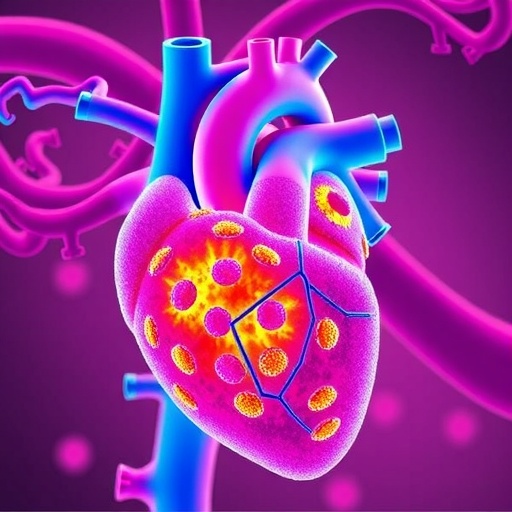
In an groundbreaking study published in Genome Medicine, researchers led by Youness et al. have uncovered critical insights into the role of fibroblasts in the failing human heart. The research highlights that the location and etiology of heart failure significantly influence the activation and heterogeneity of fibroblast populations, a finding that has far-reaching implications for understanding cardiac diseases and potential therapeutic targets.
Fibroblasts are a type of cell responsible for producing collagen and other fibers, playing a crucial role in maintaining the structural integrity of tissues. In the context of heart failure, the behavior of these cells can dramatically change, contributing to the disease progression and exacerbating the heart’s incapacity to function correctly. The complex interaction between fibroblasts and the cardiac environment has been the focus of several studies, but the specifics of how different factors affect their activation have not been thoroughly understood until now.
This article delves into how differing heart failure etiologies—ranging from ischemic heart disease to hypertensive heart disease—affect fibroblast behavior. By examining fibroblast populations from various regions of the failing heart, the team was able to draw correlations that highlight significant discrepancies in fibroblast activation based on both location and underlying causes of heart failure. This finding raises questions about the uniformity of fibroblast response across different types of heart disease and suggests that targeted therapies may need to be tailored to individual patient profiles.
The study employed advanced single-cell RNA sequencing techniques, allowing researchers to analyze thousands of fibroblasts at individual resolution. This state-of-the-art method provided insights into the transcriptional changes in fibroblasts associated with heart failure, effectively mapping the differences between fibroblast populations derived from different regions of the heart. Such high-resolution data not only reveal which genes are upregulated or downregulated in these cells but also provide a glimpse into the functional states of fibroblasts under pathological conditions.
Moreover, the study emphasizes the concept of fibroblast heterogeneity. Rather than existing as a homogenous population, fibroblasts can exhibit diverse functional roles depending on their location within the heart as well as the specific pathophysiological context. For instance, fibroblasts in the infarcted region of the heart may adopt a pro-fibrotic phenotype, which can exacerbate cardiac remodeling and worsen heart failure, while those in non-infarcted regions may play similar but distinct roles in maintaining cardiac architecture.
By shedding light on fibroblast heterogeneity, this research paves the way for potential novel therapeutic interventions. By understanding the specific fibroblast populations that are more involved in disease progression, researchers and clinicians may be able to develop treatments that specifically target the harmful functions of those cells while preserving their beneficial roles. Such precision medicine approaches are crucial for the development of effective therapies and improving outcomes for patients with heart failure.
Additionally, the findings speak to the broader narrative of how organ-specific responses contribute to systemic health. The heart may respond to injury and stress in ways regulated by local microenvironments, again underscoring the importance of context when it comes to understanding cellular responses to damage. As heart failure remains a leading cause of mortality globally, the implications of this research stretch beyond academic curiosity; they represent a crucial step towards improving patient care.
This study also opens doors for further research into the molecular mechanisms that govern fibroblast behavior in heart failure. Understanding the signals that drive fibroblast activation in distinct cardiac regions could uncover targets for intervention. Moreover, exploring the possibility of utilizing fibroblast modulation as a therapeutic strategy against heart failure could drastically change how we approach conventional treatment paradigms.
One critical takeaway from Youness et al.’s findings is the adaptive capacity of cardiac fibroblasts. As the heart responds to injury, fibroblasts play varying roles depending on physiological need. This adaptability suggests that preventative strategies could involve manipulating fibroblast behavior in anticipation of cardiac stress, potentially preempting the onset of heart failure in susceptible individuals.
In conclusion, the study by Youness and colleagues establishes a significant association between the location and etiology of heart failure, and fibroblast activation and heterogeneity. These findings not only advance our understanding of fibroblast biology but also introduce the possibility of personalized medicine in cardiac care, urging the need for further studies to validate and explore these concepts on a larger scale. As researchers continue to delve deeper into this cellular complexity, new avenues for effective treatments may emerge, paving the way for more comprehensive approaches to combat cardiovascular diseases.
This research exemplifies the pivotal need for innovative studies that bridge the gap between basic science and clinical application. As the landscape of cardiac treatment evolves, understanding the cellular and molecular intricacies influencing disease progression will be indispensable in formulating strategies that not only treat symptoms but target the underlying pathophysiological processes. The journey towards unraveling the complexities of the human heart continues, promising a future filled with potential breakthroughs that could redefine cardiac health.
Subject of Research: The role of fibroblast activation and heterogeneity in the failing human heart, influenced by location and etiology.
Article Title: Location and aetiology are determinants of fibroblast activation and heterogeneity in the failing human heart.
Article References:
Youness, M., Ekhteraei-Tousi, S., Nagaraju, C.K. et al. Location and aetiology are determinants of fibroblast activation and heterogeneity in the failing human heart.
Genome Med 17, 155 (2025). https://doi.org/10.1186/s13073-025-01580-z
Image Credits: AI Generated
DOI: https://doi.org/10.1186/s13073-025-01580-z
Keywords: Fibroblasts, heart failure, cellular heterogeneity, single-cell RNA sequencing, cardiac research, precision medicine.


