


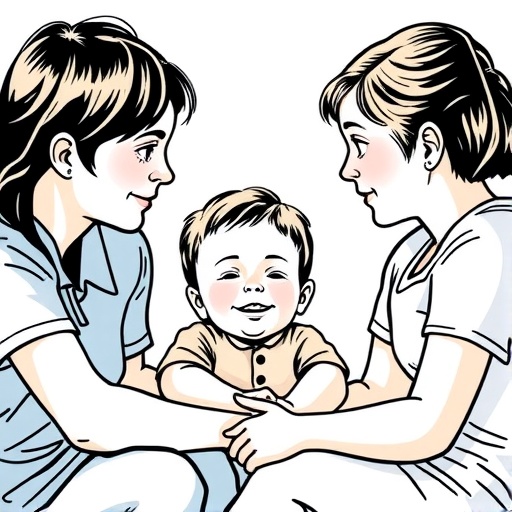
When a child is diagnosed with a malignant tumor, the diagnosis lands on an entire household, not just on the young patient. The weeks that follow—filled with frightening explanations, port placements and the first cycles of chemotherapy—represent one of the most stressful periods a family can face. A new cross-sectional study from Sichuan, China, published in BMC Cancer, offers one of the most detailed portraits yet of how families hold together during this critical window, and it identifies the specific social and economic factors that predict whether a family bends or breaks under the strain.
The research, led by Junxia Zhou and colleagues at the Department of Pediatric Hematology Oncology Nursing at West China Second University Hospital, Sichuan University, focused on families of children who had recently been diagnosed with cancer and were beginning their initial course of chemotherapy. Between January and December 2023, the team recruited 265 families from the pediatric hematology-oncology department of a Grade A tertiary hospital in Sichuan Province using convenience sampling. The choice of this moment—initial chemotherapy rather than later phases of treatment—was deliberate, because the early treatment period subjects parents, siblings and grandparents to a concentrated assault of physical exhaustion, financial pressure and emotional upheaval.
Family resilience, the central concept of the study, refers to a family’s capacity as a unit to adapt positively to adversity, recover from crisis and even emerge strengthened. Psychologists and oncology researchers have increasingly recognized it as a protective factor: resilient families tend to maintain better communication, coordinate caregiving more effectively and shield both the sick child and other family members from the worst psychological consequences of the disease. Yet resilience is not a fixed trait. It is shaped by internal resources, such as how well a family functions day to day, and external ones, including financial security, social support and the coping strategies its members adopt.
To capture this multidimensional construct, the researchers administered a battery of validated instruments. Alongside a General Information Questionnaire covering demographics and socioeconomic characteristics, families completed the Chinese Family Resilience Assessment Scale, a multidimensional measure of family-level adaptation; the Family APGAR Index, a brief screening tool that quantifies perceived family functioning across five dimensions: adaptation, partnership, growth, affection and resolve; the Simple Coping Style Questionnaire, which distinguishes active, problem-focused coping from passive, emotion-focused avoidance; and the Social Support Rating Scale, which measures objective support received, subjective perceptions of support and the degree to which families make use of the support available to them.
The headline finding was cautiously encouraging. The mean family resilience score was 131.40 with a standard deviation of 12.41, and 50.94 percent of the families were classified as exhibiting a moderate level of family resilience. In other words, roughly half of the households navigating a child’s first chemotherapy cycles demonstrated a solid, though not optimal, capacity to absorb the shock. The remaining families spread across lower resilience categories, underscoring that a substantial minority entered this ordeal with compromised adaptive capacity—a group the authors argue should be a priority for targeted nursing intervention.
Statistical analysis went beyond description. Using regression modeling, the team identified eight factors that significantly influenced family resilience: family functioning, monthly family income above 10,000 CNY, residence in a township or county, occupation as a farmer, residence in a prefecture or autonomous prefecture, subjective support, active coping and support utilization. Together, these eight variables explained 30.6 percent of the variance in family resilience, a respectable proportion for a psychosocial outcome shaped by countless unmeasured influences. Among them, family functioning, monthly income and place of residence showed the strongest associations, pointing to the material and structural bedrock on which psychological resilience ultimately rests.
The prominence of family functioning, as measured by the Family APGAR Index, aligns with a broad body of resilience theory. Families whose members report clear communication, shared decision-making and emotional responsiveness have more resources to draw on when treatment schedules disrupt work, school and daily routines. The socioeconomic signals are equally telling. A monthly income above 10,000 CNY presumably buffers families against the considerable out-of-pocket costs of pediatric cancer care in China, reducing one major channel of stress. Residence emerged as a double-edged factor: families living in townships and counties and those in prefectures or autonomous prefectures differed from urban families in resilience levels, and farmers—a group often facing both lower income and reduced access to urban medical infrastructure—also showed distinct resilience profiles.
The coping and support dimensions of the analysis carry perhaps the most actionable implications. Both active coping and support utilization independently predicted higher family resilience, suggesting that interventions teaching problem-focused strategies and encouraging families to actually accept and deploy the help around them—rather than merely perceiving that help exists—could measurably strengthen households under oncological stress. Subjective support, the felt sense of being supported, also contributed, consistent with models in which perceived social resources translate into psychological stability even before any concrete assistance is delivered.
The study’s design and scope come with the caveats typical of cross-sectional research. The data capture a single time point, so causal direction cannot be established: families with higher resilience may cope more actively, just as active coping may build resilience. Convenience sampling from one major tertiary hospital in Sichuan may limit generalizability to rural households treated elsewhere or to families who cannot reach such centers at all. The authors also note that the version of the article published early is citable with a permanent DOI and subject to further editorial refinement before the final Version of Record.
Nevertheless, the findings arrive at a time when pediatric oncology units worldwide are grappling with how to support not just patients but the caregivers whose stability determines whether treatment plans can be followed. Children undergoing chemotherapy depend on parents who can manage medication schedules, recognize warning signs of infection, maintain nutrition and attend countless appointments. When family resilience falters, adherence and outcomes often follow. The Chinese team’s results suggest a practical screening logic: early in treatment, nursing staff could use brief instruments like the Family APGAR to flag low-functioning families, then direct additional resources toward low-income, rural and farming households, while offering structured programs that cultivate active coping and teach families how to mobilize their social networks.
The research was conducted in accordance with the Declaration of Helsinki, with ethics approval from the Medical Ethics Committee of West China Second Hospital, Sichuan University, and written informed consent obtained from all adult participants and from the parents or legal guardians of children aged zero to fourteen. The authors report no competing interests and received no specific grant from any funding agency in the public, commercial or not-for-profit sectors.
As the authors conclude, most families in the study demonstrated relatively good resilience during the initial chemotherapy period, but resilience was not evenly distributed. It clustered around families with robust functioning, financial security and supportive communities—and it could be strengthened where clinicians deliberately nurture the skills and supports that make adaptation possible. For the roughly half of families sitting at moderate resilience, the study suggests the difference between surviving a child’s cancer treatment and being worn down by it may lie in exactly these identifiable, and modifiable, factors.
Cite Scienmag News
Nathaniel Bowman. (September 8, 2026). Family resilience and influencing factors in children’s cancer chemotherapy: cross-sectional study. Scienmag. https://scienmag.com/family-resilience-and-influencing-factors-in-childrens-cancer-chemotherapy-cross-sectional-study/
Nathaniel Bowman. "Family resilience and influencing factors in children’s cancer chemotherapy: cross-sectional study." Scienmag, 8 September 2026, https://scienmag.com/family-resilience-and-influencing-factors-in-childrens-cancer-chemotherapy-cross-sectional-study/. Accessed 8 September 2026.
Nathaniel Bowman. "Family resilience and influencing factors in children’s cancer chemotherapy: cross-sectional study." Scienmag. September 8, 2026. https://scienmag.com/family-resilience-and-influencing-factors-in-childrens-cancer-chemotherapy-cross-sectional-study/


