


Controlling highly pathogenic avian influenza (HPAI) in the small family poultry flocks that dominate many low- and middle-income countries has proven persistently difficult, and a new policy-oriented rapid review argues that the problem lies less with the virus than with the systems surrounding it. Published in Frontiers in Veterinary Science, the review synthesized 110 peer-reviewed publications and 27 policy and guidance documents to examine the structural, epidemiological, and socio-economic factors shaping HPAI and low-pathogenicity avian influenza (LPAI) prevention and control in family poultry systems. Its central conclusion is that effective control cannot be achieved through biosecurity protocols alone; it must be embedded within a broader, systems-oriented strategy grounded in One Health principles that simultaneously improves overall poultry productivity and explicitly values smallholder knowledge and participation.
The review, led by Robyn Alders of the Australian National University’s Development Policy Centre, with Brigitte Bagnol of Tufts University and Md. Ahasanul Hoque of Chattogram Veterinary and Animal Sciences University, frames avian influenza as one hazard among many interacting within highly interconnected biological, environmental, and socio-cultural systems. Family poultry—defined by the FAO as production systems relying primarily on family labor and locally available inputs, encompassing chickens, ducks, geese, pigeons, quail, and guinea fowl—span extensive scavenging systems of roughly 1 to 50 birds, semi-intensive systems of 51 to 200 birds, and small-scale intensive operations exceeding 200 broilers or 100 layers. These systems coexist within the same communities in many settings, meaning the village itself often functions as the epidemiological unit, particularly where birds roam freely and biosecurity measures appropriate to one production context may be irrelevant to another.
A core epidemiological constraint identified by the authors is the obscuring effect of high background mortality from enzootic diseases. Newcastle disease (ND), first described in 1926 and still enzootic across much of Africa, Asia, and South America, alongside infectious bursal disease (IBD) and fowl cholera, produces clinical signs in chickens that are indistinguishable from those of HPAI without laboratory confirmation. Where vaccination against these vaccine-preventable diseases is irregular or absent—as is common in family poultry systems—frequent high-mortality events normalize poultry deaths and diminish the likelihood that HPAI is recognized or reported. The review notes that coping strategies following ND outbreaks, such as selling live or dying birds, home slaughter and consumption, or improper disposal, can exacerbate transmission and zoonotic risks precisely when HPAI is circulating. Reducing baseline mortality is therefore framed as both a productivity objective and a prerequisite for effective HPAI surveillance, since early-warning systems depend on detecting mortality levels that exceed expected background losses.
The historical trajectory of HPAI emergence described in the review underscores how intensification has reshaped viral dynamics. Between 1990 and 2023, the global chicken population expanded from roughly 11 billion to more than 33 billion birds, a growth concentrated particularly within high-density production systems. The review cites well-supported evidence that increasing poultry density, extensive movement networks, and live bird market connectivity facilitate the amplification and dissemination of avian influenza viruses once introduced into poultry populations, consistent with evolutionary theory suggesting that high densities of susceptible hosts favor the emergence and spread of more virulent pathogens. Major outbreaks in Mexico (1993–1995), Pakistan (1994–1995), and Italy (1999–2000) demonstrated the capacity of H5 and H7 low-pathogenicity viruses to evolve into highly pathogenic forms following sustained circulation in commercial poultry, while the emergence of HPAI H5N1 in southern China in 1996 initiated recurrent outbreaks across Asia, particularly where ND and fowl cholera were already poorly controlled.
On the zoonotic front, the review documents that since 2003 more than 1,000 laboratory-confirmed human H5N1 infections have been reported from over 20 countries, with the vast majority associated with direct or indirect exposure to infected poultry or contaminated environments. Most infections have occurred among people keeping or handling family poultry, participating in household slaughter and processing, or working in live bird markets, rather than being linked to large-scale production. However, the ongoing clade 2.3.4.4b panzootic has expanded the range of occupational exposure settings; in the United States, 70 confirmed human H5N1 infections were identified between March 2024 and May 2025, including 41 associated with infected dairy cattle and 24 with commercial poultry operations. As of June 2026, the clade had reached every continent, causing unprecedented mortality in wild birds and infecting new mammalian host species. Serological studies further suggest that subclinical and mild infections occur more frequently than routine surveillance indicates, implying that laboratory-confirmed cases underestimate the true incidence of zoonotic infection.
The review identifies LPAI as a distinct surveillance challenge requiring different operational approaches. LPAI viruses circulate in domestic poultry with limited or no overt clinical signs, particularly in chickens, ducks, geese, and turkeys, making detection through passive surveillance difficult; effective LPAI surveillance generally requires active sampling. Ducks may excrete virus without showing clinical signs, facilitating silent transmission, and mixed-species production systems involving ducks and chickens contribute to viral persistence and reassortment due to differences in host susceptibility and shedding dynamics. Live bird markets are recognized as key nodes for viral maintenance and transmission, aggregating birds from multiple sources and enabling amplification through high-density contact networks. The review notes that while HPAI surveillance prioritizes rapid detection and response to outbreaks causing clinical disease, LPAI surveillance focuses on detecting silent viral circulation, monitoring H5 and H7 subtypes, and identifying conditions that may favor viral evolution toward high pathogenicity.
Building on a nine-factor assessment of the elements shaping avian influenza control feasibility, the authors group practical entry points into three complementary themes. The first addresses structural constraints within family poultry production systems, including the use of locally adapted poultry genotypes—indigenous and other locally adapted birds generally remain more resilient under endemic disease pressure and resource-constrained conditions than highly selected commercial hybrid lines—alongside improved access to safe markets, sustainable feed and water systems that reduce food–feed competition, and effective control of enzootic vaccine-preventable diseases. The second addresses governance, institutional, and social barriers, including culturally appropriate outbreak preparedness and response protocols pre-negotiated with communities before outbreaks occur, encompassing detection, reporting, movement controls, culling, and compensation arrangements. The third addresses gender and socio-economic equity, encompassing participatory approaches grounded in inclusivity, transparency, and accountability, with particular attention to the barriers that limit women’s access to veterinary extension, training, producer organizations, and decision-making processes.
Trust emerges as a cross-cutting determinant throughout the review. The authors document how uncompensated mass culling during previous HPAI outbreaks eroded producer confidence, how veterinary services oriented toward large livestock and commercial enterprises may lack understanding of family poultry constraints, and how top-down imposition of solutions developed for the large-scale sector without adequate compensation widens the gap between small-scale farmers and animal health authorities. Evidence from several settings indicates that poultry are frequently assigned lower priority for vaccination and animal health investments than larger livestock species. The review proposes that reporting systems should build on the intrinsic motivations of communities, including women, rather than relying primarily on financial incentives, as monetary rewards may increase short-term participation while reducing the sustainability of engagement once incentives are withdrawn. Where uncompensated culling has occurred in the past, proactive trust-repair strategies, including community-level dialogue and transparent accountability mechanisms, are framed as essential preconditions for effective future response.
The review ultimately proposes an integrated conceptual systems framework combining multi-hazard risk management with One Health principles, in which avian influenza risk emerges through interactions among biological and ecological hazards, exposure pathways, underlying vulnerabilities, and response capacities. Biological hazards include viral circulation, mutation, and spillover and interactions between wild and domestic birds; exposure is shaped by poultry density, bird movements, market connectivity, and biosecurity conditions; vulnerability is influenced by livelihood dependence on poultry, food insecurity, poverty, and gendered inequalities in access to resources and services; and response capacity depends on surveillance and diagnostic capacity, veterinary services, institutional coordination, community trust, and the ability to implement appropriate disease-control measures. The authors conclude that functional cross-sectoral collaboration between public health, animal health, and environmental sectors, along with local government, is essential if One Health approaches are to deliver tangible, cost-effective reductions in zoonotic risk while supporting sustainable household food and nutrition security, and that realizing this vision will require sustained political commitment and coordinated investment from national veterinary and public health services, regional and international bodies including the Quadripartite (FAO, WHO, WOAH, and UNEP), and donors, working in genuine partnership with family poultry producers themselves.
Subject of Research: Rethinking avian influenza control: a systems-oriented One Health perspective for family poultry
Article Title: Rethinking avian influenza control: a systems-oriented One Health perspective for family poultry
Article References: Alders, R., Bagnol, B., & Hoque, M. A. (2026). Rethinking avian influenza control: a systems-oriented One Health perspective for family poultry. Frontiers in Veterinary Science, 13, Article 1814751. https://doi.org/10.3389/fvets.2026.1814751
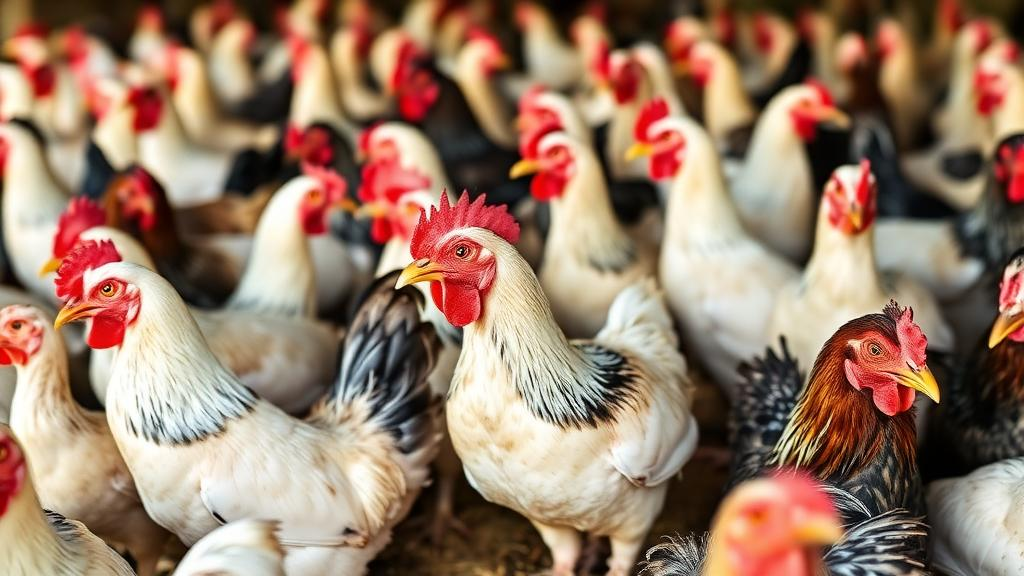
Image Credits: AI Generated
DOI: 10.3389/fvets.2026.1814751
Keywords: avian influenza, One Health, family poultry, HPAI, LPAI, surveillance, gender equity, Rethinking, avian, influenza, control, systems-oriented
Cite Scienmag News
William Thompson. (October 19, 2026). Family Poultry Flocks Need Systems-Based Avian Influenza Control, Review Finds. Scienmag. https://scienmag.com/family-poultry-flocks-need-systems-based-avian-influenza-control-review-finds/
William Thompson. "Family Poultry Flocks Need Systems-Based Avian Influenza Control, Review Finds." Scienmag, 19 October 2026, https://scienmag.com/family-poultry-flocks-need-systems-based-avian-influenza-control-review-finds/. Accessed 19 October 2026.
William Thompson. "Family Poultry Flocks Need Systems-Based Avian Influenza Control, Review Finds." Scienmag. October 19, 2026. https://scienmag.com/family-poultry-flocks-need-systems-based-avian-influenza-control-review-finds/


