

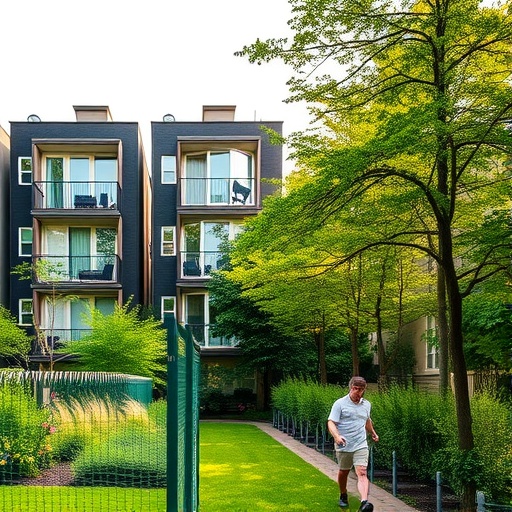
Urban Green Spaces Under Siege: How Extreme Heat and Humidity Are Undermining Recreational Benefits
In recent decades, the benefits of urban green spaces—parks, gardens, and natural landscapes embedded within the concrete fabric of cities—have been widely recognized. These verdant areas serve as vital refuges offering ecological, psychological, and social advantages to urban residents. They provide critical ecosystem services such as air purification, carbon sequestration, and temperature regulation, while also fostering mental well-being and physical activity. However, the relentless advance of climate change poses a formidable challenge to the functionality and appeal of these green sanctuaries. A groundbreaking study led by Wang et al., published in Communications Earth & Environment in 2026, delineates how escalating temperature and humidity extremes are poised to erode the recreational value of urban green spaces, thus threatening their role as urban havens.
The study meticulously examines the interplay between climatic stressors—specifically elevated heat and humidity—and human perceptions of thermal comfort during outdoor recreation in urban green spaces. It leverages sophisticated modeling frameworks alongside empirical observational data to quantify how these climatic factors influence recreational behavior and overall user experience. The findings underscore that as heat waves intensify and humidity rises, the suitability of urban greenscapes for leisure activities diminishes significantly, discouraging prolonged outdoor engagement.
Urban microclimates, shaped by the amalgamation of built environments and green infrastructure, are already subject to the urban heat island effect, a phenomenon where city centers experience higher temperatures than surrounding rural areas. This amplified heat is exacerbated when paired with increased atmospheric moisture, leading to oppressive humidity levels. Wang and colleagues elucidate that such conditions notably escalate heat stress among city dwellers, compromising their ability to comfortably use green spaces for exercise, relaxation, or social interaction.
By integrating climatological analyses with human thermophysiological models, the paper reveals that the threshold of tolerable heat exposure is substantially lowered in high-humidity environments due to the decreased efficacy of evaporative cooling via sweat evaporation. This physiological limitation means that even moderate physical exertion in humid heat becomes hazardous or unpleasant, thereby curtailing the desirability of outdoor recreational pursuits.
The implications extend beyond mere discomfort; there are tangible public health concerns. Reduced access and utilization of urban green spaces cut off critical opportunities for physical activity and social cohesion, both of which are central to healthier urban populations. The study warns that neglecting this erosion of recreational value amidst extreme heat and humidity could exacerbate inequalities, as vulnerable populations—often with limited indoor cooling options—rely heavily on public green spaces.
Furthermore, Wang et al. highlight the compounding effect on urban biodiversity and ecosystem services. Under stress from extreme climate factors, vegetation health deteriorates, altering canopy cover and plant transpiration rates, which further diminishes shading and cooling potential. This feedback loop intensifies localized heating and reduces overall habitat quality within cities, undermining both human and ecological resilience.
The authors employ temporal projections to simulate future scenarios under various climate change models, revealing alarming trends. By mid-century, many urban green spaces in regions prone to heat and humidity spikes may witness drastic declines in usable hours for recreation. The resulting behavioral shifts could entail decreased visitation during peak heat periods, leading to underutilization and potential neglect of green infrastructure investments.
Despite these grim projections, the research also advocates for actionable adaptive strategies. Enhancing urban design by increasing tree canopy density, incorporating water elements, and deploying high-albedo surfaces could mitigate some thermal stressors. Additionally, innovative cooling technologies and community engagement in planning processes may help sustain the recreational viability of green spaces under climatic strain.
Importantly, the study calls for a recalibration of urban planning paradigms, emphasizing the integration of climate resilience with social equity. This entails prioritizing interventions in neighborhoods disproportionately affected by heat and humidity, ensuring equal access to safe, comfortable green spaces. It also advocates for interdisciplinary collaborations that blend climatology, physiology, ecology, and urban design to holistically tackle these challenges.
This research shines a spotlight on the increasingly complex dynamics shaping human-environment interactions in cities contending with the dual threats of global warming and humidity escalation. It presents compelling evidence that protecting urban green spaces in the face of extreme climate demands innovative, science-driven policy responses to preserve their critical multifaceted value.
Moreover, the study’s findings resonate in the broader discourse of sustainable urban development, signaling that green spaces cannot remain passive assets but must be dynamically managed and adapted. Anticipating and responding to climatic shifts ensures that these areas continue to serve as vital oases rather than becoming underutilized or health-risk zones.
Wang and colleagues have opened an urgent dialogue on the importance of quantitatively understanding how thermal discomfort, mediated by extreme heat and humidity, translates into diminished recreational use of urban greenery. Their data-driven insights empower stakeholders to implement targeted interventions that safeguard public health and urban livability amid an evolving climate landscape.
As the global community races to mitigate and adapt to climate change, this research underscores a critical nexus of environment, health, and urban policy. It offers a clarion call to rethink how cities nurture green spaces, align them with emerging environmental realities, and maintain their invaluable role as accessible, restorative refuges for all city inhabitants.
The study stands as a seminal contribution to urban climate adaptation literature, providing a nuanced, mechanistic understanding of how compounded thermal stressors impair outdoor human activity. By rigorously connecting climatological trends with behavioral impacts, it affords practical foresight into future urban livability challenges and potential pathways for resilient design.
In sum, “Extreme heat and humidity reduce the recreational value of urban green spaces,” authored by Wang, Mameno, Owake, and colleagues, presents a sobering yet hopeful treatise on preserving the multifaceted benefits of urban nature. Its implications extend far beyond park benches and leafy pathways, touching upon the core of sustainable, equitable, and health-promoting urban futures.
Subject of Research: The impact of extreme heat and humidity on the recreational usability and thermal comfort of urban green spaces.
Article Title: Extreme heat and humidity reduce the recreational value of urban green spaces.
Article References:
Wang, J., Mameno, K., Owake, T. et al. Extreme heat and humidity reduce the recreational value of urban green spaces. Commun Earth Environ 7, 253 (2026). https://doi.org/10.1038/s43247-026-03389-z
Image Credits: AI Generated


