

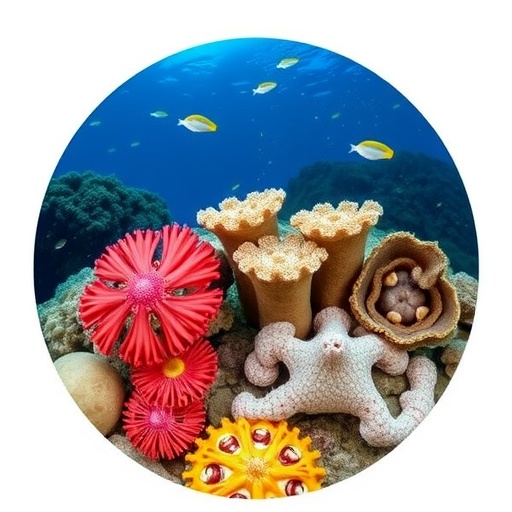
In recent years, the pervasive presence of microplastics in marine environments has raised significant concern among ecologists and environmental scientists alike. A newly published study spearheaded by experts from the University of Barcelona and the University of Girona delves into the physiological impacts of prolonged microplastic exposure on Mediterranean octocorals, specifically focusing on two prominent gorgonian species. These colonial organisms, known for their vital structural role in benthic ecosystems, face unseen threats that could have cascading effects on marine biodiversity.
The investigation centers on the white gorgonian (Eunicella singularis) and the violescent sea-whip (Paramuricea clavata), species representative of Mediterranean coral forests. These gorgonian species contribute indispensable three-dimensional habitats on rocky seabeds, ecosystems that nurture diverse assemblages of fish and invertebrates. Given their ecological significance, any subtle physiological disruption within these octocorals can undermine entire marine communities dependent on them for shelter and sustenance.
Microplastics, defined as plastic particles smaller than five millimeters, have become ubiquitous contaminants in global marine environments. Originating from larger plastic debris breakdown or directly from consumer and industrial products, these particles persist in ocean waters for prolonged periods. Their ingestion by marine organisms has been observed widely, yet comprehensive understanding of their sublethal physiological effects on seabed-forming organisms, such as Mediterranean gorgonians, remains elusive.
In a controlled experimental design, the research team exposed colonies of Eunicella singularis and Paramuricea clavata to environmentally relevant concentrations of common microplastics found in the Mediterranean, including polyethylene terephthalate (PET), polystyrene (PS), and polypropylene (PP). The exposure lasted three months, simulating real-world pollution levels. Scientists monitored physiological responses with a particular focus on respiration rates, prey capture efficacy, organic matter content, and histological integrity.
Significantly, the study reveals that although microplastic exposure did not inflict visible damage on the biological tissues or cellular structures of these octocorals, it produced measurable disruptions in fundamental metabolic processes. Respiration rates, indicative of cellular oxygen uptake necessary for metabolism, exhibited a marked decline in both species. This decrease suggests an overall reduction in metabolic activity, potentially reflecting an adaptive mechanism to conserve energy under stress or a direct metabolic impairment.
Despite the metabolic alterations, the octocorals maintained stable feeding behaviors and organic matter content. This suggests a complex physiological response where colonies may allocate energy to preserve essential functions such as prey capture and tissue maintenance despite microplastic-induced stress. Microscopic analyses confirmed the absence of structural damage or histopathological changes, implying an effective capacity in gorgonians to manage ingested microplastic particles without long-term accumulation in their tissues.
Importantly, the ingestion dynamics varied between species in terms of particle number and size retained, with PET particles dominating the internalized debris. This interspecies variation could hint at differing feeding mechanisms or filtration capacities that influence their vulnerability and physiological response to microplastic pollution. The finding underscores the need to consider species-specific traits when evaluating ecological risks posed by microplastics in marine habitats.
While not immediately lethal, these physiological disruptions are characterized as sublethal effects, with potential implications for the long-term energy budgets of gorgonian colonies. Reduced respiration rates point to diminished energy production, which may impair the organism’s ability to invest in growth, reproduction, or resilience to concomitant environmental stressors like ocean warming and habitat degradation—factors already threatening Mediterranean marine ecosystems.
This study accentuates the ecological ramifications of microplastic pollution beyond the well-documented visual and physical damage to marine life. By revealing metabolic vulnerabilities in foundational species, the research advocates for intensified scrutiny of microplastic impacts on marine benthic habitats, particularly under the mounting pressures of anthropogenic climate change and marine habitat loss.
The authors call for further investigations to elucidate the cumulative effects of chronic microplastic exposure on the ecological functionality and resilience of gorgonian species. Such research is essential to develop effective conservation strategies and to forecast ecosystem responses to the intertwined challenges of plastic pollution and global climate dynamics.
In essence, Mediterranean octocorals demonstrate a capacity to ingest and seemingly clear microplastic particles without overt tissue damage. However, the subtle metabolic disturbances inflicted by prolonged exposure raise concerns about their long-term health and the integrity of marine ecosystems they support. These findings highlight a previously underappreciated risk factor that could reverberate through marine food webs, necessitating urgent attention from researchers, policymakers, and conservationists.
Understanding the physiological nuances of microplastic pollution at this sub-organismal level is crucial for assessing broader ecological impacts and informing global marine conservation efforts. As gorgonian species underpin critical habitat structures, their compromised metabolic function could translate into diminished biodiversity and ecosystem services in Mediterranean benthic zones, with potential parallels in other marine regions worldwide.
This pioneering study bridges key knowledge gaps concerning the sublethal effects of microplastics on habitat-forming marine invertebrates and underscores the multifaceted threats posed by pervasive plastic pollution. As the scientific community advances, integrating such insights into marine ecosystem management will be vital to tackle the intricacies of ocean health in the Anthropocene.
Subject of Research: Animals
Article Title: Physiological responses of Mediterranean octocorals to prolonged exposure to ecologically relevant microplastic concentrations
News Publication Date: 6-Mar-2026
Web References: Marine Pollution Bulletin Article
Image Credits: Odei Garcia-Garin and Núria Viladrich
Keywords: Ecology, Marine Pollution, Microplastics, Mediterranean Octocorals, Gorgonians, Metabolism, Respiration, Marine Biodiversity, Marine Ecosystems, Environmental Stress


