


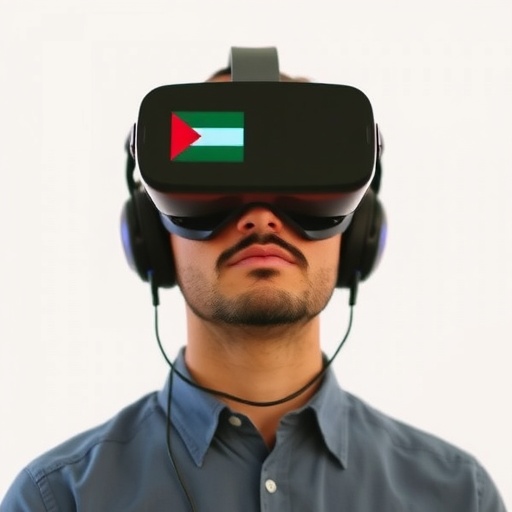
In recent years, the integration of technology into healthcare has transformed various fields within medicine. Among these advancements, virtual reality (VR) stands out as a revolutionary tool, particularly in physiotherapy. A new study conducted by Ghrouz et al. delves into the awareness and perceptions of VR technologies among physiotherapy students and clinicians in Palestine, shedding light on both the potential benefits and the obstacles faced in adopting such innovations in practice.
Virtual reality has been used in various healthcare applications, from acute rehabilitation following injuries to long-term management of chronic conditions. The immersive experience VR offers can simulate real-world environments, making physiotherapeutic exercises more engaging for patients. By utilizing VR, clinicians can create customized rehabilitation programs that encourage adherence and improve patient outcomes. The findings from this study suggest that while awareness of VR’s benefits is growing, significant gaps still exist concerning its practical application in clinical settings.
The research team executed a cross-sectional study targeting both students and practicing clinicians. This dual approach is critical as it captures insights from the next generation of healthcare providers and those currently delivering care. The survey employed within the study assessed knowledge about VR technologies, familiarity with its applications in physiotherapy, and overall attitudes toward its use in clinical practice. The results revealed notable discrepancies in understanding and acceptance between the two groups, making it evident that educational interventions may be necessary to bridge this gap.
One fascinating revelation from the study was the varied perceptions of VR’s effectiveness in treating conditions such as musculoskeletal disorders and neurological rehabilitation. Students exhibited a greater enthusiasm for adopting new technologies, while clinicians expressed skepticism rooted in traditional practices and concerns over the efficacy of VR based interventions. This divergence underscores a crucial challenge: aligning educational strategies with the realities of clinical practice to foster an environment conducive to innovation.
The potential of VR in physiotherapy goes beyond mere engagement; it offers quantifiable data that can enhance treatment planning and assessment. For instance, VR platforms can track a patient’s performance, allowing therapists to adjust treatment plans based on real-time analytics. This data-driven approach not only improves individualized care strategies but also provides measurable outcomes that demonstrate the therapy’s efficacy. The study emphasizes these advantages but also points to the technological and financial barriers that may restrict its widespread use in clinical environments.
Overall, while the therapeutic potentials of virtual reality are substantial, the path toward its implementation in physiotherapy is fraught with challenges. The study makes it clear that educational initiatives need to be prioritized within physiotherapy curricula. By integrating VR modules into training programs, future clinicians can develop a more robust skill set and a greater willingness to adopt these innovative technologies in their practice.
Additionally, there are ethical considerations regarding the use of VR in healthcare. As with any technology, it is imperative to ensure that patient privacy and data security are adequately maintained. The study briefly touches on these aspects, highlighting that concerns regarding confidentiality could lead to hesitance in implementing VR solutions. Open communication and transparency will be essential in alleviating these concerns and fostering trust among patients and clinicians alike.
Furthermore, continued research is vital to understanding the long-term impact of VR therapy on different populations. The preliminary findings in this study mark a stepping stone towards deeper exploration into how VR can specifically aid various patient demographics, particularly in a region like Palestine, where access to conventional healthcare resources may be limited.
The implications of this research extend beyond just the borders of Palestine. As the healthcare industry increasingly invests in technology, other regions can learn from the insights provided by this study. The parallels drawn between student enthusiasm and clinician skepticism may reflect a global trend in many healthcare disciplines, thus warranting further examination into educational methods and clinical practices alike.
In conclusion, Ghrouz et al.’s study serves as a critical examination of the current landscape of VR in physiotherapy within Palestine, pinpointing both the excitement and the barriers toward its implementation. As we continue to explore the integration of advanced technologies in healthcare, studies like this not only highlight existing challenges but also pave the way for future innovations. Moving forward, stakeholders in the healthcare sector must work collaboratively to create an ecosystem that encourages the adoption of VR and similar technologies, ultimately enhancing patient care and therapeutic outcomes.
The challenge now lies in the hands of educators, clinicians, and technology developers to cultivate an integrating approach that embraces both the promise of new technologies and the realities of their application in clinical practice. By breaking down silos between education and practice, the healthcare community can harness the potential of virtual reality to revolutionize the landscape of physiotherapy and beyond.
Through continuous education, rigorous research, and a commitment to patient-centered care, the vision of a future where virtual reality is a standard tool in physiotherapy treatment could soon become a reality. The dialogue initiated by Ghrouz et al. serves as an essential catalyst for this transformation, inspiring clinicians and educators alike to explore the uncharted territories of innovative healthcare solutions.
Ghrouz, A., Herbawi, F., Abualkhair, D. et al. Awareness and perceptions of virtual reality in physiotherapy: a cross-sectional study among students and clinicians in Palestine.
BMC Med Educ 25, 1524 (2025). https://doi.org/10.1186/s12909-025-08117-3
Cite Scienmag News
Courtney Benton. (October 30, 2025). Exploring Virtual Reality Awareness in Palestinian Physiotherapy. Scienmag. https://scienmag.com/exploring-virtual-reality-awareness-in-palestinian-physiotherapy/
Courtney Benton. "Exploring Virtual Reality Awareness in Palestinian Physiotherapy." Scienmag, 30 October 2025, https://scienmag.com/exploring-virtual-reality-awareness-in-palestinian-physiotherapy/. Accessed 5 September 2026.
Courtney Benton. "Exploring Virtual Reality Awareness in Palestinian Physiotherapy." Scienmag. October 30, 2025. https://scienmag.com/exploring-virtual-reality-awareness-in-palestinian-physiotherapy/


