


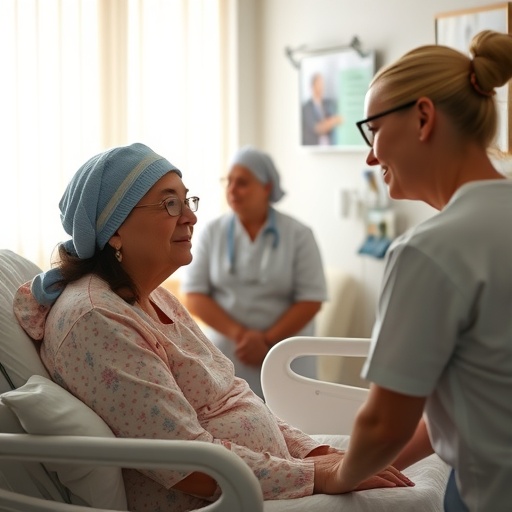
In the ever-evolving landscape of healthcare, the emotional toll on healthcare professionals is increasingly coming to light. A recent qualitative study sheds critical insight into the phenomenon of vicarious trauma, particularly among hospice nurses. This investigation reveals not only the profound impact of their daily experiences but also the resilience and coping strategies they employ amidst the emotional challenges of their profession. The study, titled “Falling in and climbing out,” authored by Wu, Liu, Bo, and colleagues, is a testament to the significant role nurses play at the end-of-life care continuum.
Hospice nurses are often on the front lines of care for terminally ill patients and their families. This close interaction can bring about a unique set of emotional challenges and psychological stressors. The researchers aimed to uncover the layers of vicarious trauma that these nursing professionals endure while navigating the complex emotional landscape of their roles. This qualitative research exposes the emotional burden these caregivers face and highlights the silent struggle that often goes unnoticed.
The study utilized qualitative interviews with hospice nurses, allowing participants to share their stories and experiences openly. This approach not only gave voice to underrepresented concerns but also focused on the intricate emotional layers associated with their everyday encounters. The narratives captured by the researchers paint a vivid picture of the duality of a hospice nurse’s role—both the privilege of providing comfort in death and the heavy burden of emotional labor that accompanies such care.
As the study delves deeper into the concept of vicarious trauma, it uncovers the psychological effects of witnessing suffering and loss. Nurses frequently find themselves in situations where they become intimately connected with their patients and their families, often absorbing the grief and pain that accompanies death. This emotional transference can lead to profound psychological effects, manifesting as anxiety, depression, and burnout. Understanding this phenomenon is crucial not only for the nurses but also for healthcare facilities seeking to support their staff effectively.
Compounding the emotional challenges faced by hospice nurses is the often-stigmatized conversation surrounding mental health within the healthcare profession. Many nurses feel compelled to carry these emotional burdens alone, fearing that expressing their struggles may be perceived as weakness. The study’s findings indicate that there is an urgent need to create supportive environments within healthcare settings where nurses feel safe to share their emotional experiences without stigma.
The interviews also highlighted the coping mechanisms employed by hospice nurses to manage vicarious trauma. Many participants discussed their need to compartmentalize their experiences, creating mental boundaries to separate work from personal life. Others found solace in peer support, emphasizing the importance of community among healthcare professionals navigating similar struggles. These coping strategies provide a critical insight into the resilience of hospice nurses, showcasing their ability to adapt and survive in a high-stress environment.
Moreover, the study points to the necessity for institutional changes that prioritize the mental health of hospice nurses. Training programs aimed at building emotional resilience could be instrumental in preparing nurses for the psychological demands of their role. Institutions are encouraged to implement comprehensive support systems, including counseling services and wellness programs aimed explicitly at addressing the mental health challenges faced by nursing professionals.
The conversation about vicarious trauma in healthcare is shifting, and this study serves as a catalyst for broader discussions on the importance of emotional health within the nursing workforce. As society becomes increasingly aware of the mental health challenges faced by healthcare providers, it is imperative that this conversation extends to the unique experiences of hospice nurses, who operate at the intersection of care and grief.
In recognizing the profound impact of vicarious trauma, healthcare organizations can begin to formulate targeted interventions that support hospice nurses. By prioritizing mental health and well-being, these institutions not only safeguard the health of their workforce but ultimately enhance the quality of care provided to patients and families during their most vulnerable moments.
In conclusion, the qualitative study conducted by Wu et al. delivers crucial insights into the emotional experiences of hospice nurses dealing with vicarious trauma. By shedding light on this often-overlooked aspect of their work, the researchers have opened the door for necessary conversations about mental health in nursing, encouraging institutions to take meaningful actions toward support and resilience-building. As the discussion around emotional health in the healthcare workforce continues to evolve, the hope is that hospice nurses will find the support and recognition they need to thrive in their indispensable roles.
Wu, Y., Liu, Y., Bo, E. et al. “Falling in and climbing out”: a qualitative study on vicarious trauma among hospice nurses.
BMC Nurs 24, 1320 (2025). https://doi.org/10.1186/s12912-025-03845-9
Cite Scienmag News
Ophelia Keating. (October 23, 2025). Exploring Vicarious Trauma in Hospice Nurses. Scienmag. https://scienmag.com/exploring-vicarious-trauma-in-hospice-nurses/
Ophelia Keating. "Exploring Vicarious Trauma in Hospice Nurses." Scienmag, 23 October 2025, https://scienmag.com/exploring-vicarious-trauma-in-hospice-nurses/. Accessed 3 September 2026.
Ophelia Keating. "Exploring Vicarious Trauma in Hospice Nurses." Scienmag. October 23, 2025. https://scienmag.com/exploring-vicarious-trauma-in-hospice-nurses/


