

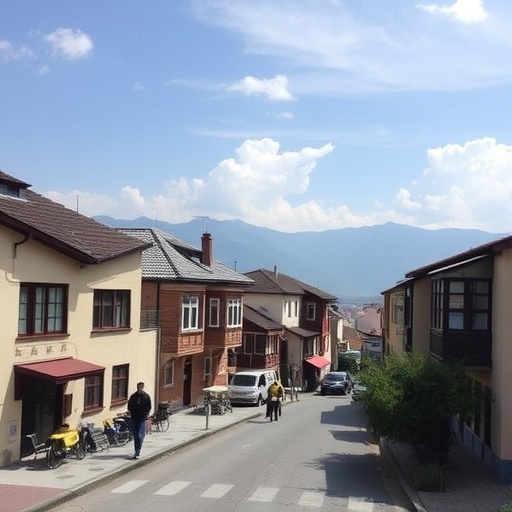
Urban heat islands (UHIs) present a pressing issue in rapidly urbanizing areas, where city landscapes are characterized by significant temperature differentials compared to their rural counterparts. The phenomenon of urban heat islands is a consequence of various factors, including land use and land cover, aspects that are examined in detail in a recent study titled “Land use and land cover and urban heat island nexus in Ortahisar and Akçaabat, Trabzon” by researchers Ogce and Sancar. This study delves into the intricate relationship between urbanization processes and heat accumulation in these Turkish locales, shedding light on an increasingly critical environmental challenge.
The study draws a compelling connection between urban development and exposure to extreme heat. As cities grow, so does the extent of impervious surfaces like concrete and asphalt, which absorb and retain heat during the day. This heat is subsequently released at night, causing elevated temperatures that can significantly impact urban ecosystems and human health. Understanding this dynamic is crucial, especially as urban areas continue to expand due to factors such as population growth and economic development.
In Ortahisar and Akçaabat, specific land use patterns have been mapped to evaluate their effects on local climate conditions. The researchers utilized advanced geospatial technologies combined with ground-level observations to assess how different surfaces and vegetation types contribute to UHI effects. By comparing areas with dense urban structures against those with green spaces, valuable data was gathered on how vegetation can mitigate heat accumulation, creating cooler microclimates within urban settings.
The implications of this research extend beyond local observation, resonating with global conversations about sustainable urban development. As cities worldwide grapple with climate change, the findings from Ortahisar and Akçaabat offer insights into how strategic urban planning can enhance resilience against increasing heat burdens. Implementing green infrastructure, such as parks and green roofs, emerges as a pivotal strategy in reducing UHI effects, ultimately benefiting public health and bolstering urban livability.
Urban planning policies must adopt a multidisciplinary approach to accommodate the growing challenges posed by urban heat islands. Policymakers can leverage data from studies like this one to inform zoning regulations, promote green space initiatives, and encourage sustainable practices among developers. The paper indicates a necessity for stakeholders, including local governments, to prioritize green spaces within urban landscapes to combat rising temperatures effectively.
In the context of climate change mitigation, the research underscores the importance of integrating environmental considerations into urban design. Effective land cover management is paramount not only for preserving local biodiversity but also for enhancing climate resilience. Urban planners can benefit from adopting strategies that incorporate both natural and built environments, fostering a balance that addresses both development needs and ecological sustainability.
The complexity of the UHI phenomenon is compounded by other environmental stressors, such as air pollution and water quality degradation. Understanding how land use and land cover change interact with these multiple factors is essential for developing comprehensive urban strategies. This study illuminates the urgent need for an interdisciplinary approach that encompasses meteorological data, public health statistics, and urban planning to address the multifaceted challenges posed by UHIs.
Another critical aspect highlighted in this research is the socio-economic implications of urban heat islands. Vulnerable populations often reside in areas with lower green space coverage, making them disproportionately affected by heatwaves and poor air quality. The researchers advocate for targeted interventions that prioritize these communities, thereby assisting in reducing health disparities exacerbated by environmental conditions. Implementing educational programs about UHI effects can empower residents to take proactive measures in their neighborhoods.
Furthermore, the study emphasizes the necessity of continual monitoring and data collection to better understand the evolving nature of urban heat islands. Ongoing research not only aids in validating existing models but also helps refine predictive analytics, enabling cities to anticipate potential overheating scenarios. Scientists and urban planners are encouraged to collaborate, utilizing technological advancements in remote sensing and data analytics to drive future studies.
Adopting a long-term perspective is vital in fostering sustainable urban environments. This research serves as a catalyst for cities to reevaluate their growth trajectories in the context of climate adaptation. By synthesizing ecological principles with urban planning methodologies, communities can cultivate environments that thrive even amid rising global temperatures.
In summary, the investigation into land use and land cover in Ortahisar and Akçaabat provides critical insights into the nexus of urban heat islands and urban development. The study’s findings underscore the importance of integrating ecological considerations into city planning and policy-making, advocating for sustainable practices that enhance urban resilience. The dialogue surrounding urban heat islands will only grow in importance, emphasizing the necessity for civic engagement and scientific research to work hand in hand in creating cities that are not only livable but also sustainable for generations to come.
In conclusion, as cities evolve, the imperative to manage urban heat islands becomes increasingly urgent. The research conducted by Ogce and Sancar provides a foundational understanding of how land use and land cover impact thermal dynamics in urban areas. The recommendations set forth by this study should not only resonate among local policymakers but also inspire broader discussions in global urban planning circles concerning sustainability and public health.
To dissect the findings of this research and respond to the looming challenges of urbanization, stakeholders must come together, fostering a collaborative environment that embraces diverse perspectives. Their efforts can catalyze a shift towards urban landscapes that prioritize ecological balance, social equity, and resilience against heat-related adversities, steering us toward a future where cities thrive in harmony with their natural surroundings.
Subject of Research: Urban Heat Islands, Land Use and Land Cover Dynamics
Article Title: Land use and land cover and urban heat island nexus in Ortahisar and Akçaabat, Trabzon
Article References:
Ogce, S., Sancar, C. Land use and land cover and urban heat island nexus in Ortahisar and Akçaabat, Trabzon.
Discov Cities 3, 6 (2026). https://doi.org/10.1007/s44327-026-00181-8
Image Credits: AI Generated
DOI: https://doi.org/10.1007/s44327-026-00181-8
Keywords: Urban Heat Island, Land Use, Land Cover, Climate Resilience, Sustainable Urban Planning


