


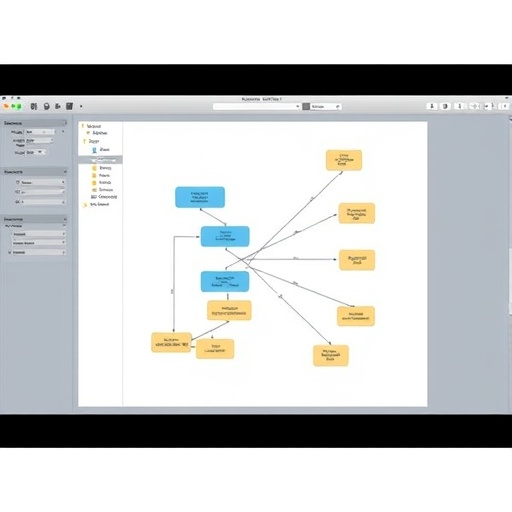
In the contemporary landscape of higher education, the utilization of visual languages and modeling techniques has become increasingly significant. Among these, the Unified Modeling Language (UML) serves as a cornerstone in software engineering education and facilitates the communication of complex systems. The emerging focus of scholarly research on this topic highlights the pedagogical potential of UML class diagrams, particularly within the context of first-year Bachelor of Computer and Information Sciences (BCIS) students. A recent study conducted by Khomokhoana, Fouché, and Nkalai investigates this intersection between semiotic analysis and educational methodologies, posing vital questions about the effectiveness of visual learning tools.
One of the main findings of this research is the imperative role that semiotics—the study of signs and symbols as elements of communicative behavior—plays in understanding UML class diagrams. These diagrams do more than merely represent data structures; they communicate complex relationships and behaviors within a system. A semiotic approach can help students decode these representations, allowing them to bridge the gap between abstract concepts and practical applications in their programming endeavors. By leveraging semiotic theory, educators can facilitate deeper cognitive processing, leading to improved comprehension among students.
The researchers argue that UML class diagrams are not just technical drawings; they are semiotic resources that embody intricate meanings and representational forms. Each component of a UML class diagram, whether it be a class, a relationship, or an attribute, carries specific connotations and uses a shared vocabulary that students must learn to interpret. This alignment of visual representation with theoretical understanding is crucial in nurturing proficient future software developers.
As the study unfolds, the authors meticulously detail the methodologies employed to assess how first-year BCIS students engage with UML diagrams through a semiotic lens. By analyzing student interactions and their interpretations of these diagrams, the researchers unveil varying levels of understanding and resultant challenges faced by learners. It was observed that those adept at navigating the semiotic dimensions of UML were more likely to successfully implement class diagrams in their programming assignments.
The implications of their findings extend beyond individual student performance; they prompt a reevaluation of pedagogical strategies within software engineering courses. The necessity for an integrative instructional design emerges, one that systematically includes semiotic awareness in teaching methodologies. This integration could result in tailored educational interventions that cater to visual learners, presenting UML diagrams as not just abstract assets but as central components of software engineering literacy.
Moreover, the study emphasizes the importance of fostering an environment where students can critique and collaborate on UML diagrams. This collaborative criticism serves not only to illuminate individual interpretations but also to cultivate a community of learners who can share knowledge and strategies. Such interactions can dramatically enhance students’ analytical skills and their ability to communicate complex ideas clearly.
However, the researchers also highlight a significant challenge: many first-year students struggle with the abstraction that UML entails. As novices in the field, their cognitive frameworks may not yet be equipped to handle the complexities of UML class diagrams. Thus, the study calls for scaffolded approaches in instruction, where educators introduce these concepts gradually, providing ample opportunities for practice and feedback. This stepwise advancement can empower students to integrate UML into their problem-solving processes more effectively.
To further support this progression, the study advocates for the utilization of technology-enhanced learning tools that can simulate UML environments. By employing software that visually represents UML class diagrams, educators could create immersive learning experiences. Such tools would allow students to manipulate and visualize their diagrams interactively, thus reinforcing their understanding of the semiotic principles at play.
In conclusion, Khomokhoana and colleagues’ research contributes significantly to the discourse on pedagogical strategies in computer science education. By blending semiotic analysis with UML teaching practices, they propose a paradigm shift that prioritizes student comprehension through visual language. As educational frameworks continue to evolve in our digital age, these insights present a timely reminder of the importance of adapting teaching methods to align with the needs and strengths of today’s learners.
In essence, the findings suggest that effective pedagogical strategies for UML class diagrams hinge not only on knowledge of the technical aspects but also on understanding the semiotic resources these diagrams represent. The challenges posed by abstraction must be addressed through innovative teaching practices that empower students, creating proficient software engineers ready to tackle the challenges of the field.
As our understanding of the intersection of visual communication and programming deepens, so too does the need to foster environments that cultivate these vital skills. The work of Khomokhoana, Fouché, and Nkalai stands as a testament to the promise of semiotic analysis in revolutionizing the pedagogical landscape of software development education, paving the way for more effective and inclusive learning experiences.
Cite Scienmag News
Courtney Benton. (September 16, 2025). Exploring UML Class Diagrams: A Semiotic Study. Scienmag. https://scienmag.com/exploring-uml-class-diagrams-a-semiotic-study/
Courtney Benton. "Exploring UML Class Diagrams: A Semiotic Study." Scienmag, 16 September 2025, https://scienmag.com/exploring-uml-class-diagrams-a-semiotic-study/. Accessed 3 September 2026.
Courtney Benton. "Exploring UML Class Diagrams: A Semiotic Study." Scienmag. September 16, 2025. https://scienmag.com/exploring-uml-class-diagrams-a-semiotic-study/


