

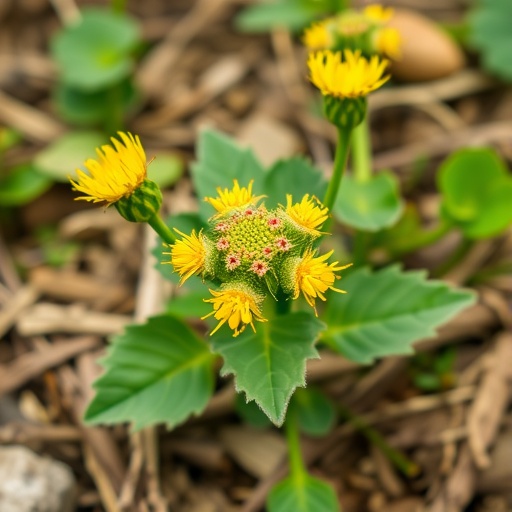
In a groundbreaking study published in the journal 3 Biotech, researchers have delved into the intricate world of phytochemistry, focusing their attention on the valuable fruit extract of Tribulus terrestris. This plant, known for its historical use in traditional medicine, has been under the scientific spotlight thanks to its potential health benefits that may not only enhance physical performance but also provide a plethora of other biological activities. The meticulous research conducted by Srinivasan et al. emphasizes not just the plant’s phytochemical composition but also its biological effects and molecular interactions through innovative in vitro and in silico methodologies.
The quest to understand Tribulus terrestris is not merely another chapter in phytochemical research; it marks a significant pivot towards integrating ancient wisdom with modern scientific inquiry. In their work, the authors comprehensively catalog the essential phytochemicals that are responsible for the various bioactive properties of the plant. Among these compounds, saponins, flavonoids, and alkaloids have been identified as the key players contributing to its therapeutic efficacy. Each of these classes of compounds has been studied for their roles in human health and disease prevention, thus providing a rich field of research opportunities.
Moreover, the team’s exploration of biological activities linked to the ethanolic fruit extract presents promising implications for various medical applications. Drawing on extensive data, the researchers detailed how Tribulus terrestris exhibits antioxidant, anti-inflammatory, and antimicrobial properties. The antioxidant capacity, in particular, may serve as a fundamental mechanism through which the plant helps in combating oxidative stress, which is a factor implicated in numerous chronic diseases, including cancer and cardiovascular disorders. The implications of these findings are vast, suggesting prospective pathways for therapeutic interventions that leverage the natural benefits afforded by this extraordinary plant.
One of the most innovative aspects of the study lies in their application of molecular docking studies. Utilizing computational methods allows for a deeper inspection of the molecular interactions between the phytochemicals and target proteins involved in various biological pathways. This in silico approach furnishes a blueprint for understanding how the chemical constituents of Tribulus terrestris bind with specific receptors, potentially bolstering our comprehension of its pharmacological effects. Moreover, by elucidating these interactions, the researchers open doors for the development of new therapeutic agents that could harness the plant’s properties in more targeted and effective ways.
In vitro experiments further validate the real-world applicability of their findings. The researchers employed diverse cell lines to test the efficacy of the ethanolic extract, monitoring its effects under laboratory-controlled conditions. The results displayed a significant enhancement in cellular health and proliferation, indicating the extract’s potential role in promoting overall wellness. As the scientific community continues to seek natural alternatives to synthetic drugs, such data solidifies Tribulus terrestris‘s position as an important candidate for further research.
The study also highlights the growing trend of harmonizing traditional herbal remedies with contemporary biochemical research practices. By incorporating methods such as gas chromatography-mass spectrometry (GC-MS) and high-performance liquid chromatography (HPLC) in identifying and quantifying the phytochemicals, the authors exemplify a robust approach to validating traditional knowledge through empirical evidence. This blend of old and new not only enriches the scientific debate surrounding herbal medicine but also lays the groundwork for future explorations that could yield novel insights into plant-based therapies.
As researchers analyze the ramifications of their work, certain challenges become apparent. For one, the variability in the phytochemical profiles of Tribulus terrestris due to factors such as geographical location, plant maturity, and extraction methodologies should be emphasized. Future studies must address these variables to ensure consistency and reliability in therapeutic applications. Additionally, the complexity of human physiology, with its myriad interactions and responses to phytochemicals, begs a cautious approach as researchers delve further into clinical applications.
The ongoing dialogue within the scientific community underscores the necessity for interdisciplinary approaches in herbal research. Collaboration between botanists, chemists, pharmacologists, and clinicians is becoming increasingly vital as researchers strive to translate findings from the bench to the bedside effectively. By sharing insights and pooling expertise, a more holistic understanding of Tribulus terrestris and similar botanical resources can emerge, fostering the development of integrative treatment options.
In conclusion, Srinivasan et al.’s research on Tribulus terrestris serves as a lighthouse guiding the way forward in the field of phytochemistry. Their findings not only illuminate the plant’s rich chemical diversity and biological potential but also stimulate a broader conversation about the relevance of ethnobotany in modern medicine. As science continues to embrace the wisdom of nature, exploring plants like Tribulus terrestris may unlock new dimensions in healthcare, promoting preventive strategies and enhancing quality of life.
This compelling research lays a strong foundation for future investigations into Tribulus terrestris, urging both academic inquiry and clinical trials to engage with its promising constituents. As academia and industry work hand-in-hand, the integration of such herbal extracts in therapeutic regimens could very well redefine our understanding of health and wellness in the 21st century. The journey of Tribulus terrestris from traditional practice to scientific scrutiny exemplifies the transformative power of research, holding the potential to bridge generations of knowledge in pursuit of better health solutions for all.
Furthermore, the rising scientific interest in herbal remedies can not be overlooked. Global health trends show a marked shift towards natural products as consumers become more aware of their ingredients and the potential side effects of synthetic alternatives. The research findings about Tribulus terrestris not only cater to this demand but also enlighten the public on the superior efficacy of certain phytochemicals, advocating for a more profound respect for nature’s offerings in modern therapeutics.
This synergy of ancient knowledge and contemporary science is encouraging for future research initiatives, promising a resurgence of herbal medicine grounded in rigorous scientific methodology. As further studies unfold, the full spectrum of benefits offered by Tribulus terrestris and similar plants will likely come to light, enriching both the scientific literature and the therapeutic arsenal available to clinicians worldwide.
Through meticulous research efforts like that of Srinivasan et al., the narrative surrounding botanical medicine continues to evolve, inviting more stakeholders to participate in the quest for sustainable health practices that honor our connection to nature while embracing scientific rigor.
In this era where health-conscious decisions are paramount, uncovering and harnessing the power of plants like Tribulus terrestris is not just enlightening; it may be essential for crafting a sustainable healthcare future, where nature and science coalesce to foster wellness, longevity, and vitality.
Subject of Research: Phytochemical composition and biological activities of Tribulus terrestris.
Article Title: Correction: Phytochemical composition, biological activities, and molecular docking studies of ethanolic fruit extract of Tribulus terrestris: an in vitro and in silico approach.
Article References:
Srinivasan, M.K., Maran, J., Prasad, M. et al. Correction: Phytochemical composition, biological activities, and molecular docking studies of ethanolic fruit extract of Tribulus terrestris: an in vitro and in silico approach. 3 Biotech 16, 30 (2026). https://doi.org/10.1007/s13205-025-04669-9
Image Credits: AI Generated
DOI:
Keywords: Tribulus terrestris, phytochemicals, biological activities, molecular docking, health benefits, herbal medicine, antioxidant, anti-inflammatory, in vitro, in silico.


