


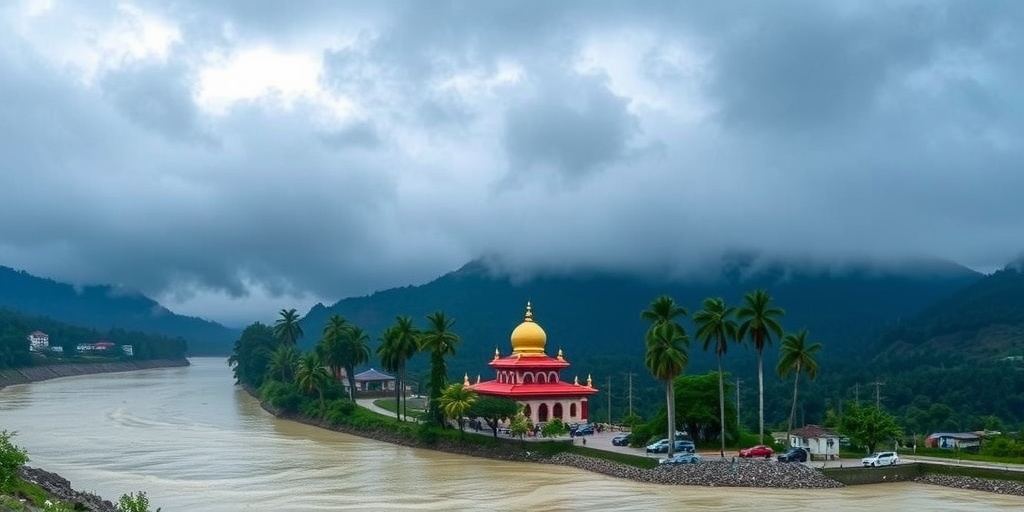
In the heart of the Himalayas, the 2023 Sikkim glacial lake outburst flood (GLOF) marks a significant environmental disaster that underscores the formidable risks posed by climate change. This catastrophic event, which unfolded on October 3, 2023, spotlighted not only the peril of glacial lake instability but the pressing need for advanced monitoring and risk management strategies in regions vulnerable to such natural calamities. The unfortunate occurrence claimed 55 lives and left 74 individuals missing, revealing just how devastating these incidents can be to local communities and infrastructure.
At the crux of this disaster is South Lhonak Lake, a glacial body that has seen rapid expansion over the years. Situated at an alarming altitude of 5,200 meters above sea level within Sikkim’s Upper Teesta basin, South Lhonak Lake exemplifies the changing landscape of glacial formations due to climate-driven influences. As glaciers melt, the risk of GLOFs increases, making this lake particularly perilous. The research initiated by Ashim Sattar and colleagues provides a vital examination of the factors surrounding the outburst, emphasizing the need for enhanced early warning systems and risk assessment methodologies.
The trigger for the Sikkim flood was a landslide that transported an overwhelming volume of frozen sediment—specifically, 14.7 million cubic meters—into the glacial lake. This sudden influx catalyzed the generation of a tsunami-like wave estimated at around 20 meters in height. In an instant, the lake’s capacity was breached, culminating in the rapid release of roughly 50 million cubic meters of water into the surrounding valley, unleashing a torrent of destruction that rippled downstream. This kind of cascading failure, with its profound implications on sediment transport and erosion, is a clarion call for the need to rethink current predictive models of GLOFs.
Building on these observations, scientists have articulated how climate change ultimately set the stage for this catastrophic event. Sikkim et al. emphasize that heavy rainfall preceding the incident saturated the geological landscape, creating conditions ripe for the landslide that precipitated the disaster. The connection between climate warming and increased GLOF risks is becoming clearer; as temperatures rise and weather patterns shift, landscapes in high-altitude regions are increasingly at risk.
The implications of the Sikkim disaster extend far beyond immediate fatalities and infrastructural damage. The flood’s destructive path reached significant distances, affecting areas in Sikkim, West Bengal, and even as far as Bangladesh. To grapple with the repercussions of this event, we must consider not just immediate responses but also long-term strategies for risk mitigation, particularly concerning vital infrastructure such as the Teesta-III hydropower dam, which suffered catastrophic damage as a result of the flooding.
Current GLOF prediction and detection methodologies often fall short when confronted with the compounding effects of erosion and sediment dynamics. Traditional models have not accurately captured the full extent of cascading processes, thus underscoring the inadequacies in our understanding of these complex systems. Such limitations can have dire consequences when people’s lives and livelihoods are at stake. To address this, the scientific community is called to update and refine GLOF models to incorporate the variables that were markedly absent during this catastrophic event.
In addition to re-assessing predictive models, the necessity for enhanced early warning systems cannot be overstated. The catastrophic nature of the Sikkim event demonstrates that communities near glacial lakes must have advanced notifications and mechanisms in place to prepare for potential outbursts and ensuing floods. The integration of scientific data, real-time observations, and community engagement is vital in creating a robust early warning infrastructure that can effectively safeguard populations.
Policy reforms are another crucial element in addressing the threats posed by GLOFs. Governments and international organizations must collaborate to develop resilient frameworks that consider climate adaptation and disaster preparedness. By reallocating resources and investing in infrastructure that can withstand extreme weather events, societies can build resilience. Countries with vulnerable high-altitude regions, such as India and its neighbors, must prioritize collaborative efforts to share data and strategies aimed at overcoming these ongoing challenges.
Communities must also be educated about the risks associated with glacial lakes and their propensity to cause disasters. This awareness can empower local populations with knowledge on what steps to take in the event of a warning, reducing panic and enhancing safety protocols. Engaging residents in monitoring and reporting changes can additionally strengthen local resilience and enhance community-level responses to emerging threats.
The story of the Sikkim flood serves as a stark reminder of our planet’s changing climate and the increasing challenges it brings. While the immediate aftermath of the catastrophe presents a sobering reality, it also reflects a crucial juncture for science, policy, and community engagement. With a collective commitment to enhancing GLOF understanding, developing early warning systems, and reforming policies, we can better navigate the complexities of climate-related hazards.
In conclusion, the need for actions informed by the tragic events of October 2023 in Sikkim cannot be overstated. The insights gleaned from scientific analyses must be channeled into concrete measures that prevent recurrence and strengthen responses to natural disasters. Through focused efforts aimed at understanding, preparedness, and resilience, communities can better withstand what may increasingly become a frequent reality in a warming world.
Cite Scienmag News
Violet Maxwell. (January 30, 2025). Exploring the Drivers, Causes, and Consequences of the 2023 Sikkim Flood in India. Scienmag. https://scienmag.com/exploring-the-drivers-causes-and-consequences-of-the-2023-sikkim-flood-in-india/
Violet Maxwell. "Exploring the Drivers, Causes, and Consequences of the 2023 Sikkim Flood in India." Scienmag, 30 January 2025, https://scienmag.com/exploring-the-drivers-causes-and-consequences-of-the-2023-sikkim-flood-in-india/. Accessed 3 September 2026.
Violet Maxwell. "Exploring the Drivers, Causes, and Consequences of the 2023 Sikkim Flood in India." Scienmag. January 30, 2025. https://scienmag.com/exploring-the-drivers-causes-and-consequences-of-the-2023-sikkim-flood-in-india/


