

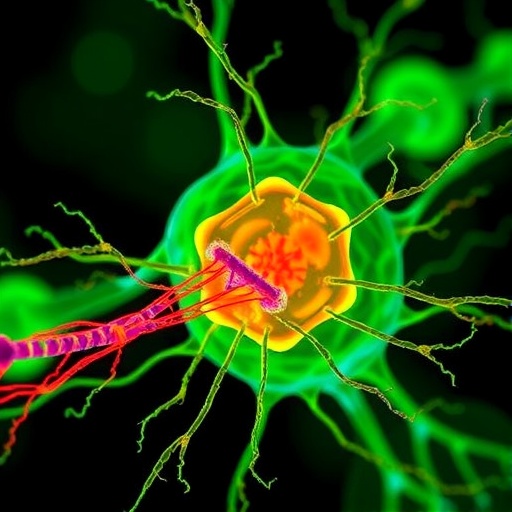
Recent advances in immunology have brought to light the complex and intricately choreographed processes that occur at the cellular level, particularly involving T cell receptors (TCRs). In the pivotal research conducted by Travaglino, Jeon, Kim, and others, the authors delve into the phenomenon of mechanotransduction in T cells, an area of study that is both burgeoning and contentious. The concept of mechanotransduction refers to how cells sense and respond to mechanical stimuli in their environment. The implications of this research stretch far beyond fundamental biology, offering insight into potential therapeutic innovations.
At the core of T cell activation lies the TCR, a molecular complex integral to the immune response. TCRs are responsible for recognizing antigens presented by major histocompatibility complex (MHC) molecules on the surfaces of other cells. The binding of TCRs to these antigens not only initiates a cascade of signaling events leading to T cell activation but is also influenced by the mechanical properties of the cellular environment. This interaction between biomechanics and biochemistry has emerged as a critical area of investigation for scientists aiming to unravel the true functionality of the immune system.
Mechanotransduction in T cells represents a dualistic paradigm where mechanical forces can enhance or inhibit immune responses. For instance, studies indicate that physical forces experienced by T cells, such as shear stress in the bloodstream or tension exerted by surrounding cellular matrices, can significantly modulate the strength and duration of TCR signaling. In line with this, it has been observed that T cells exhibit different activation thresholds based on their mechanical surroundings, a discovery that may revolutionize our understanding of immune modulation.
This position is supported by a body of work that highlights the necessity of mechanobiology within the immune system, providing a framework for future research aimed at delineating how mechanical inputs are transduced into chemical signals that ultimately govern cellular behavior. One particularly intriguing aspect noted by Travaglino and colleagues is the role of TCR clustering—a process influenced by mechanical interactions. When under mechanical stress, TCRs can cluster together more efficiently, which in turn amplifies the signaling that promotes T cell activation.
Hotly debated within the scientific community are the mechanisms through which such mechanotransductive processes occur. While various models have been proposed, a definitive consensus remains elusive. Some researchers advocate for the restructuring of cytoskeletal components as a primary means by which T cells translate mechanical pressure into biochemical signals. Alternatively, others suggest that TCR interactions with the cytoplasmic tail could play a more pivotal role in initiating intracellular signaling cascades in response to mechanical stimuli.
Another area of contention revolves around the functional consequences of mechanotransduction on T cell differentiation and memory formation. Observations suggest that the mechanical environment not only influences immediate T cell responses but may also affect the long-term functionality of T cells. For example, T cells exposed to high mechanical forces might develop enhanced capabilities, resulting in improved efficacies during subsequent encounters with pathogens. Conversely, a suboptimal mechanical environment might hinder T cell development, potentially leading to compromised health outcomes.
As this area of research progresses, the implications for developing novel immunotherapies are profound. Envision therapies that leverage mechanical signals to enhance T cell efficacy against tumors or chronic infections. For instance, incorporating biomaterials designed to modulate mechanical forces on T cells could optimize their activation and functionality, creating a new class of immunotherapeutic strategies.
Moreover, the intersection of mechanotransduction research with engineering principles offers exciting prospects for advancing personalized medicine. By customizing the mechanical environments of T cells in vitro before infusion into patients, clinicians might optimize the therapeutic effects of T cell therapy. Such bioengineering approaches may usher in a transformative era of immune therapies tailored to individual patients, thereby enhancing the overall efficacy of interventions in chronic diseases and cancer treatments.
Despite the promising horizons mechanotransduction unveils, further investigation is essential to elucidate the nuanced interactions between mechanical properties and cellular responses. By addressing the existing controversies and filling the research gaps, scientists can better understand T cell biology, leading to enhanced therapeutic strategies that harness the inherent capabilities of the immune system in a mechanically sophisticated manner.
Ultimately, the future landscape of immunology will likely be shaped by our understanding of mechanotransduction in T cells. The challenge lies not merely in discovering the underlying mechanisms but also in translating that knowledge into applicable therapies that can significantly improve patient outcomes. The ongoing exploration of how mechanical forces influence T cell activation and function represents a fascinating frontier, one that is sure to yield groundbreaking discoveries in the years to come.
As we endeavor into this complex yet rewarding field, the findings from this research pave the way for developing innovative treatments that not only enhance the immune response but also redefine how we approach diseases from an immunological perspective. The discourse surrounding mechanotransduction will only intensify, indicating a robust trajectory for future studies that will strategically sharpen our understanding of immune cell behavior and function.
Subject of Research: Mechanotransduction through T cell receptors.
Article Title: Mechanotransduction through T cell receptors: consensus, controversies and future outlooks.
Article References:
Travaglino, S., Jeon, Y., Kim, Y. et al. Mechanotransduction through T cell receptors: consensus, controversies and future outlooks. Exp Mol Med (2026). https://doi.org/10.1038/s12276-026-01639-w
Image Credits: AI Generated
DOI: 10.1038/s12276-026-01639-w
Keywords: Mechanotransduction, T cell receptors, immunology, T cell activation, mechanobiology, immune response, cancer immunotherapy.


