

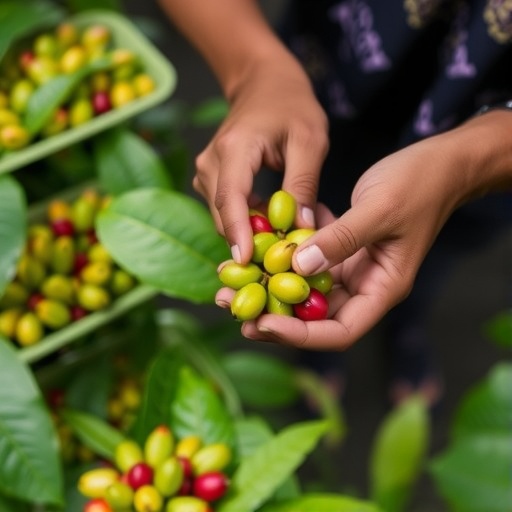
In a recent study, researchers have unveiled critical dynamics within family coffee farming in Brazil, emphasizing the intricate relationship between relational spaces and sustainability. Coffee, being one of the most economically significant agricultural products globally, is under increasing pressure to adapt to changing environmental and social paradigms. The research illuminates how familial ties, local practices, and sustainability initiatives interplay to sustain coffee farming in a rapidly evolving landscape. This study offers significant insights relevant to policymakers, agricultural practitioners, and sustainability advocates, highlighting the need for a nuanced understanding of social relations in agricultural practices.
Family coffee farms play a pivotal role in Brazil’s economy and social fabric. These farms, often passed down through generations, exemplify traditional practices blended with modern sustainability efforts. The research focuses on how different social structures among family members foster resilience against challenges posed by climate change and market fluctuations. This multidimensional approach allows for a comprehensive view of sustainability that goes beyond mere financial viability, incorporating social and environmental dimensions that are often overlooked.
In exploring relational spaces, the researchers identified how intertwined relationships between family members, local communities, and broader stakeholder networks shape farming practices. The creation of these spaces is critical to fostering collaboration, knowledge sharing, and adaptive strategies that enhance sustainability. For instance, families often engage in collective decision-making, which leads to more informed choices regarding the adoption of eco-friendly practices and resource management. This cooperative approach not only strengthens the family unit but also builds community resilience.
The findings of this study underline the importance of understanding cultural values and local knowledge systems in promoting sustainable coffee farming. Traditional practices, often rooted in ancestral wisdom, have shown to be effective in managing resources sustainably. By integrating modern sustainability initiatives with these age-old techniques, farmers can foster an ecosystem that supports both the environment and the local economy.
Moreover, family structures significantly influence the generational transfer of knowledge and skills in coffee farming. The study reveals how mentorship roles within families help younger generations to acquire critical farming competencies while instilling a sense of responsibility towards sustainable practices. This intergenerational transfer is crucial for ensuring the longevity of both the farming methods and the family-owned business itself, creating a symbiotic relationship with nature and the market.
The role of external factors, such as government policies and economic incentives, is also examined in the context of sustainability in family coffee farms. Government initiatives aimed at promoting sustainable agriculture, such as financial assistance programs and training workshops, can enhance the capacity of family farmers to implement environmentally friendly practices. However, the study highlights the necessity for tailored policies that understand the unique social dynamics of family-run farms to be truly effective.
Furthermore, the research demonstrates how broader market trends and consumer preferences are driving changes in coffee farming practices. As consumers increasingly demand sustainably sourced products, family farms that adapt to these trends can access new markets and potentially increase their revenue streams. This economic incentive also encourages farmers to maintain sustainable practices, creating a win-win situation for both the environment and the economy.
Additionally, the study emphasizes the importance of collaboration among various stakeholders, including NGOs, government entities, and academic institutions. Partnerships that facilitate knowledge exchange and resource sharing can amplify the sustainability efforts of family coffee farms, fostering innovation and resilience. The convergence of diverse perspectives can lead to the development of holistic solutions that address both environmental and social challenges faced by these farms.
The implications of this research extend beyond Brazil, as the dynamics uncovered reflect a global trend in family farming. Regions around the world face similar challenges associated with climate change, market demands, and social structures. By understanding the relational aspects of farming, stakeholders globally can draw lessons from Brazil’s family coffee farming experience, applying these insights to enhance sustainability in their local contexts.
As technology continues to evolve, the integration of digital tools in family farming is becoming increasingly relevant. The researchers suggest that digital platforms can facilitate communication and knowledge sharing among family members and external stakeholders. By leveraging technology, farmers can enhance record-keeping, optimize resource management, and access markets more efficiently, which can greatly contribute to sustainability initiatives.
In conclusion, the study titled “Relational spaces and sustainability dynamics in family coffee farming in Brazil” presents a comprehensive analysis of the socio-environmental intricacies inherent in coffee farming. By underscoring the value of relational spaces—the complex web of social interconnections—the researchers shine a spotlight on a crucial but often overlooked aspect of sustainable agriculture. This narrative of sustainability illuminates the path forward for family farms, fostering resilience and adaptability against a backdrop of global change.
The urgent need for innovative, culturally relevant solutions in the agricultural sector emphasizes that the challenges of sustainability cannot be addressed in isolation. The relational dynamics observed in Brazilian family coffee farming serve as a compelling case study for understanding the broader systemic approaches necessary for achieving long-term sustainability in agriculture worldwide.
As discourse surrounding the future of farming evolves, it is imperative that we acknowledge the vital role of social relationships in cultivating resilient agricultural communities. The exchange of knowledge, reciprocity, and mutual support among family farmers can drive transformative change that surpasses individual farm boundaries, ultimately contributing to sustainable food systems and ecological health on a global scale.
Understanding relational spaces through this research opens up new possibilities for enhancing collaboration and stakeholder engagement, setting the stage for a more sustainable future not only for coffee farming but for agriculture as a whole.
Strong governance, community engagement, and the integration of modern sustainability practices are the cornerstones of the pathway to resilience. As this important research highlights, the future of family coffee farming in Brazil is intrinsically tied to harnessing these relational spaces, offering a promising model for sustainable agricultural practices worldwide.
Subject of Research: Family Coffee Farming and Sustainability Dynamics in Brazil
Article Title: Relational spaces and sustainability dynamics in family coffee farming in Brazil.
Article References: Rocha, G.A., Silva, M.R., da Cunha Neto, A.R. et al. Relational spaces and sustainability dynamics in family coffee farming in Brazil. Discov Sustain 6, 1384 (2025). https://doi.org/10.1007/s43621-025-02212-7
Image Credits: AI Generated
DOI: https://doi.org/10.1007/s43621-025-02212-7
Keywords: sustainability, family farming, coffee, relational spaces, Brazil


