

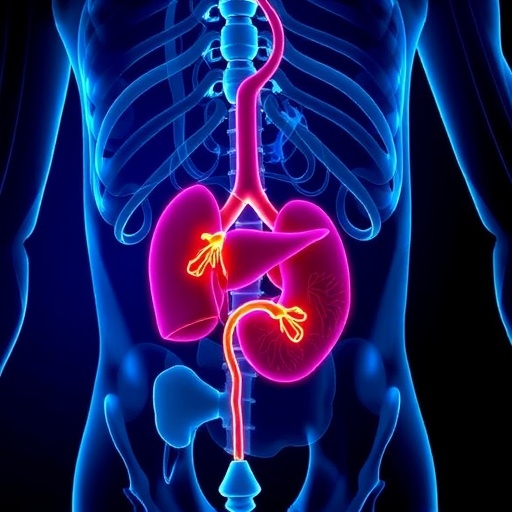
In a groundbreaking new study published in the Annals of Hematology, researchers led by Ke and Nan delve into the complexities surrounding primary urinary tract lymphoma (PUTL), a rare but significant form of cancer affecting the urinary system. The study, titled “Population-Based Analysis of Conditional Survival Patterns and Dynamic Prognostic Modeling in Primary Urinary Tract Lymphoma,” sheds light on the intricate survival dynamics of patients diagnosed with this disease. With the potential to redefine prognostic approaches, this research could have far-reaching implications for patients and healthcare providers alike.
One of the fundamental aspects of this study is the methodology employed to analyze survival patterns among PUTL patients. Ke and Nan utilized population-based data, analyzing a cohort of individuals diagnosed with this condition over an extended period. Through advanced statistical models and dynamic prognostic techniques, they aimed to uncover how survival probabilities evolved over time for these patients. The implications of their findings can significantly affect patient management strategies and treatment decision-making processes.
The researchers focused on conditional survival, which takes into account the fact that the prognosis of cancer patients changes as they survive longer after diagnosis. For PUTL, this is particularly crucial due to its varied biological behavior and treatment responses. By assessing conditional survival patterns, the study reveals that patients who reach certain time milestones post-diagnosis may experience significantly different survival probabilities than those newly diagnosed. Understanding these dynamics could empower healthcare providers to offer better-informed prognostic advice.
In addition to survival analysis, the researchers introduced dynamic prognostic modeling as a pivotal component of their study. This innovative approach allows for continuous updates of survival probabilities based on the most recent data, facilitating a more accurate and personalized approach to patient care. By integrating clinical and demographic variables, such as age, sex, and treatment history, the model dynamically adjusts predictions of survival outcomes. This is especially relevant for conditions like PUTL, where treatment responses can significantly vary among patients.
Moreover, the study emphasizes the variance in treatment outcomes based on geographical and demographic differences. By employing a population-based approach, Ke and Nan illuminate how various factors, including socioeconomic status and access to healthcare, may contribute to differences in survival rates. Such insights serve as a call to action for healthcare systems to address disparities and ensure equitable treatment opportunities for all patients diagnosed with PUTL, regardless of their backgrounds.
Another essential aspect of the research illustrates the importance of early detection and timely intervention in improving survival outcomes. The authors advocate for heightened awareness and screening protocols for urinary tract lymphoma, particularly in at-risk populations. This could potentially enhance early diagnosis and, by extension, increase the chances of successful treatment outcomes. Their findings underscore the need for ongoing research into the factors that affect early detection rates and the effectiveness of different treatment modalities.
Additionally, the research highlights the role of molecular and genetic factors in determining patient prognosis. Understanding the underlying biological mechanisms associated with PUTL could pave the way for more targeted therapeutic approaches. The integration of genetic profiling into dynamic prognostic models is an appealing prospect, as it could lead to personalized treatment regimens based on the specific characteristics of an individual’s lymphoma.
The researchers also underline the role of multidisciplinary teams in managing complex cases of PUTL. Given the disease’s rarity, collaboration among oncologists, urologists, pathologists, and support staff is crucial for determining the best treatment pathway for patients. A comprehensive care approach not only fosters better communication but also ensures that all aspects of a patient’s health—physical, emotional, and psychological—are considered in their treatment plan.
As healthcare continues to evolve with technological advancements, Ke and Nan’s study exemplifies how data-driven approaches can significantly enhance patient care in oncology. The potential integration of machine learning algorithms with dynamic prognostic models could further refine survival predictions, ultimately leading to more informed clinical decisions.
Furthermore, the study reinforces the significance of patient engagement in their treatment journey. By understanding the nuances of their prognosis, patients can make educated decisions that align with their values and preferences. This creates an opportunity for healthcare providers to foster collaborative relationships with their patients, where shared decision-making becomes a central aspect of cancer care.
In conclusion, Ke and Nan’s work provides a comprehensive overview of the factors influencing survival rates in primary urinary tract lymphoma. Their findings advocate for a paradigm shift in how prognostic information is conveyed and utilized in clinical practice, emphasizing the necessity for individualized approaches to patient care. As the research calls for further exploratory studies, it lays the groundwork for future advancements in treating a disease that has historically been under-researched.
As the medical community continues to grapple with the challenges presented by malignancies like PUTL, it is clear that dedicated research efforts like those of Ke and Nan are integral to improving patient outcomes and reshaping the landscape of cancer treatment.
Subject of Research: Primary urinary tract lymphoma survival patterns and prognostic modeling.
Article Title: Population-Based analysis of conditional survival patterns and dynamic prognostic modeling in primary urinary tract lymphoma.
Article References:
Ke, R., Nan, C. Population-Based analysis of conditional survival patterns and dynamic prognostic modeling in primary urinary tract lymphoma.
Ann Hematol 105, 58 (2026). https://doi.org/10.1007/s00277-026-06836-1
Image Credits: AI Generated
DOI: https://doi.org/10.1007/s00277-026-06836-1
Keywords: Primary urinary tract lymphoma, conditional survival, dynamic prognostic modeling, prognosis, patient care.


