


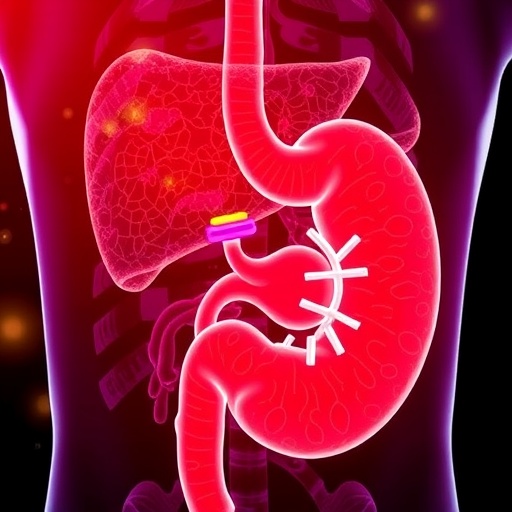
Gastric cancer remains one of the leading causes of cancer-related mortality globally, with its complex pathophysiology posing significant challenges to effective treatment. Recent studies have shed light on the role of post-translational modifications, particularly SUMOylation, in the development and progression of gastric cancer. SUMOylation, the process by which small ubiquitin-like modifiers (SUMOs) are covalently attached to target proteins, plays a pivotal role in regulating crucial cellular processes, including transcription, signal transduction, and DNA repair. Research reveals that aberrations in SUMOylation pathways can contribute to tumorigenesis, making them a compelling focus for therapeutic intervention.
Understanding the delicate balance of SUMOylation in normal cellular function is critical when deciphering its implications in gastric malignancies. Under physiological conditions, SUMOylation modulates protein stability, localization, and activity. However, in cancerous cells, this regulation becomes altered, leading to enhanced survival, proliferation, and resistance to apoptosis. Gastric cancer cells often exhibit an upregulation of SUMOylation activity, facilitating a more aggressive tumor phenotype. This connection between SUMOylation and the cancer hallmark traits invites deeper investigation into the molecular mechanisms at play.
Studies indicate that SUMOylation affects various signaling pathways integral to gastric cancer progression, including the p53, NF-κB, and Wnt pathways. For instance, p53, a well-known tumor suppressor, undergoes SUMOylation, which can either enhance its stability and activity or promote its degradation depending on the cellular context. Such intricate partnerships between sumoylated proteins and signaling pathways amplify the potential for SUMOylation-modulating therapies in treating gastric cancer.
Moreover, emerging evidence suggests that SUMOylation serves as a determinant in the tumor microenvironment. Inflamed tissues and specific immune responses can alter SUMOylation patterns, impacting cancer cell interaction with the immune system. In gastric cancer, this modulation of the immune landscape through SUMOylation could be exploited to enhance immunotherapeutic strategies, potentially leading to improved patient outcomes.
Owing to the multifunctional nature of SUMOylation, researchers are now exploring SUMOylation inhibitors as therapeutic agents. Several small molecules targeting SUMOylation have shown promise in preclinical models, providing a potential avenue for the development of novel treatment regimens. As the field of targeted therapies continues to evolve, these SUMOylation inhibitors could revolutionize the approach to managing gastric cancer and similar malignancies.
In addition to traditional pharmacological approaches, gene therapy targeting the SUMOylation pathways presents a transformative strategy. Employing CRISPR/Cas9 technology in manipulating genes associated with SUMOylation could enable precise cancer cell targeting. This type of innovative strategy provides a promising outlook for therapeutic modalities that harness the specificity of SUMOylation alterations.
The integration of SUMOylation research into clinical practice also encompasses the identification of biomarkers associated with treatment response. By characterizing SUMOylation profiles in gastric cancer patients, oncologists may be able to stratify patients based on predicted responses to SUMOylation-targeted therapies. Such precision medicine approaches underscore the necessity to further elucidate the intricate relationship between SUMOylation and gastric cancer pathology.
The collaborative efforts across laboratories to unravel these complexities demonstrate the synergistic potential of interdisciplinary research. As gastroenterologists and molecular biologists continue to examine the mechanistic roles of SUMOylation, the anticipation of translational breakthroughs grows stronger. The implications of these findings stretch beyond gastric cancer, opening pathways for investigational studies in other cancer types where SUMOylation plays a role in disease progression.
Despite the promising developments, many questions remain unanswered. Clarifying the downstream effects of SUMOylation on various cellular signaling cascades and its interactions with other post-translational modifications requires extensive research. The dynamic nature of SUMOylation encourages ongoing studies to refine our understanding and harness this knowledge for new therapeutic strategies.
As this area of research matures, the concept of drug resistance linked to SUMOylation is gradually gaining recognition. The ability of cancer cells to adapt their SUMOylation patterns in response to treatment could explain some of the challenges faced in chemotherapeutic efficacy. Understanding how cancer cells evade therapeutic agents through SUMOylation will be instrumental in overcoming such hurdles.
Ultimately, the exploration of SUMOylation in gastric cancer not only enhances our understanding of tumor biology but also underscores the potential for novel therapeutic dividends. With continued investment in research and a focus on translating these findings into clinical practice, the dream of effectively managing gastric cancer may become a reality.
In conclusion, the intricacies of SUMOylation present an exciting frontier in the battle against gastric cancer. As scientists decode these mechanisms, the development of SUMOylation-based therapeutics and biomarker discovery could pave the way for a new era in personalized cancer care. The anticipation continues to build within the scientific community as new insights emerge, reinforcing the potential of SUMOylation in shaping the future of oncology.
Tabnak, P., Ebrahimnezhad, M. Insights into SUMOylation in gastric cancer: molecular mechanisms and emerging therapeutic opportunities.
J Cancer Res Clin Oncol 152, 2 (2026). https://doi.org/10.1007/s00432-025-06382-9
Cite Scienmag News
Nathaniel Bowman. (November 29, 2025). Exploring SUMOylation’s Role in Gastric Cancer Therapy. Scienmag. https://scienmag.com/exploring-sumoylations-role-in-gastric-cancer-therapy/
Nathaniel Bowman. "Exploring SUMOylation’s Role in Gastric Cancer Therapy." Scienmag, 29 November 2025, https://scienmag.com/exploring-sumoylations-role-in-gastric-cancer-therapy/. Accessed 5 September 2026.
Nathaniel Bowman. "Exploring SUMOylation’s Role in Gastric Cancer Therapy." Scienmag. November 29, 2025. https://scienmag.com/exploring-sumoylations-role-in-gastric-cancer-therapy/


