

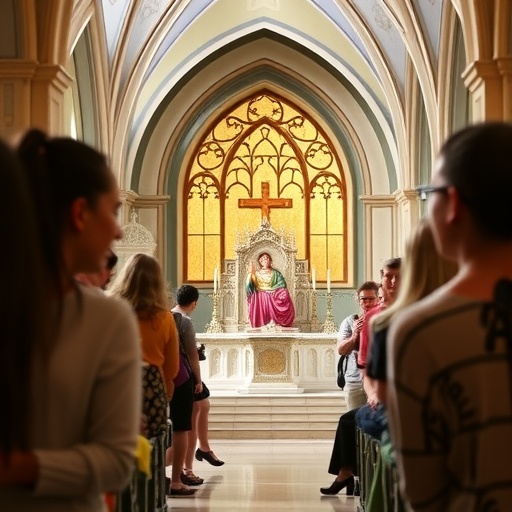
In recent years, education systems around the world have been constantly evolving, attempting to adapt to the changing dynamics of society. One fascinating area of exploration within this context is the way students perceive religion, particularly in environments where faith plays a significant role in their education. This is precisely what the research conducted by Hadley, Robinson, and Mitton delves into, focusing on elite Catholic schools. The study outlines the nuanced views students harbor regarding their religious education and engagement, shedding light on how these perceptions shape their identities and worldviews.
The Catholic education system has long been perceived as a bastion of academic excellence, frequently associated with tradition and rigorous educational standards. However, as society becomes increasingly pluralistic, the challenges within these establishments have likewise evolved. Students today are bombarded with diverse perspectives and ideologies, leading to a complex interplay between personal belief systems and institutional doctrines. Understanding how students within elite Catholic schools navigate their beliefs can yield vital insights for educators, parents, and policymakers alike.
The research identifies key themes that emerge from the students’ perceptions, notably their sense of agency regarding their spiritual journeys. Unlike previous generations that may have accepted religious teachings without question, today’s students often engage in critical discussions about faith and spirituality. This shift signifies a move towards empowerment, where young individuals feel entitled to voice their thoughts and concerns regarding the role of religion in their lives. This phenomenon can be partially attributed to an increasing emphasis on individualism in contemporary culture, where students are encouraged to forge their paths rather than conform to established norms.
Moreover, the research investigates how the school’s environment influences students’ religious beliefs. Elite Catholic institutions are often characterized by close-knit communities, which can provide a strong support system for students grounded in shared values. However, this same closeness can create pressure to conform, making it essential for educators to foster an environment where diverse opinions can coexist. Instances of peer influence may lead some students to internalize beliefs more aligned with their immediate social circles rather than their personal convictions, further complicating their understanding of faith.
Another pivotal aspect presented in the study is the role of curriculum in shaping students’ religious perceptions. The curriculum within these elite institutions often goes beyond conventional religious teachings, incorporating elements of social justice, ethics, and interfaith dialogue. Such an inclusive approach allows students to critically engage with not only their faith but also the faiths of others, expanding their understanding significantly. This broadening of perspectives can instigate salience of compassion, valorizing the importance of respect and dialogue in a rapidly globalizing world.
The researchers also delve into the impact of technology on how students engage with religious concepts. In an age defined by the internet and social media, students access a plethora of religious resources beyond the confines of their school libraries. This digital revolution allows them to participate in discussions and debates on faith that transcend geographical boundaries, providing a deeper understanding of the myriad ways in which religion is practiced and interpreted across the globe. This enhancement of exposure prompts students to develop opinions and beliefs that may differ significantly from those taught within their traditional educational environment.
Furthermore, the study highlights how students view the significance of community service and its connection to their faith. Many Catholic schools emphasize service as a crucial component of their educational philosophy, believing that hands-on experiences foster personal growth. Students frequently express how these experiences at community service projects reinforce their spiritual understanding and foster a stronger sense of responsibility toward societal issues. This real-world engagement can ultimately deepen their appreciation for their faith as they realize the tangible impacts of their actions.
Peer-led initiatives also emerge as a notable influence on religious perceptions, as students often create spaces within their schools where they can discuss spiritual matters freely. Such initiatives can manifest through student-led faith groups, retreats, or informal discussions, where peers provide each other with support and understanding. The importance of these initiatives cannot be overstated, as they create a platform for students to express doubts, share insights, and navigate challenges related to their faith without fear of judgment.
In the context of the pandemic, the researchers found that students’ engagement with religion was particularly affected. Many reported a sense of loss when religious rituals and community events were put on hold, revealing how integral these experiences were to their spiritual lives. While the pandemic hindered traditional methods of religious engagement, it also paved the way for creative adaptations, such as virtual services or online community discussions. This shift emphasizes the resilience of faith and the adaptability of students as they seek to maintain their religious connection during times of crisis.
A significant portion of students surveyed articulated feelings of disillusionment with the institutional aspects of their religious education. Questions regarding the alignment of their beliefs with the school’s teachings often overshadowed their spiritual journey. This disillusionment underscores the critical need for institutions to engage with students candidly about the evolving nature of faith and the importance of fostering an environment where inquiry is encouraged. A lack of direct communication may leave some students feeling alienated from their beliefs, which is counterproductive to the goals of religious education.
As the study draws conclusions, the authors emphasize several recommendations to better align the educational experiences of students with their religious identities. School administrators are urged to combat pressures of conformity by celebrating the diverse expressions of faith within their communities. Incorporating more initiatives focused on personal reflection, questioning, and critical engagement with religion are equally vital. By prioritizing these principles, educators can help cultivate an environment that honors students’ unique spiritual journeys while still reinforcing the core values of Catholic education.
This robust investigation into students’ perceptions of religion within elite Catholic schools highlights the intricate relationship between faith, education, and personal development in the contemporary landscape. As society continues to evolve, so too must the frameworks that govern religious education. Ultimately, the insights garnered from this research present opportunities not only for transformative education but also for fostering a deeper understanding of faith in a diverse world.
In conclusion, the study by Hadley, Robinson, and Mitton elucidates a significant area within religious education that requires ongoing attention and adaptation. By recognizing the complexities of students’ perceptions and actively engaging with their experiences, elite Catholic schools can continue to thrive as spaces of learning, faith, and community.
Subject of Research: Students’ perceptions of religion at elite Catholic schools.
Article Title: Students’ perceptions of religion at an elite Catholic school.
Article References:
Hadley, G., Robinson, D. & Mitton, J. Students’ perceptions of religion at an elite Catholic school.
j. relig. educ. (2025). https://doi.org/10.1007/s40839-025-00285-0
Image Credits: AI Generated
DOI:
Keywords: Elite Catholic schools, students’ perceptions, religious education, faith, community service, peer influence, technology, curriculum.


