

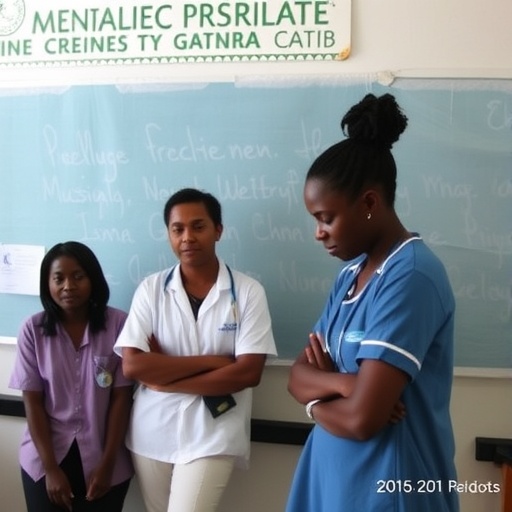
Nursing and midwifery students represent an integral segment of the healthcare workforce, tasked with developing the skills and knowledge necessary to care for patients in demanding environments. Despite their crucial role, the pressures faced by these students are frequently overlooked. A recent qualitative phenomenological study, conducted by researchers Anyidoho, Dartey, and Aryee, delves deep into the pervasive issue of stress among nursing and midwifery students in Ho municipality, Ghana. This pivotal research sheds light on the unique challenges these students encounter, contributing to a growing body of literature advocating for mental health awareness and supportive educational practices.
The study examines various factors that contribute to stress in the lives of nursing and midwifery students, revealing complex layers of pressure that stem from their academic workload, clinical placements, and emotional demands inherent to the profession. These findings underscore the necessity for healthcare education institutions to prioritize mental health support and cultivate an environment that encourages resilience among students. This is essential not only for the well-being of the students but also for maintaining high standards of patient care in the future.
Students pursuing nursing and midwifery careers often find themselves grappling with both academic and practical demands. Balancing rigorous coursework, clinical placements, and often personal obligations creates a perfect storm of stressors. The study identifies specific sources of stress, including time management challenges, fear of failing examinations, and concerns about clinical competencies, which can overwhelm even the most dedicated students. The implications of this stress are profound, potentially affecting learning outcomes, retention rates, and overall mental health.
Furthermore, the emotional toll of interacting with patients and their families cannot be ignored. Nursing and midwifery students are frequently exposed to situations involving trauma, loss, and high-stakes decision-making, which can lead to significant emotional distress. The study emphasizes that while engaging in clinical practice, students often experience a conflict between their academic responsibilities and the compassionate, empathetic care that is demanded by patients. This duality can lead to feelings of inadequacy and ultimately result in burnout if not addressed appropriately.
Interestingly, peer relationships also play a critical role in how nursing and midwifery students experience stress. The researchers found that a supportive peer network can alleviate some pressure, providing students with a sense of belonging and understanding. Conversely, competition among peers can exacerbate feelings of anxiety and inadequacy. The social dynamics within nursing programs are therefore a compelling area for further investigation, particularly considering the implications for academic success and mental health.
Notably, the findings of this study are not unique to Ghana; similar trends have been observed in nursing and midwifery programs worldwide. This global perspective highlights the urgent need for systemic changes in how educational institutions perceive and handle student stress. By implementing effective stress management programs and providing accessible mental health resources, schools can significantly improve students’ experiences and outcomes.
Equally important is the recognition of the broader systemic issues that contribute to student stress. Many students enter nursing and midwifery programs with financial burdens, which can intensify their academic pressures. The study points out that financial strain can limit students’ ability to focus on their studies, as they may work part-time or take on additional responsibilities to support themselves or their families. Addressing financial barriers is crucial in creating an equitable educational environment where all students have the opportunity to succeed.
The research also touches on the role of faculty in shaping the educational experience. Faculty members are often seen as resources for support; however, their understanding of student stress and mental health varies widely. Therefore, training faculty to recognize signs of stress and burnout among students can foster a more supportive educational atmosphere. Establishing open lines of communication between students and faculty can make a significant difference in addressing concerns before they escalate.
Alongside these findings, the study provides recommendations aimed at both educational institutions and policymakers. It advocates for the integration of mental health awareness into the nursing curriculum, suggesting that topics related to stress management, coping strategies, and emotional health be systematically incorporated. This proactive approach could significantly enhance students’ resilience and preparedness for the challenges they will face in their professional careers.
Moreover, the researchers emphasize the importance of institutional policies that prioritize mental health resources. This could include access to counseling services, stress-relief programs, peer support groups, and wellness initiatives designed to promote a balanced lifestyle. By fostering a culture of wellness, educational institutions can empower their students to navigate the challenges of their programs more effectively.
In conclusion, the qualitative phenomenological study conducted by Anyidoho, Dartey, and Aryee offers critical insights into the stressors faced by nursing and midwifery students in Ho municipality, Ghana. As the healthcare landscape continues to evolve, understanding and addressing the mental health needs of future providers is not just an educational imperative but a moral one. With the knowledge gained from this research, institutions have the opportunity to reshape their approaches, ultimately contributing to healthier students and, by extension, healthier communities. Moving forward, it will be essential to maintain a dialogue among educators, students, and policymakers to develop sustainable solutions that support the well-being of nursing and midwifery students everywhere.
Subject of Research: Stress among nursing and midwifery students in Ghana
Article Title: A qualitative phenomenological study of stress among nursing and midwifery students in Ho municipality Ghana
Article References:
Anyidoho, E.D., Dartey, A.F. & Aryee, A.N.T. A qualitative phenomenological study of stress among nursing and midwifery students in Ho municipality Ghana.
Discov Educ (2026). https://doi.org/10.1007/s44217-026-01154-0
Image Credits: AI Generated
DOI: 10.1007/s44217-026-01154-0
Keywords: Nursing students, midwifery students, stress, mental health, educational support, Ghana, peer relationships, faculty support.


