


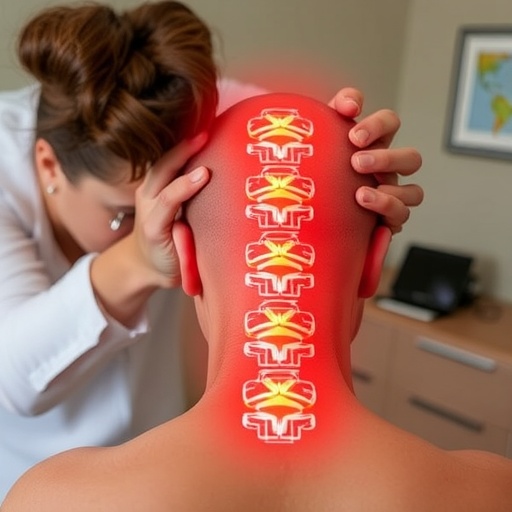
Spinal manipulation therapy (SMT) has garnered attention as a non-pharmacological treatment for a variety of conditions, particularly in managing headaches, which affect millions across the globe. In South Africa, recent research from Padayachy, Fatima, and Kahere, highlights the importance of understanding the existing evidence surrounding this therapeutic approach through a meticulous scoping review of grey literature. Their findings are expected to pave the way for enhanced clinical practices and evidence-based guidelines in managing headache disorders.
Headaches are a predominantly reported ailment, leading individuals to seek relief through various means, including medications, lifestyle changes, and alternative therapies. Among these, spinal manipulation therapy has emerged as a popular non-invasive option, presenting a compelling alternative for patients seeking relief without the side effects commonly associated with pharmaceutical medications. SMT focuses on the manipulation of the spine, which is believed to alleviate pain through realignment of vertebrae and improvement of overall spinal function.
What sets the research conducted by Padayachy and colleagues apart is its emphasis on grey literature, which encompasses information not peer-reviewed, typically published in academic settings, including theses, reports, and conference abstracts. This aspect of the research is crucial because it often contains valuable insights into ongoing practices and the real-world application of SMT within South African healthcare. By exploring these underrepresented data sources, the researchers provide a comprehensive picture of what exists in the field, often revealing a range of practices, outcomes, and patient experiences.
Within the ambit of this scoping review, the authors synthesized a wealth of qualitative and quantitative evidence that addresses the effectiveness of SMT for managing headache disorders. The review elucidates various studies conducted across South Africa, illuminating diverse perspectives on how patients and practitioners view and implement SMT in their treatment regimens. This depth of analysis is not merely academic; it represents the real-life implications and experiences of individuals who frequently turn to such therapies for relief.
Moreover, as the authors meticulously parsed through the existing grey literature, they highlighted this landscape’s significant knowledge gaps and challenges. For instance, the inconsistency in terminology, lack of standardization in treatment protocols, and varied patient outcomes lend credence to the need for further studies to enhance the reliability of findings related to SMT. It hints at an urgent requirement for the establishment of a framework to assess and standardize treatment practices, ultimately leading to improved patient care and outcomes.
The authors also pointed out the importance of interdisciplinary collaboration in advancing the understanding and practice of SMT. By working cohesively, chiropractic practitioners, medical doctors, and other healthcare providers can jointly enhance the holistic management of headache disorders. This collaboration is vital in contextualizing the role of SMT as part of a broader treatment strategy, which may include physiotherapy, medication, and lifestyle interventions.
Importantly, the researchers also shed light on the socio-cultural aspects influencing the adoption and acceptance of SMT among South African populations. Cultural perceptions of health and wellness significantly impact how individuals approach treatment options. Understanding these perceptions is essential for health practitioners when recommending spinal manipulation as a viable treatment option. Successfully addressing these cultural components can enhance patient engagement and inform more personalized treatment plans that align with individual beliefs and preferences.
The review emphasizes the need for ongoing education and professional development for spinal manipulation therapists. Enhancing practitioner skills and knowledge can help ensure that they remain abreast of the latest evidence and best practices. Furthermore, as new research continues to emerge, education encompasses not only learning new techniques but also understanding the underpinning science that supports these practices. This educational push will empower practitioners to deliver more effective interventions for headaches, ultimately leading to better patient outcomes.
Moreover, the review concludes with a solid acknowledgement of the need for future research in this realm. To further legitimize the use of SMT in headache management, researchers are urged to conduct robust clinical trials to generate higher-quality evidence, addressing existing uncertainties and validating treatment efficacy. Only through rigorous scientific inquiry can the true potential of spinal manipulation therapy be realized, creating a basis for its integration into mainstream healthcare approaches in South Africa and beyond.
Indeed, the journey of understanding spinal manipulation therapy for headaches is still in its infancy. The findings from Padayachy and colleagues serve not just to inform but also to inspire future inquiries that may unlock new facets in the management of headache disorders. As the body of literature surrounding SMT grows, it will be pivotal to monitor how these findings translate into clinical practice, with the ultimate goal of improving patient care through evidenced approaches.
In summary, as the landscape of healthcare continues to evolve, the findings from this scoping review offer critical insights that push the conversation forward. Addressing both the benefits and challenges of spinal manipulation therapy for headaches, this study serves as an important stepping stone toward enhancing clinical practices grounded in evidence-based approaches and improving the lives of countless individuals who suffer from chronic headache disorders.
Padayachy, K., Fatima, I., Kahere, M. et al. Mapping evidence of spinal manipulation therapy for headaches in South Africa: a scoping review of grey literature.
BMC Complement Med Ther 25, 294 (2025). https://doi.org/10.1186/s12906-025-05044-0
Cite Scienmag News
Ophelia Keating. (September 4, 2025). Exploring Spinal Manipulation Therapy for Headaches in SA. Scienmag. https://scienmag.com/exploring-spinal-manipulation-therapy-for-headaches-in-sa/
Ophelia Keating. "Exploring Spinal Manipulation Therapy for Headaches in SA." Scienmag, 4 September 2025, https://scienmag.com/exploring-spinal-manipulation-therapy-for-headaches-in-sa/. Accessed 5 September 2026.
Ophelia Keating. "Exploring Spinal Manipulation Therapy for Headaches in SA." Scienmag. September 4, 2025. https://scienmag.com/exploring-spinal-manipulation-therapy-for-headaches-in-sa/


