


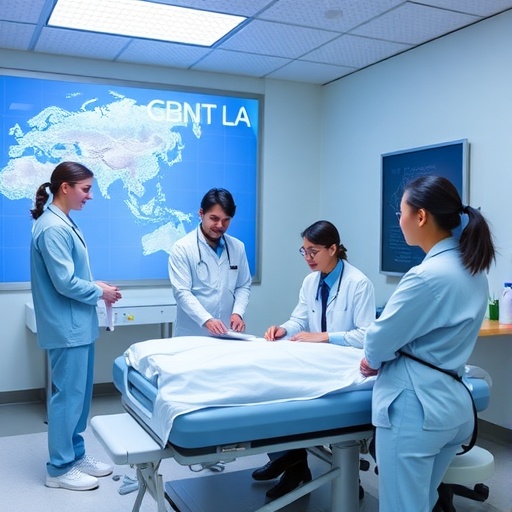
In the ever-evolving landscape of medical education, innovative teaching techniques are crucial for preparing the next generation of healthcare professionals. A recent scoping review conducted by Owolabi, Gardner, Agboola, and colleagues has highlighted a transformative approach to learning: the use of simulation in teaching biomedical sciences to undergraduate medical students. This research, published in BMC Medical Education, underscores the effectiveness of simulation-based learning and sets the stage for a deeper conversation about its implications and potential.
Simulation in medical education is not merely a passing trend; it embodies a comprehensive strategy to bridge the gap between theoretical knowledge and practical application. Medical students often face the daunting task of translating complex biomedical concepts into clinical competence. This transition can be fraught with challenges, including anxiety and a lack of confidence when facing real patients. The study reveals that simulation provides a safe, controlled environment in which students can practice and hone their skills without the immediate risks associated with patient care.
The review included an extensive analysis of existing literature on simulation techniques, drawing from a variety of sources to assess their effectiveness. Key findings indicate that students exposed to simulation training demonstrate improved clinical skills, enhanced critical thinking, and greater self-confidence. The ability to practice in a realistic, but risk-free environment allows students to refine their techniques repeatedly, making errors and learning from them without the fear of harming real patients.
One significant advantage of simulation-based education is its versatility. The research highlights various modalities of simulation, ranging from simple role-playing exercises to complex, high-fidelity simulations that involve life-like manikins and virtual reality technologies. Each method offers unique benefits, enabling educators to tailor their approaches to meet the specific needs of their students. High-fidelity simulations, for instance, can mimic real-life scenarios such as medical emergencies, immersing students in situations that require quick decision-making and teamwork.
Furthermore, the review draws attention to the importance of debriefing sessions following simulation exercises. These sessions are critical for fostering reflective learning, allowing students to discuss their experiences, receive feedback, and identify areas for improvement. This reflective practice not only reinforces learning but also cultivates a culture of continuous improvement among future healthcare providers.
As the researchers explored the landscape of simulation-based education, they also highlighted the growing body of evidence supporting its efficacy. Studies cited within the review demonstrate that not only do students appreciate simulation as a learning tool, but they also express heightened engagement and motivation in their studies. This enthusiasm translates into improved academic outcomes, suggesting that simulation might well be a key ingredient in enhancing the overall quality of medical education.
Despite its numerous advantages, the review does not shy away from discussing the challenges associated with implementing simulation training. For one, the cost of high-fidelity simulation equipment can be prohibitive for some institutions, especially those with limited funding. Additionally, there is a need for faculty development to ensure educators are adequately prepared to guide students through simulation exercises effectively. This aspect of training is vital, as the success of simulation in education largely hinges on the facilitators’ ability to encourage active learning and critical thinking.
The review sheds light on the necessity for further research to thoroughly evaluate the long-term impacts of simulation training on student performance and patient outcomes. While initial findings are promising, establishing a robust evidence base will be essential for driving the widespread adoption of simulation strategies in medical curricula. As the field continues to evolve, it will be crucial to identify best practices and establish standardized guidelines for implementing simulation in various educational settings.
The authors also advocate for an interdisciplinary approach to simulation training, suggesting that students from various healthcare professions could benefit from shared learning experiences. This collaborative model not only enhances teamwork skills but also promotes a holistic understanding of patient care, reinforcing the idea that effective healthcare hinges on an integrated approach among various specialties.
As medical education embraces simulation, the implications extend beyond the classroom or simulation lab. The skills and competencies acquired through these exercises prepare students to face the challenges of real-world clinical practice. Patients, in turn, benefit from well-trained professionals who can respond effectively to their needs. The ripple effects of enhanced education through simulation resonate throughout the healthcare system, fostering improved patient safety and outcomes.
In conclusion, the scoping review by Owolabi et al. serves as a critical reminder of the importance of innovative educational methods such as simulation in medical training. It speaks to the pressing need for educators and institutions to embrace these techniques, ensuring that the current and future generations of healthcare providers are well-equipped to meet the challenges of modern medicine. As the journey of medical education continues, the integration of simulation may well serve as a cornerstone for cultivating a workforce capable of delivering exceptional patient care.
The findings from this review serve as both a call to action and a beacon of hope for medical educators worldwide. By prioritizing simulation in their curricula, institutions can not only elevate the educational experience for students but also contribute positively to the overall landscape of healthcare delivery, ultimately enhancing the quality of care received by patients.
Now more than ever, the commitment to enhancing medical education through innovative practices is paramount. As the findings suggest, simulation has the potential to revolutionize how biomedical sciences are taught, creating a more competent and confident healthcare workforce ready to tackle the complexities of patient care.
Owolabi, J.O., Gardner, K., Agboola, R. et al. Use of simulation for teaching biomedical sciences to undergraduate medical students- a scoping review.
BMC Med Educ 25, 1259 (2025). https://doi.org/10.1186/s12909-025-07819-y
Cite Scienmag News
Courtney Benton. (September 27, 2025). Exploring Simulation in Biomedical Education for Students. Scienmag. https://scienmag.com/exploring-simulation-in-biomedical-education-for-students/
Courtney Benton. "Exploring Simulation in Biomedical Education for Students." Scienmag, 27 September 2025, https://scienmag.com/exploring-simulation-in-biomedical-education-for-students/. Accessed 5 September 2026.
Courtney Benton. "Exploring Simulation in Biomedical Education for Students." Scienmag. September 27, 2025. https://scienmag.com/exploring-simulation-in-biomedical-education-for-students/


