


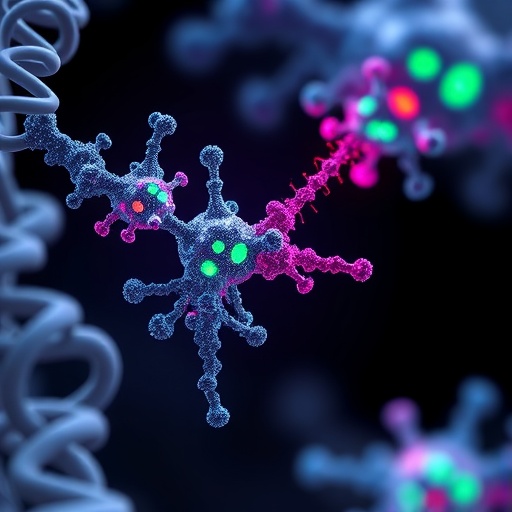
Recent advancements in microbiological research have unveiled intricate mechanisms underlying the CRISPR-Cas systems, particularly focusing on the type III-B variant. Central to this evolution are the findings surrounding the interactions specifying the recognition of nonself target RNA and the subsequent synthesis of S-adenosyl methionine-adenosine monophosphate (SAM-AMP). This component is critical for initiating immune responses in bacteria, thereby marking a pivotal development in our understanding of the defensive capabilities of microbial life.
The type III-B CRISPR-Cas system distinguishes itself through its unique enzymatic activities. Upon recognizing RNA sequences that are foreign to their host, these systems catalyze a concurrent reaction involving S-adenosyl methionine and adenosine triphosphate (ATP), leading to the synthesis of SAM-AMP. This coupling of reactions reveals an evolutionary adaptation that allows bacteria to mount an effective response against invading nucleic acids, such as those from viruses.
Delving deeper into the mechanism, it is crucial to pinpoint how the complex recognizes foreign RNA. Researchers found that the Cmr2 subunit plays a vital role in this specific recognition. Its structure undergoes conformational alterations upon binding to the 3′ anti-tag of the target RNA, which subsequently engages in the synthesis of SAM-AMP. This critical interaction serves as a captivating example of how subtle molecular adaptations can facilitate significant biological processes.
Notably, the synthesis of SAM-AMP does not rely on the stalk loop of the Cmr3 subunit, which was previously thought to be essential in the process. The discovery that the event occurs independently of this component highlights the intricate nature of the CRISPR-Cas system and raises new questions about the evolutionary pressures that have shaped its current form. Such findings reinforce the concept of redundancy in biological systems, where multiple pathways may yield similar outcomes.
Once synthesized, SAM-AMP acts as a signaling molecule capable of triggering immune responses. This raises a fascinating aspect of CRISPR-Cas biology—the balance between activation and deactivation of the immune response. In this context, the role of enzymes such as NrN and SAM lyase become of paramount importance. SAM-AMP can be hydrolyzed by these enzymes, thus providing a mechanism by which the system can be turned off, illustrating a finely-tuned feedback loop in the bacterial immune response.
The Cmr subunit’s interaction with SAM-AMP prompts NrN to shift from an open conformation to a closed one, facilitating the breakdown of the 3′–5′ phosphodiester bond. This enzymatic function is crucial for maintaining balance within the immune system, as the degradation of active signaling molecules ensures that responses do not become overstimulated, which could be detrimental to the cell.
The SAM lyase component further extends the understanding of this biological machinery by forming a triangular trimer that specifically targets and degrades SAM-AMP. The resulting products, which include 5′-methylthioadenosine-AMP and homoserine lactone, shed light on potential secondary metabolic pathways that could be important in various microbial processes. The formation of these degradation products also poses intriguing possibilities for the ecological roles of these molecules beyond immune responses.
Scientific inquiries into the CRISPR-Cas systems have substantially evolved, particularly within the context of understanding their molecular underpinnings. The findings from the type III-B effector complex from Bacteroides fragilis exemplify this trend as novel structural and functional insights emerge. This research unveils a striking interplay of molecular dynamics that are emblematic of the ongoing arms race between bacteria and their viral counterparts, a narrative reflective of Darwinian principles.
From an evolutionary standpoint, these mechanisms offer a glimpse into the adaptability and resilience of microbial life. They highlight the complexity and sophistication of bacterial immune strategies that have been honed over millions of years. As research continues, these insights pave the way for potential biotechnological applications, including the development of novel antimicrobial therapies that can exploit these bacterial defenses for human benefit.
In summary, the intricate workings of the type III-B CRISPR-Cas system unveil a tapestry of biology where recognition, activation, and deactivation of immune responses are meticulously orchestrated. The synthesis and degradation of SAM-AMP underscore a sophisticated signaling cascade that ensures bacteria can defend themselves against viral threats. As our understanding deepens, it will undoubtedly fuel further innovative research into the applications of these systems in various fields, including biotechnology and medicine.
The ability of the bacterial CRISPR-Cas systems to manipulate molecular signals and maintain homeostasis reflects a level of organization that raises important questions. What does it imply for our understanding of cellular survival and adaptation in a constantly evolving microbial landscape? Each discovery leads the scientific community closer to solving the complex puzzles that govern life at the molecular level, proving that even in the simplest of organisms, elaborate mechanisms are at work.
This line of investigation is bound to draw attention from various sectors of science, indicating a vibrant future for CRISPR research. With the continuous unveiling of new pathways and mechanisms, each resulting study contributes to a larger narrative—the quest to comprehend life’s fundamental processes and their potential applications in addressing human health challenges.
Ultimately, the detailed knowledge gained from the mechanisms of SAM-AMP synthesis and degradation within the type III-B CRISPR-Cas system represents a critical leap forward, propelling not only microbiological research but also inspiring interdisciplinary collaborations poised to leverage this knowledge for future innovations.
Cite Scienmag News
Juliet Wilcox. (November 21, 2025). Exploring SAM-AMP Dynamics in Type III-B CRISPR. Scienmag. https://scienmag.com/exploring-sam-amp-dynamics-in-type-iii-b-crispr/
Juliet Wilcox. "Exploring SAM-AMP Dynamics in Type III-B CRISPR." Scienmag, 21 November 2025, https://scienmag.com/exploring-sam-amp-dynamics-in-type-iii-b-crispr/. Accessed 5 September 2026.
Juliet Wilcox. "Exploring SAM-AMP Dynamics in Type III-B CRISPR." Scienmag. November 21, 2025. https://scienmag.com/exploring-sam-amp-dynamics-in-type-iii-b-crispr/


