


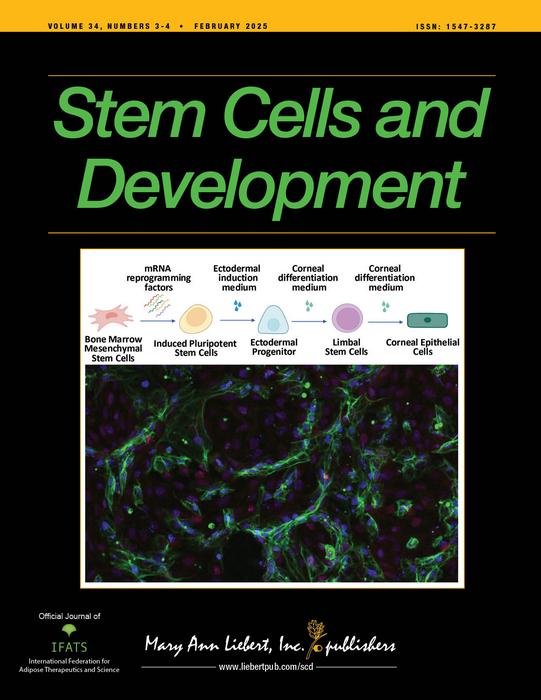
A new and pivotal advance in stem cell biology has emerged from a study published in the esteemed journal Stem Cells and Development. Researchers from Vanderbilt University and the University of Colorado Anschutz Medical Campus have unveiled an innovative co-culture system combining human-induced pluripotent stem cell (iPSC) derived neural organoids with fetal leptomeninges sourced from mice. This fusion, termed leptomeningeal neural organoid (LMNO) fusions, represents a significant step forward in our understanding of the complex interactions between the brain and the meninges, the protective tissues surrounding the central nervous system.
This pioneering research provides insights into the cellular dynamics between various cell types present within the leptomeninges, including fibroblasts and macrophages, and how these cells interface with the neural progenitor and neuronal populations within the organoid. The team utilized fluorescent labeling techniques to track the interactions and stability of the fused cell types over extended periods, specifically 30 days and 60 days in culture. Their findings aim to set new standards for future organoid research, emphasizing the necessity for supportive extracellular matrices in three-dimensional culture systems.
The editorial insights from Dr. Graham C. Parker, Editor-in-Chief of Stem Cells and Development, highlight the significance of this model in addressing the historical limitations of organoid development. He points out that the incorporation of meninges is not merely an enhancement; it addresses an essential need for the supportive structure that is often overlooked in organoid studies. This model not only enriches our understanding of organoid biology but also opens up pathways for future therapeutic applications, potentially bridging the gap between basic science and clinical translation.
Furthermore, the comprehensive study meticulously examines optimal practices for preparing the meninges samples before fusion. This meticulous methodology aims to enhance reproducibility and facilitate subsequent experiments in various applications, including drug discovery, disease modeling, and regenerative medicine. By focusing on the engineering of the cellular environment within organoids, the authors advocate for a new paradigm in the field of stem cell research which prioritizes the architectural and biochemical cues essential for tissue development.
The therapeutic implications of such advancements are profound. By successfully creating a robust model that accurately reflects the in vivo environment of the human brain, researchers pave the way for studying various neurological conditions. The interaction between the meninges and neural tissue is pivotal for understanding signaling pathways that may be disrupted in diseases ranging from neurodegeneration to traumatic brain injury. This model affords researchers a valuable tool for exploring these pathways, which may one day inform targeted therapeutic strategies.
Moreover, the researchers suggest that by utilizing such organoid fusions, it may be possible to investigate how external stimuli—such as environmental toxins or drugs—affect the brain-meninges interaction. Given the increasing recognition of the importance of the meninges in disease pathology, the implications of this research extend to a broad spectrum of medical fields, including pharmacology and neurology.
Importantly, the study also emphasizes the need for multi-tissue approaches in regenerative medicine. The brain does not function in isolation; understanding its interactions with adjacent and supporting tissues is crucial. By fostering a model that integrates multiple tissue types, researchers can better emulate the complexities of organ and tissue interactions. This integrative approach is essential for developing effective therapies for brain-related ailments and furthering our fundamental understanding of human biology.
As the field of stem cell research evolves, the introduction of models such as the LMNO fusion showcases the drive toward innovation within scientific inquiry. The implications for future studies are tremendous; as scientists continue to refine these models, we may see exponential growth in our understanding of developmental biology and regenerative medicine. These advancements hold the potential to not only illuminate fundamental biological processes but also catalyze the development of novel treatment strategies for conditions that currently have limited therapeutic options.
The groundbreaking nature of this research is clear; it not only challenges existing paradigms within stem cell biology but also enriches our toolkit for future studies. Such developments underline the importance of collaborative and interdisciplinary approaches in scientific research, fostering an environment where diverse perspectives and expertise contribute to significant breakthroughs. As researchers continue to unravel the complexities of brain development and function, models like the LMNO fusion are essential for bridging gaps in knowledge and moving toward a future where innovative therapies can be realized.
In summary, the findings from this study represent a transformative approach to understanding the interactions between meninges and neural tissues. With continued exploration of these mechanisms, this research could fundamentally change how we approach therapy for a variety of neurological conditions, heralding a new era of targeted and effective treatments that are grounded in a thorough understanding of cellular interactions and tissue dynamics.
Cite Scienmag News
Cassandra Pierce. (March 25, 2025). Exploring Meninges-Brain Signaling Through Organoid Fusion Models. Scienmag. https://scienmag.com/exploring-meninges-brain-signaling-through-organoid-fusion-models/
Cassandra Pierce. "Exploring Meninges-Brain Signaling Through Organoid Fusion Models." Scienmag, 25 March 2025, https://scienmag.com/exploring-meninges-brain-signaling-through-organoid-fusion-models/. Accessed 4 September 2026.
Cassandra Pierce. "Exploring Meninges-Brain Signaling Through Organoid Fusion Models." Scienmag. March 25, 2025. https://scienmag.com/exploring-meninges-brain-signaling-through-organoid-fusion-models/


