

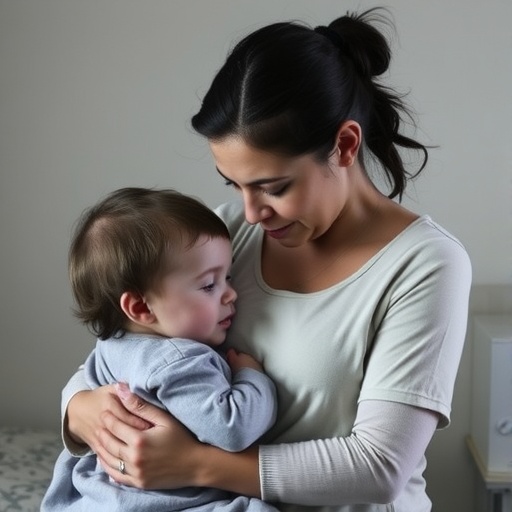
Maternal Trauma and Child Development: Unpacking the Link Through a Novel Study
In a groundbreaking study set to be published in 2025, researchers have illuminated the complex interplay between maternal trauma history, maternal mental health, and child behavior. Conducted in Lima, Peru, this prospective study involving mother-child dyads aims to unravel the intricate facets of how a mother’s past experiences can impact the psychological and behavioral development of their children. The study not only addresses an urgent public health issue but does so by employing a rigorous scientific methodology that offers insights into the impact of maternal adversity on child development.
At the forefront of this research are scholars including M. Regan, E. Levey, and A. Basu, who recognized the escalating prevalence of mental health issues stemming from traumatic experiences in mothers. The researchers aimed to fill a critical gap in the existing literature by exploring the psychosocial dynamics between maternal trauma, mental health conditions, and the resultant behavioral patterns in children. This focus underscores the relevance of context-specific studies, particularly in regions like Lima, where socio-economic factors can intensify the challenges faced by families.
The researchers gathered a diverse sample of mother-child pairs, meticulously documenting histories of trauma that the mothers had experienced. The criteria for what constituted trauma were comprehensively defined, encompassing a broad spectrum of experiences from domestic violence to loss of a loved one. By adopting this inclusive definition, the study ensured that the data collected would accurately reflect the varied experiences of trauma that mothers face, setting a strong foundation for the subsequent analysis of mental health outcomes.
Maternal mental health was assessed using validated psychological assessments, employing tools that are widely recognized in the scientific community. The mothers were evaluated for conditions such as depression and anxiety, offering a multifaceted view of their mental well-being. This approach not only provided quantitative data but also a nuanced understanding of the psychological burdens that might stem from traumatic histories. The researchers emphasized that exploring maternal mental health is essential to comprehending child behavioral outcomes fully.
Children’s behaviors were monitored and evaluated through various behavioral assessments that looked at both internalizing and externalizing behaviors. This distinction is critical; internalizing behaviors often manifest as anxiety and depression, whereas externalizing behaviors may present as aggression or defiance. Understanding how a mother’s trauma and mental health are correlated with these behavioral outcomes in children allows for a deeper investigation into the cyclical nature of mental health challenges within families.
One of the most striking findings emerging from the initial analysis suggests a significant correlation between mothers who experienced trauma, particularly those who exhibited symptoms of depression, and maladaptive behaviors in their children. This pattern raises awareness of the need for targeted interventions that could potentially break this cycle. By identifying the indicators of mental health challenges in mothers, programs aimed at supporting both maternal mental health and child development can be more effectively designed and implemented.
Equally important is the study’s implication on societal and cultural norms within Lima and similar contexts. The findings advocate for a supportive framework where mothers can receive the mental health care they need. By enhancing community resources and psychological support systems, the broader implications could lead to improved outcomes for future generations. This indicates a pressing need for policymakers to consider mental health as an integral part of public health initiatives, emphasizing the importance of developing supportive environments for mothers and their children shaped by compassion and understanding.
The longitudinal aspect of the study is crucial; it tracks developmental outcomes over time, allowing researchers to observe changes and trends in child behavior as their mothers receive varying levels of support. This longitudinal analysis offers dynamic insights, highlighting the potential for interventions over time to yield positive results. By evaluating the progression of these mother-child dyads, the research encourages an ongoing dialogue around mental health and trauma, fostering an environment where continued support is prioritized.
Furthermore, the results challenge researchers and practitioners alike to consider the broader implications of maternal trauma. They urge a comprehensive understanding of how childhood behavioral problems can often be traced back to a mother’s own unresolved experiences and mental health struggles. This understanding is particularly salient in preventive care models, where early intervention could mitigate not only individual suffering but also intergenerational cycles of trauma.
The research team underscores that continued exploration of these themes must extend beyond empirical data. They call for more holistic approaches that consider not only the psychological elements but also the socio-cultural dimensions that influence maternal mental health. By integrating cultural sensitivity into the framework of mental health interventions, practitioners can better respond to the needs of maternal populations, fostering resilience and improvement in child behavioral outcomes.
Furthermore, this study epitomizes the progression in understanding mental health as a public health issue that transcends individual experience. It encapsulates a plea for increased awareness, advocacy, and action towards maternal mental health initiatives as the cornerstone for healthy child development. Inevitably, the dialogue initiated by this research could provoke further studies that examine the various layers of this complicated relationship, extending beyond the borders of Peru to global communities facing similar challenges.
In conclusion, the prospective study conducted by Regan, Levey, Basu, and their colleagues serves as a vital contribution not only to academic literature but also to practical applications in mental health policy and child development strategies. By shedding light on the consequences of maternal trauma and its pervasive effects, it proposes a new blueprint for intervention, where addressing maternal mental health is paramount to ensuring positive outcomes for children.
Subject of Research: Maternal Trauma history, Maternal Mental health, and Child Behavior
Article Title: Maternal Trauma history, Maternal Mental health, and Child Behavior: A Prospective Study of mother-child Dyads in Lima, Peru.
Article References:
Regan, M., Levey, E., Basu, A. et al. Maternal Trauma history, Maternal Mental health, and Child Behavior: A Prospective Study of mother-child Dyads in Lima, Peru.
Child Psychiatry Hum Dev (2025). https://doi.org/10.1007/s10578-025-01919-y
Image Credits: AI Generated
DOI: https://doi.org/10.1007/s10578-025-01919-y
Keywords: Maternal Trauma, Maternal Mental Health, Child Behavior, Public Health, Psychosocial Dynamics, Longitudinal Study, Intervention Strategies.


