

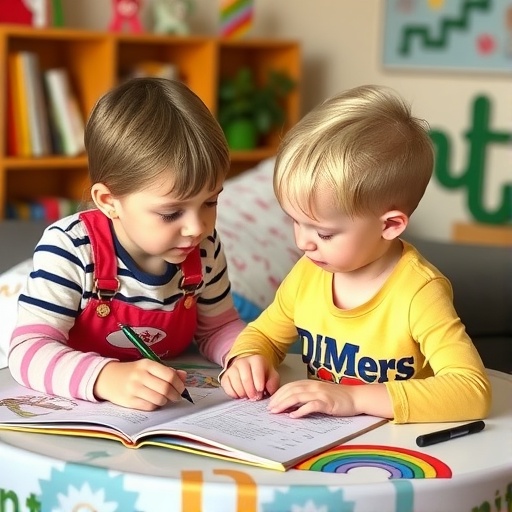
Recent research has illuminated a significant and often overlooked area related to the development of autistic preschoolers: their home literacy and numeracy environments. A systematic review conducted by Urban, Roeyers, Peters, and colleagues sheds light on the prevailing circumstances that shape these children’s early learning experiences within their family settings. Understanding the dynamics of these environments is crucial for fostering effective educational strategies and interventions tailored to autistic children.
The review synthesizes existing literature to gather comprehensive insights about the nature and quality of literacy and numeracy practices observed in homes with autistic preschoolers. The findings indicate a disparity in the engagement frequency and the variety of educational activities provided at home when compared to neurotypical peers. This disparity can significantly influence a child’s development trajectory, suggesting a pressing need for caregivers and educators alike to prioritize the expansion of supportive environments centered around literacy and numeracy skills.
Families play a central role in the cultivation of a child’s early cognitive skills and social interactions. The home serves not just as a sanctuary, but as a foundational learning landscape where children first engage with numbers, letters, and the nuances of conversation. Autism presents unique challenges that can alter typical learning patterns, making it imperative for parents and caregivers to recognize and adapt to the specific needs of their children. Through engagement in structured and unstructured learning activities, parents can significantly impact their children’s readiness for formal education.
Among the key observations from the systematic review, the research indicates an inclination among autistic children to thrive in environments rich in responsive interactions and adaptive learning materials. Parents and caregivers who actively participate in literacy and numeracy activities—such as reading together, using counting games, or relating numbers to everyday situations—create fertile ground for their children to explore and learn. This participatory approach not only bolsters academic skills but also enhances emotional bonds, thus fostering a nurturing atmosphere where learning can flourish.
However, the study also outlines challenges faced by families, particularly a lack of understanding of how to create engaging learning experiences for their autistic children. Many parents report feeling overwhelmed or ill-equipped to support their children’s unique learning styles, which may lead to gaps in educational opportunities. The need for more accessible resources, workshops, and training sessions has become evident—not only for the sake of the children but also to empower parents in their crucial roles as first educators.
In exploring the realm of literacy, the review emphasizes the importance of diverse reading materials tailored to the interests and developmental stages of autistic children. Additionally, the timing of these interventions can be crucial; early exposure to varied forms of literacy accompaniment—such as storytelling, interaction with picture books, or auditory learning through music—can lead to more favorable outcomes. By diversifying the tools available for learning, parents can sustain engagement and nurture an appreciation for literacy, paving the way for lifelong learning habits.
Numeracy, too, occupies a vital space in the spectrum of early education. The review points to the blending of everyday experiences with mathematical concepts as particularly beneficial. When parents incorporate counting into daily activities—such as cooking, shopping, or even during playtime—they can demystify numbers and abstract concepts for their children. This practical approach not only teaches children how to count or recognize shapes but also illustrates the relevance of mathematics in everyday life, enhancing their conceptual understanding and reducing anxiety around numeric tasks.
The issue of accessibility in educational resources cannot be overstated. Currently, many families struggle to find appropriate materials that cater specifically to the needs of autistic learners. The research calls for educational publishers and organizations to consider the unique profiles of these children when designing learning tools and resources. Tailoring content to various learning modalities—through visuals, tactile experiences, and interactive technologies—can dramatically improve engagement levels and learning outcomes.
Furthermore, the interplay between familial support and formal education settings emerges as a key theme within the review. Researchers underscore the need for comprehensive training for educators who will interface with autistic children transitioning from home to school. Educators must be equipped not only with the knowledge of autism but also with strategies that guide parents in extending literacy and numeracy efforts beyond the classroom walls. Collaboration between home and educational institutions is essential for creating consistent learning environments that reinforce the skills being taught.
The implications of this research extend beyond immediate educational practices; they also touch on broader societal perspectives on autism. By focusing on the strengths and capabilities of autistic children rather than solely on their challenges, communities can cultivate a culture that values diversity in learning styles. Normalizing discussions around the educational needs of autistic learners can lead to improved resources, increased parental confidence, and ultimately better outcomes for children.
In conclusion, the systematic review by Urban, Roeyers, Peters, and their team brings to light crucial insights into the home literacy and numeracy environments of autistic preschoolers. By emphasizing the vital role that families play in shaping children’s education, this body of work serves as a clarion call for enhanced support systems tailored to meet the needs of these children. As awareness continues to grow, it becomes imperative to ensure that parents are armed with the knowledge, resources, and confidence to foster enriching learning experiences for their autistic children, paving the way toward a more inclusive educational landscape.
As we look forward to the future of autism research, the connection between home learning and educational success remains clear. Teachers and parents alike play pivotal roles in reinforcing the learning processes that happen within the home. The integration of insights from such systematic reviews into practical applications will be beneficial for all stakeholders involved. The journey of understanding and supporting autistic preschoolers must continue, fueled by the collective efforts of researchers, educators, and families as they strive for meaningful progress in shaping the educational journey of their children.
This foundational knowledge will not only assist in bridging educational gaps but can also promote a more inclusive society where every child’s unique abilities are recognized and celebrated. By fostering strong home literacy and numeracy environments, we can help create a brighter future for autistic children as they navigate their formative years and beyond.
Subject of Research: Home Literacy and Numeracy Environments of Autistic Preschoolers
Article Title: What Do We Know About the Home Literacy and Numeracy Environments of Autistic Preschoolers? A Systematic Review
Article References: Urban, S., Roeyers, H., Peters, L. et al. What Do We Know About the Home Literacy and Numeracy Environments of Autistic Preschoolers? A Systematic Review. J Autism Dev Disord (2025). https://doi.org/10.1007/s10803-025-07186-z
Image Credits: AI Generated
DOI: https://doi.org/10.1007/s10803-025-07186-z
Keywords: Autism, literacy, numeracy, preschool, home environment, education, parental support, early intervention


