

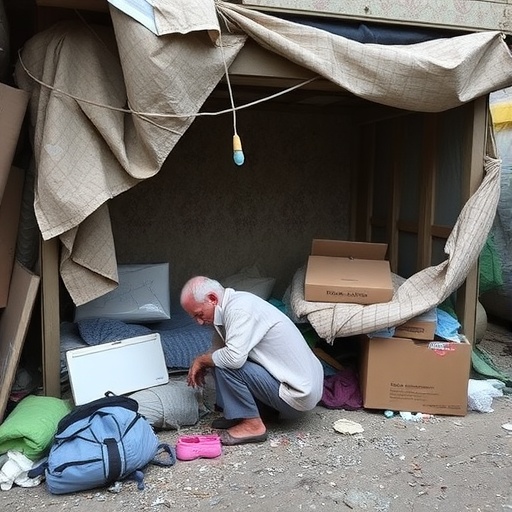
As societies evolve, the phenomenon of homelessness among older adults demands urgent attention. New research by Parvaei, Rashedi, and Sharifi Saei has shed light on the experiences of older adults facing cumulative displacement in Iran, revealing a complex and distressing pathway to homelessness. The study delves into the life-course trajectories that lead to this dire situation, utilizing a phenomenological approach to capture the intricacies of individual experiences amidst societal neglect.
The issue of aging and homelessness is often shrouded in stigma, with societal perceptions failing to acknowledge the multifaceted factors that contribute to this crisis. As individuals age, they encounter various life transitions—such as retirement, loss of loved ones, and declining health—that can significantly impact their stability. The Iranian context presents unique challenges, shaped by socio-economic fluctuations, cultural shifts, and inadequate social support systems.
Cumulative displacement, as articulated in the researchers’ work, refers to the gradual accumulation of adverse life events that can culminate in the loss of housing stability. This notion highlights the progressive nature of vulnerability faced by older adults, who might initially find themselves grappling with minor challenges, such as reduced income or social isolation, which can later escalate into homelessness. The research exemplifies how these cumulative experiences do not exist in isolation but are interconnected, creating a web of disadvantage.
One of the key findings from the study is the impact of diverse social determinants on older adults’ living conditions. Economic instability, lack of affordable housing, and inadequate healthcare services contribute significantly to the risk of homelessness among this demographic. The researchers emphasize that social policies should be re-evaluated to address these systemic barriers, ensuring that older adults have access to necessary resources and support.
Additionally, the experience of aging itself poses unique challenges for individuals as they navigate a society that often marginalizes them. Older adults may face discrimination, stigmatization, and social exclusion, compounding their challenges and reducing their resilience. The phenomenological approach employed in this research allows for a deep exploration of these lived experiences, providing a platform for marginalized voices to be heard.
The research underscores the importance of understanding homelessness not merely as a lack of housing, but as a complex social issue intertwined with identities, societal perceptions, and personal histories. This perspective encourages a shift in how we frame the problem, urging us to consider the broader socio-economic and cultural dimensions that contribute to homelessness.
Furthermore, the study highlights the necessity for comprehensive support systems tailored to the needs of older adults. Policymakers and social service agencies must collaborate to design interventions that address the specific vulnerabilities faced by this group. This includes advocacy for affordable housing initiatives, accessible healthcare, and mental health support that acknowledges the psychological toll of displacement.
While the research focuses on the Iranian context, its implications are universally relevant, as many societies grapple with the rising numbers of older adults living in precarious situations. The study’s findings stress the urgency of implementing humane policies that prevent homelessness before it happens, rather than merely addressing its aftermath.
Engaging with communities can foster a sense of belonging and security among older adults. Initiatives that promote social inclusion, such as community fairs or skill-sharing workshops, can help combat feelings of isolation. By integrating older adults into the fabric of society, we can create environments where they feel valued and connected, effectively reducing their likelihood of facing displacement.
The authors also advocate for increased awareness and education regarding the nuanced realities of homelessness among older adults. Public campaigns that humanize this issue can help dismantle stereotypes and foster empathy, galvanizing community support and involvement. Such efforts can mobilize resources and foster collaborative solutions that elevate the voices of older adults in discussions about their needs and rights.
As the study illustrates, addressing homelessness among older adults requires a coordinated approach that includes various stakeholders—from government entities to non-profit organizations and community groups. By working together, we can create a comprehensive strategy that not only alleviates immediate issues but also addresses the root causes of homelessness, ensuring that older adults have a safe and dignified living environment.
Ultimately, the work of Parvaei, Rashedi, and Sharifi Saei contributes to a growing body of literature that seeks to illuminate the dark corners of societal neglect surrounding our aging population. By bringing these issues to light, the hope is that greater understanding will lead to actionable solutions that promote the well-being and dignity of older adults facing the threat of homelessness.
As this critical research reaches wider audiences, it serves as a reminder of the responsibility we all share to advocate for vulnerable members of our communities. In reflecting on the lives of older adults, we are called to action—not just to support those in need, but to foster a society that values and uplifts every individual, regardless of age.
In conclusion, the fight against homelessness among older adults is far from over. It requires collective effort, commitment, and a nuanced understanding of the complexities at play. By continuing to highlight these stories and challenges, we can work towards a future where stability and compassion prevail over displacement and despair.
Subject of Research: Cumulative displacement and homelessness in older adults in Iran.
Article Title: Cumulative displacement in old age: a phenomenological study of life-course trajectories to homelessness among older adults in Iran.
Article References:
Parvaei, S., Rashedi, V. & Sharifi Saei, M.H. Cumulative displacement in old age: a phenomenological study of life-course trajectories to homelessness among older adults in Iran.
BMC Geriatr (2025). https://doi.org/10.1186/s12877-025-06904-7
Image Credits: AI Generated
DOI: 10.1186/s12877-025-06904-7
Keywords: homelessness, older adults, cumulative displacement, Iran, social determinants, phenomenological study.


