

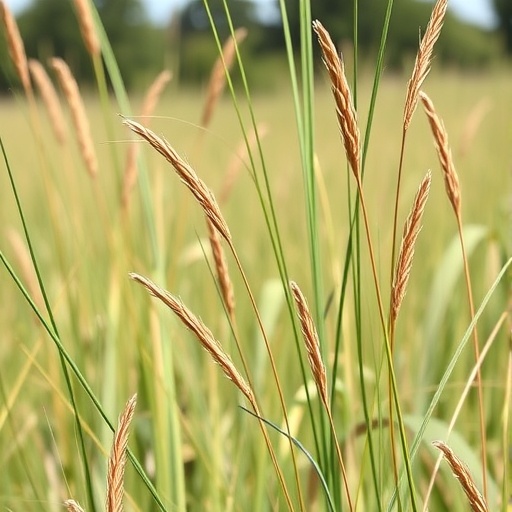
In a groundbreaking study published in the journal “Discover Sustainability,” researchers Atumo, Samago, and Yada explore the intricate dynamics of genotype by environment interaction and its impact on the yield and forage quality of native panic grasses. This work is timely and crucial as it aligns with the pressing concerns regarding food security, sustainable agriculture, and the adaptability of grass species under varying environmental conditions. Panic grasses, known for their resilience and adaptability, are pivotal in livestock production systems, especially in regions prone to climatic variability.
The primary focus of this research is to unravel how different genotypes of panic grasses respond to varying environmental conditions. This is particularly relevant in the context of climate change, where fluctuations in temperature and precipitation patterns can drastically alter the growth dynamics of these grasses. The researchers employed advanced statistical methods, including AMMI (Additive Main Effects and Multiplicative Interaction) and GGE (Genotype and Genotype × Environment) biplot analyses, to elucidate the performance of various panic grass genotypes across different environments.
Through their comprehensive analysis, the team has made significant strides in understanding how genotype by environment interactions affect not just yield but also the qualitative aspects of forages produced. Yield remains a primary concern for farmers and agricultural scientists alike, but forage quality is equally important for ensuring that livestock receives adequate nutrition. In the study, it was found that specific genotypes excelled in certain environmental conditions, underlining the importance of matching grass types with appropriate climatic zones to optimize production.
In their methodology, the team took a rigorous approach, collecting data from multiple locations characterized by distinct environmental conditions. This multi-site data collection allowed for a robust analysis of how various factors such as soil type, moisture levels, and regional climate interacted with the genetic traits of the panic grasses. Each genotype’s performance was meticulously assessed, with parameters such as biomass yield, nutrient content, and overall palatability being measured.
One of the standout findings of the study was that not all panic grasses responded uniformly to environmental stresses. Certain genotypes demonstrated remarkable resilience under adverse conditions, showcasing traits such as drought tolerance and pest resistance. This insight is invaluable for breeders aiming to develop more robust varieties of panic grasses that can thrive in less-than-ideal conditions.
The research also dives deep into the practical applications of their findings. With livestock production being heavily reliant on forage quality, identifying and promoting the best-performing panic grass varieties could lead to more sustainable grazing practices. By implementing the insights gained from this study, farmers can enhance their forage management strategies, leading to improved livestock health and productivity.
Moreover, the implications of this research extend beyond immediate agricultural practices. Enhanced forage quality and yield can contribute to more sustainable livestock production systems, reducing reliance on synthetic feed and promoting environmentally friendly farming practices. This aligns directly with global sustainability goals, making the findings particularly relevant in the discourse on climate-smart agriculture.
The statistical tools employed in this analysis, namely the AMMI and GGE biplots, are worth discussing in detail. These methods allow researchers to visualize the performance of various genotypes across different environments succinctly. Such visualization aids in understanding which genotypes exhibit stable performance across environments and which are specifically adapted to certain ecological conditions.
This pioneering study resonates with a broader audience, addressing concerns shared by various stakeholders in the agricultural sector—from policymakers to farmers. The emphasis on sustainability and adaptability is crucial as the world grapples with the complexities of climate change. Additionally, the findings serve as a call to action for continued research into the genetic traits that contribute to resilience in forage species.
In conclusion, this research presents a significant contribution to our understanding of genotype by environment interactions in native panic grasses. As the agricultural community seeks to navigate the challenges posed by a changing climate, insights from this study can provide a roadmap towards creating resilient and productive grazing systems. The collaboration between scientists and practical agriculturalists could lead to innovations that not only bolster food security but also promote sustainable practices that benefit the environment as well.
Future research will undoubtedly build on these findings, exploring further genetic variants and their responses to environmental factors. This ongoing quest for knowledge will not only enhance our agricultural systems but also fortify biodiversity, a crucial element in maintaining the ecological balance. The journey into the world of panic grasses and their environmental interplays is just beginning, yet the promise it holds for the future of sustainable agriculture is profound.
Subject of Research: Genotype by environment interaction on yield and forage quality of native panic grasses.
Article Title: Genotype by environment interaction effect on yield and forage quality of native panic grasses: AMMI, GGE biplot and correlation analysis.
Article References:
Atumo, T.T., Samago, T.Y., Yada, T.A. et al. Genotype by environment interaction effect on yield and forage quality of native panic grasses: AMMI, GGE biplot and correlation analysis. Discov Sustain (2026). https://doi.org/10.1007/s43621-025-02459-0
Image Credits: AI Generated
DOI: 10.1007/s43621-025-02459-0
Keywords: Genotype by environment interaction, panic grasses, yield, forage quality, sustainability, AMMI, GGE biplot, agricultural resilience.


