

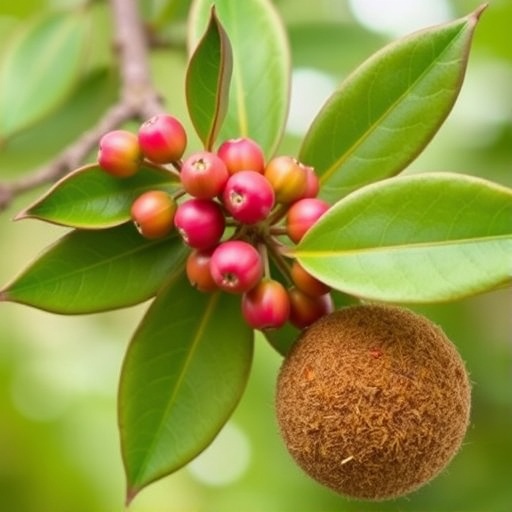
In recent years, the role of natural compounds in promoting gastrointestinal health has attracted considerable attention. Among the myriad of plant-based substances being explored, the leaves of Pistacia lentiscus, a small evergreen shrub native to the Mediterranean region, have emerged as a potential powerhouse. A groundbreaking study led by Kadi, Debbache-Benaida, and Saidene uncovers the underlying mechanisms that contribute to the gastroprotective properties of sulfated polysaccharides-rich extracts from Pistacia lentiscus leaves. This research not only sheds light on traditional uses of the plant but also offers promising insights for developing new therapies for gastric ulcers.
Ethanol-induced gastric ulcers are notorious for causing significant morbidity, impacting not only individuals’ health but also healthcare systems globally. Current treatments often rely on proton pump inhibitors and antacids, which, though effective, can lead to undesirable side effects and are not universally effective. As a response to this gap in treatment efficacy and safety, the exploration of alternative remedies such as those derived from Pistacia lentiscus has become a topic of intense research.
This study meticulously examined the extract’s chemical composition and identified sulfated polysaccharides as key bioactive constituents. These complex carbohydrates have previously been recognized for their various health benefits, but their specific actions against gastric ulcers had not been extensively characterized until now. The researchers utilized state-of-the-art analytical techniques to isolate and characterize these polysaccharides, paving the way for understanding their pharmacological profiles.
In the experimentation phase, laboratory mice were administered ethanol to induce gastric ulcers, simulating a common and debilitating condition associated with excessive alcohol consumption. The administration of the Pistacia lentiscus extract demonstrated a pronounced gastroprotective effect, significantly reducing ulcer severity. This finding underscores the potential of natural substances in mitigating the harsh consequences associated with gastric mucosal injuries caused by irritants like ethanol.
To understand the mechanisms at play, the researchers performed histological examinations of gastric tissues. Microscopic analysis revealed that the extract facilitated mucosal healing and enhanced the integrity of the gastric epithelium. This process appears to be mediated by the modulation of oxidative stress markers, as the extract significantly reduced levels of reactive oxygen species (ROS) while enhancing antioxidant enzyme activities. These findings highlight the versatility of sulfated polysaccharides in regulating oxidative stress, a well-known contributor to gastric mucosal damage.
Furthermore, the research delved into the molecular pathways involved. The sulfated polysaccharides appeared to influence various signaling cascades associated with inflammation and cellular repair. Particularly, the extract promoted the activation of various growth factors and cytokines crucial for healing processes. Understanding these molecular interactions offers a window into the intricacies of how plant-derived compounds can facilitate tissue regeneration and repair.
The study also delved into the broader implications of these findings in terms of dietary supplementation. Considering the increasing prevalence of gastrointestinal disorders, incorporating Pistacia lentiscus extracts into functional foods or nutraceuticals may provide a novel approach to prevent and manage gastric ulcers. Furthermore, the investigation champions a return to traditional remedies, encouraging a reappraisal of ancient practices supported by contemporary scientific validation.
Despite the promising results, the authors urge caution. While the preclinical outcomes are indeed encouraging, they acknowledge the necessity for clinical trials to further establish safety and efficacy in human subjects. As many natural products undergo rigorous testing before being deemed suitable for human consumption, Pistacia lentiscus is entering a crucial stage in the validation process that could greatly affect its acceptance in the medical community.
This study highlights a paradigm shift in how we view natural remedies—transitioning them from folklore to scientifically recognized therapeutic options. As more researchers begin to explore the intersections between traditional herbal medicine and modern pharmacology, the potential for discovering new treatment modalities becomes increasingly tantalizing.
Public health implications stemming from these findings are profound. As the world grapples with increasing rates of gastrointestinal diseases driven by lifestyle choices, effective prevention strategies are more critical than ever. The prospect of using plant-derived compounds as adjunct treatments or preventative measures for gastric ulcers represents an accessible avenue for many individuals, especially in regions where traditional medicine is prevalent.
In summary, the study serves as a crucial stepping stone toward understanding the gastroprotective attributes of Pistacia lentiscus leaves. It opens avenues for not only developing effective treatments for gastric ulcers but also encourages a holistic approach to health that integrates natural products into modern healthcare frameworks. This integration could signify a major advancement in therapeutic strategies, emphasizing the importance of natural compounds in safeguarding our health.
As the research community rallies to explore these and other natural substances with similar properties, the promise of a healthier future that combines tradition with science remains a beacon of hope. Researchers, consumers, and healthcare practitioners alike stand at the cusp of a new era where nature’s bounty may play an instrumental role in healing and well-being.
Ultimately, the study encapsulates a broader message: nature still holds many secrets that, when explored and understood, could lead to groundbreaking advancements in health and medicine. With the ongoing dedication to unearthing these treasures, we inch closer to transformative therapies that could redefine our approaches to health challenges.
Subject of Research: Gastroprotective properties of sulfated polysaccharides-rich leaves extract of Pistacia lentiscus against ethanol-induced gastric ulcer in mice.
Article Title: Underlying mechanisms of the gastroprotective properties of sulfated polysaccharides-rich leaves extract of Pistacia lentiscus L. against ethanol-induced gastric ulcer in mice.
Article References: Kadi, R., Debbache-Benaida, N., Saidene, N. et al. Underlying mechanisms of the gastroprotective properties of sulfated polysaccharides-rich leaves extract of Pistacia lentiscus L. against ethanol-induced gastric ulcer in mice. Waste Biomass Valor (2025). https://doi.org/10.1007/s12649-025-03432-8
Image Credits: AI Generated
DOI: https://doi.org/10.1007/s12649-025-03432-8
Keywords: Sulfated polysaccharides, Pistacia lentiscus, gastric ulcer, gastroprotective properties, natural remedies, ethanol, oxidative stress, mucosal healing, pharmacological profiles, functional foods, nutraceuticals.


