

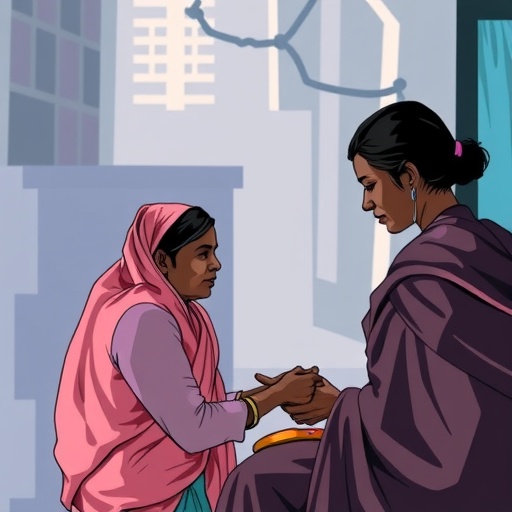
In the heart of bustling urban slums across India, a quiet crisis unfolds, one that threatens the mental health of countless caregivers. A recent qualitative inquiry, led by researchers Saikia, Sinha, and Muraleedharan, sheds light on the multifaceted challenges faced by caregivers of children born with congenital anomalies. In this landscape, where economic scarcity collides with societal stigma, the impact on mental well-being cannot be overstated. The study unveils both the heavy emotional toll experienced by caregivers and the broader implications for community health.
Caregivers often grapple with the dual pressures of managing complex health conditions in their children while navigating their own mental health challenges. The research highlights that these individuals frequently experience feelings of isolation and helplessness. This emotional burden is compounded by the inadequacies of healthcare systems in urban slums, which are often overburdened and under-resourced. The study emphasizes the need for a comprehensive approach to support caregivers, not merely as secondary figures but as integral components of the health care ecosystem.
Mental health issues among caregivers are a significant concern, with many reporting symptoms of anxiety, depression, and chronic stress. These conditions not only affect their quality of life but can also hinder their ability to provide adequate care for their children. The research underscores how the mental health of caregivers is often overlooked in discussions about child health, despite the profound interconnections between the two.
Furthermore, the study reveals that societal stigmas surrounding congenital anomalies exacerbate the strain on caregivers. Many individuals face social isolation, not only from their peers but also from extended family networks. This stigma leads to a lack of emotional support and resources, deepening the feeling of loneliness among caregivers. The inquiry calls for community education initiatives to combat these stigmas and foster a more supportive environment for affected families.
Access to mental healthcare for caregivers is also critically examined in the research. The study notes that for many caregivers, obtaining psychological support is an arduous task. Mental health services are often scarce in urban slums, and even when available, they may not be culturally competent or adequately funded to meet the needs of these families. This disconnect leaves many caregivers without the strategies they need to cope with their challenges.
The qualitative methodology employed in this inquiry provides a rich tapestry of personal stories, highlighting how caregivers navigate their daily realities. Participants reported a range of coping mechanisms, from seeking support within their local communities to drawing from personal resilience. Yet, the findings suggest that these coping strategies are often inadequate in the face of overwhelming stressors.
Moreover, the research emphasizes the importance of support networks, whether formal or informal, in alleviating caregiver burden. The presence of community health workers, for example, can bridge the gap between healthcare systems and families, providing not just health education but emotional support. Formal interventions, such as counseling and caregiver training programs, have shown promise in addressing the mental health needs of this population.
As the study notes, interventions that are culturally sensitive and community-driven are critical in addressing the unique challenges faced by caregivers. By integrating mental health support into existing healthcare frameworks, there is potential to improve outcomes for both caregivers and their children. This holistic approach can foster resilience and enhance the quality of care provided at home.
The implications of this inquiry extend beyond the immediate context of urban slums in India. Globally, the findings resonate in various settings where under-resourced healthcare systems struggle to address the complexities of congenital anomalies. The plight of caregivers is a universal narrative, one that warrants attention and action from policymakers, healthcare providers, and community leaders alike.
The research serves as a clarion call for further exploration into the intersection of caregiving, mental health, and social determinants of health. By amplifying the voices of caregivers and acknowledging their struggles, it becomes possible to develop more effective support systems tailored to their needs. This inquiry lays the groundwork for future studies aimed at understanding and addressing the intricate dynamics of caregiver burden and mental health across diverse populations.
In conclusion, the study conducted by Saikia, Sinha, and Muraleedharan highlights a critical yet often overlooked aspect of public health. The mental health of caregivers in urban slums dealing with congenital anomalies presents an urgent call to action. By prioritizing their well-being, communities can create a ripple effect that ultimately enhances the quality of life for these families as a whole. The journey towards improved mental health support for caregivers is essential in building resilient communities capable of confronting the challenges posed by congenital health conditions.
This research not only contributes valuable insights into the lives of caregivers in India but also sets the stage for broader discussions around mental health, caregiving, and social justice. It is a reminder that health is not merely the absence of illness but encompasses the intricate interplay of emotional, psychological, and social factors. As we push forward, the narrative of caregivers must be at the forefront of public health discourse, compelling us to take action and foster an environment where both caregivers and children can thrive.
Subject of Research: Mental health and caregiver burden among caregivers of children with congenital anomalies in urban slums of India.
Article Title: Mental health and caregiver burden among caregivers of children with congenital anomalies in urban slums of India: a qualitative inquiry.
Article References: Saikia, N., Sinha, M., Muraleedharan, M. et al. Mental health and caregiver burden among caregivers of children with congenital anomalies in urban slums of India: a qualitative inquiry. Discov Psychol (2026). https://doi.org/10.1007/s44202-025-00576-5
Image Credits: AI Generated
DOI: N/A
Keywords: Mental health, caregiver burden, congenital anomalies, urban slums, India, qualitative research.


