


Cancer has long been established as one of the leading causes of mortality across the globe. Among various cancer types, lung cancer remains particularly menacing, known for its high lethality and metastatic potential. Despite significant progress in developing diagnostic methods and therapeutic strategies, the five-year survival rates for patients with advanced-stage lung cancer remain alarmingly low. This stagnation can largely be attributed to therapeutic resistance, a complex phenomenon that significantly complicates treatment efforts and results in poor clinical outcomes. Notably, therapeutic resistance can stem from both genetic and nongenetic factors; the latter has only recently begun to gain attention within the medical community, marking an essential area of research as it has substantial implications for patient management.
One of the most critical aspects of nongenetic resistance is its association with cancer cells that possess either innate or acquired resistance traits. These resistant cells often coexist within heterogeneous tumor environments, displaying a diverse array of characteristics that complicate treatment. Specifically, resistant populations can include cancer stem-like cells (CSCs), which help maintain tumor growth and recurrence, as well as cells undergoing epithelial-to-mesenchymal transition (EMT) that contribute to metastatic spread. Additionally, partial EMT cells and drug-tolerant persisters (DTPs) further complicate the landscape of therapeutic resistance, underlining the need for a nuanced understanding of these cellular subpopulations.
A critical pathway implicated in both tumorigenesis and therapeutic resistance is the NOTCH signaling pathway. This intricate network of interactions involves four NOTCH receptors (NOTCH1-4) and diverse ligands, including Delta-like (DLL) and Jagged (JAG). The actions of NOTCH signaling can be classified into canonical and noncanonical pathways. Canonical signaling is characterized by the cleavage of NOTCH receptors, which subsequently activates target genes via the NICD-RBPJ complex. Conversely, noncanonical signaling operates independently of RBPJ, engaging with other cellular pathways and further complicating our understanding of NOTCH’s role in cancer biology.
Research has shown that the NOTCH pathway plays a pivotal role in mediating resistance to therapy, primarily through its influence on cell survival, apoptosis, and the tumor microenvironment. For instance, NOTCH1 has been observed to be upregulated in lung adenocarcinoma, conferring resistance to taxane-based therapies. Importantly, inhibiting NOTCH activity can resensitize these resistant cells, highlighting the therapeutic potential of targeting this pathway. Moreover, NOTCH signaling has been implicated in fostering an immunosuppressive microenvironment, thereby posing an additional challenge to the efficacy of immunotherapies. In this context, the intricate interplay between NOTCH signaling and immune modulation remains a critical area for future exploration.
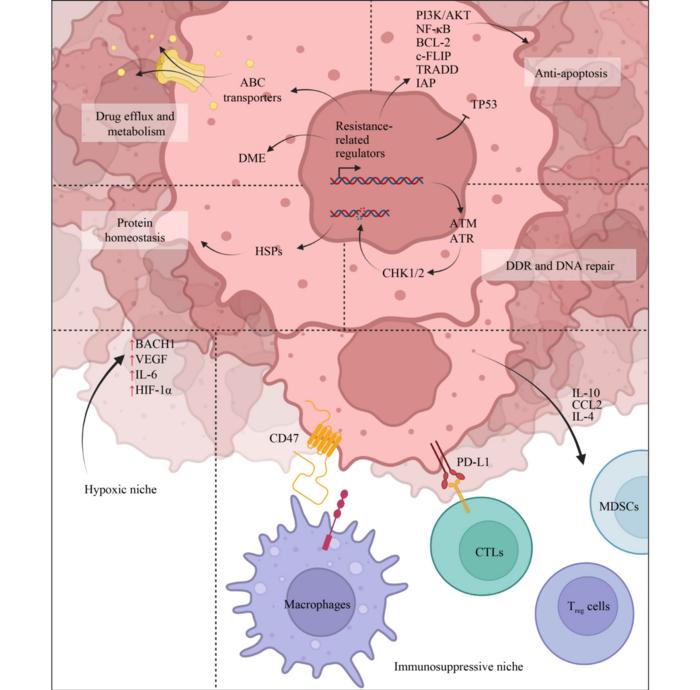
The characteristics exhibited by resistant cancer cells include enhanced drug efflux capabilities, increased efficiency in DNA repair mechanisms, and a tendency toward protein homeostasis. Not only do these traits complicate treatment efforts, but they also serve as markers for identifying populations resistant to conventional therapies. The interplay between NOTCH signaling and these resistance traits further emphasizes the necessity for targeted therapeutic approaches that consider the mechanistic underpinnings of resistance.
One promising strategy for overcoming resistance has been the development of therapeutic agents that directly target NOTCH signaling. Therapeutic agents such as γ-secretase inhibitors (GSIs), monoclonal antibodies against NOTCH ligands, and inhibitors targeting downstream effectors have entered clinical trials. However, these trials have encountered various challenges, notably due to toxicity concerns and the need for carefully moderated dosing regimens. Therefore, further refinement of these strategies is crucial, alongside exploring alternative methods that may lower doses of NOTCH inhibitors to reverse resistance without depleting resistant cell populations.
Future directions in this research area should focus on differentiating the roles of canonical and noncanonical NOTCH signaling. As our understanding of these pathways deepens, the refinement of targeting strategies will become imperative in the fight against cancer. Tapping into the nuances of both signaling branches presents an opportunity to enhance targeting specificity and reduce unintentional repercussions on non-target cells or pathways. Researchers must prioritize exploring these avenues to optimize treatment outcomes for resistant cancers.
Understanding the complexity of therapeutic resistance, especially nongenetic factors influenced by NOTCH signaling, holds significant promise for the future of cancer therapeutics. As we continue to unravel the intricate mechanisms involved in resistance, there will undoubtedly emerge more effective and personalized therapeutic strategies. Additionally, focusing on the tumor microenvironment and its interactions with cancer cells offers expanded vistas for intervention, fostering new hope for patients facing dire prognoses.
Finally, as cancer biology evolves and we gain further insights into resistance pathways like NOTCH signaling, the need to communicate these findings effectively must not be overlooked. Disseminating knowledge to healthcare practitioners and patients alike will be essential in fostering an informed dialogue regarding potential treatment avenues. As researchers, clinicians, and patients work collaboratively, the potential for breakthroughs in managing therapeutic resistance is more promising than ever.
Additionally, efforts should persist in educating stakeholders—including researchers, clinicians, and policy-makers—about the implications of these findings. The evolving landscape of cancer treatment is intricately linked to our understanding of resistance mechanisms, necessitating concerted efforts toward developing more targeted, effective therapies. By harnessing the insights gained from studying pathways such as NOTCH signaling, we can forge a path toward more successful treatment outcomes and improved quality of life for cancer patients around the world.
Cite Scienmag News
Nathaniel Bowman. (March 27, 2025). Exploring Canonical and Noncanonical NOTCH Signaling: Key Players in Cancer’s Nongenetic Resistance. Scienmag. https://scienmag.com/exploring-canonical-and-noncanonical-notch-signaling-key-players-in-cancers-nongenetic-resistance/
Nathaniel Bowman. "Exploring Canonical and Noncanonical NOTCH Signaling: Key Players in Cancer’s Nongenetic Resistance." Scienmag, 27 March 2025, https://scienmag.com/exploring-canonical-and-noncanonical-notch-signaling-key-players-in-cancers-nongenetic-resistance/. Accessed 4 September 2026.
Nathaniel Bowman. "Exploring Canonical and Noncanonical NOTCH Signaling: Key Players in Cancer’s Nongenetic Resistance." Scienmag. March 27, 2025. https://scienmag.com/exploring-canonical-and-noncanonical-notch-signaling-key-players-in-cancers-nongenetic-resistance/


