

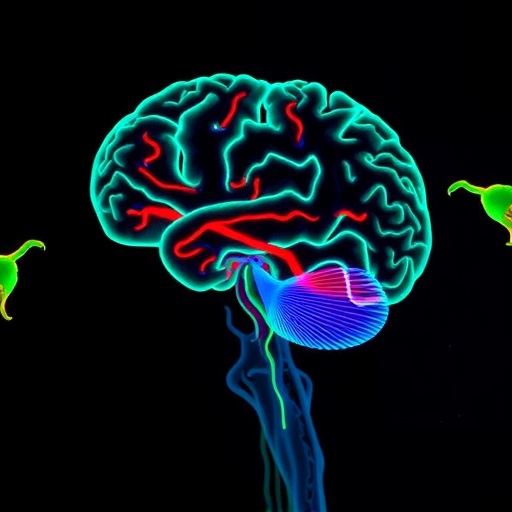
In the intricate landscape of neurobiology, the study of neuropeptides has emerged as a central theme in understanding human behavior and physiology. Among these, arginine vasopressin (AVP) possesses a fascinating dual role as a hormone and neurotransmitter. Recent research by Alacreu-Crespo and colleagues sheds light on the function of the AVP1B receptor, unveiling the complexities of its genetic variations and their influence on neurobiological pathways. This study not only enhances our understanding of the AVP system but also paves the way for potential therapeutic interventions in various psychiatric disorders.
Vasopressin, a key player in the regulation of social behaviors, includes functions like stress response, fluid balance, and circadian rhythms. The AVP1B receptor, specifically, has garnered attention for its role in modulating aggressive and social behaviors. This receptor is distributed throughout the brain, primarily in areas associated with emotional processing and social interaction, thus establishing a crucial connection between hormonal signaling and behavioral outcomes.
The authors explored functional polymorphisms within the AVP1B receptor that may influence its efficacy and response to vasopressin. These polymorphisms can manifest as variations in amino acid sequences that may alter receptor binding affinities or signaling cascades. Understanding these genetic variations is crucial, as they provide insights into individual differences in behavior and can help to elucidate the biological underpinnings of social and psychological conditions.
Brain imaging technologies, including functional magnetic resonance imaging (fMRI), were employed to elucidate the relationship between the genetic variants of the AVP1B receptor and brain activity in response to social stimuli. This methodological approach allowed the researchers to identify specific neural circuits involved when subjects engaged with social cues, underscoring the receptor’s role in integrating social information and emotional responses.
The importance of genetics in behavior cannot be overstated. Variations in the AVP1B receptor have been implicated in conditions such as autism spectrum disorders, anxiety, and depression. By identifying which polymorphisms are most influential, researchers can start to link these genetic factors with observable behavioral phenotypes. This creates a bi-directional pathway whereby knowledge of genetics can inform therapeutic strategies, while behavioral observations can direct research into genetic impacts.
Compelling evidence suggests that polymorphisms in the AVP1B receptor are not just random genetic variations but rather can be classified as significant contributors to individual behavioral differences. These insights may help in understanding why some individuals are more prone to certain psychological disorders or exhibit distinct social behaviors. Furthermore, they emphasize the necessity of personalized medicine approaches in psychiatric treatment, where understanding a patient’s unique genetic makeup could tailor their therapeutic options.
As research into the AVP system continues to evolve, an interdisciplinary approach integrating genetics, neuroscience, and psychology will be critical. This comprehensive perspective allows for a more profound understanding of how biological mechanisms translate into behavior. The interactions between our genetic predispositions and environmental influences create a vast, dynamic landscape in which behavior is formed, altered, and expressed.
What stands out in Alacreu-Crespo’s study is the potential for developing targeted interventions that could manipulate AVP activity in the brain. This could lead to novel treatment modalities for conditions where social impairments and emotional dysregulation are central features. For instance, pharmacological agents that specifically enhance or inhibit AVP1B receptor activity could offer pathways to improve social functioning in vulnerable populations.
Additionally, the implications of this research extend beyond psychiatry; they touch upon other fields such as endocrinology and general psychology. By understanding how vasopressin influences our brain function and social behavor, we may uncover broader biological principles applicable to various health conditions. This could lead to breakthroughs in how we approach other hormone-related disorders where behavioral aspects are critical.
The study certainly sparks curiosity about future research directions in AVP-related studies. Will we delve deeper into how these polymorphisms influence not just social behavior but also cognitive functions? Or how different environmental contexts may interact with these genetic factors? The potential for groundbreaking discoveries is immense, and as methodologies improve, researchers are equipped to explore these questions with renewed vigor.
While the focus on the AVP1B receptor is substantial, the broader landscape of neuropeptides and their receptors warrants further exploration. Other neuropeptides, often overshadowed by the more commonly studied neurotransmitters such as dopamine and serotonin, may also play critical roles in modulating social behavior and emotional responses. This opens a dialogue about the intricate tapestry of neurochemistry that governs human interaction.
Overall, the research conducted by Alacreu-Crespo et al. is a compelling contribution to our understanding of the neurobiological foundations of behavior. As we continue to unravel the complexities of the human brain and its myriad functions, studies like this illuminate the path forward. The ongoing investigation into genetic polymorphisms and receptor function presents a rich avenue for discovery and the promise of enhanced therapeutic strategies in the realm of mental health and beyond.
With an ever-growing body of work linking genetics to behavior, it becomes increasingly clear that the field of neuroscience is standing on the brink of a new era. One where personalized approaches based on an individual’s genetic and neurobiological profile may redefine the paradigms of treatment and intervention. As we move forward, an integrative approach will be key in harnessing the full potential of this emerging understanding, one that champions not just scientific discovery but also the betterment of human welfare.
In conclusion, the interplay of genetics, neurobiology, and behavior is intricate and multifaceted. The contributions of studies such as this one by Alacreu-Crespo and colleagues build a crucial foundation for ongoing exploration into how these elements interact harmoniously within the realm of human psychology. Through this lens of inquiry, the future of mental health treatment may indeed become more personalized, nuanced, and effective.
Subject of Research: Functional polymorphisms of the AVP1B receptor and their impact on neurobiology and behavior.
Article Title: A pharmacological and brain imaging study of human vasopressin AVP1BR receptor functional polymorphisms.
Article References: Alacreu-Crespo, A., Olié, E., Manière, M. et al. A pharmacological and brain imaging study of human vasopressin AVP1BR receptor functional polymorphisms. BMC Neurosci 26, 42 (2025). https://doi.org/10.1186/s12868-025-00963-7
Image Credits: AI Generated
DOI: https://doi.org/10.1186/s12868-025-00963-7
Keywords: Vasopressin, AVP1B receptor, functional polymorphisms, neurobiology, social behavior, pharmacology, brain imaging, genetics, mental health.


