

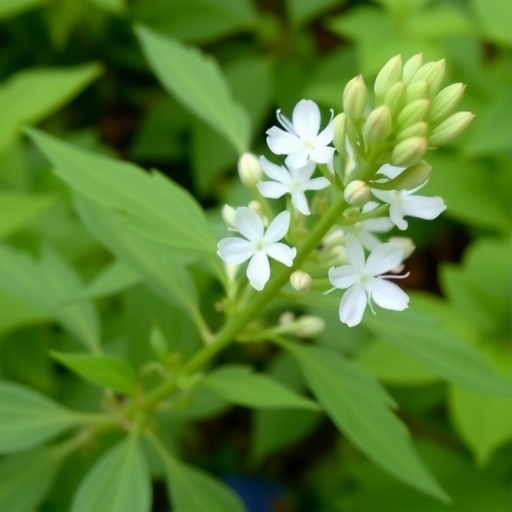
A groundbreaking study shed light on the anti-inflammatory properties of Andrographis paniculata, a traditional medicinal herb that has long been recognized in various cultures for its health benefits. This recent research, conducted by Jang, Hwang, and Kwon, highlights the plant’s potential in counteracting inflammation, a common precursor to many chronic diseases. The study focused on the effects of Andrographis paniculata leaves on LPS-induced RAW264.7 macrophages, a model used extensively to understand immune response and inflammation.
One of the major challenges in modern medicine is the search for natural anti-inflammatory agents, given the long-term side effects associated with conventional anti-inflammatory pharmaceuticals. This study seeks to address this gap by investigating the underlying mechanisms through which Andrographis paniculata exerts its effects, providing a scientific basis for its traditional uses. The researchers meticulously examined the biochemical pathways activated when macrophages were exposed to the leaf extracts, showing promising results that could revolutionize treatment protocols for inflammatory conditions.
The researchers employed rigorous methodologies to extract bioactive compounds from Andrographis paniculata, ensuring the fidelity and efficacy of the extracts used in their experiments. Specific attention was given to isolating key constituents, such as andrographolide, which has been dubbed the herb’s active constituent. The team then evaluated how these extracts influenced the production of pro-inflammatory cytokines in macrophages, thereby illuminating the herb’s potential role in mediating immune responses.
Given the increasing global prevalence of inflammatory diseases, compounded by the advent of antibiotic resistance and the limitations of synthetic drugs, natural alternatives are gaining interest. The study clearly established that treatment with Andrographis paniculata led to a significant reduction in the secretion of inflammatory markers such as TNF-alpha and IL-6. This finding is pivotal, as it suggests that the herb could be a viable candidate for the development of new anti-inflammatory therapies, especially in a world increasingly inclined toward holistic and natural health solutions.
One particularly striking aspect of the research was the observation that the Andrographis paniculata extracts were well-tolerated by macrophages, showing minimal toxicity. This characteristic is essential when considering new treatments, as safety profiles are crucial in determining the viability of any new pharmacological agent. The researchers emphasized the herb’s safety, laying the groundwork for potential clinical applications that could benefit patients suffering from various inflammatory diseases.
Moreover, the implications of these findings extend beyond just the treatment of chronic inflammatory diseases. The anti-inflammatory properties of Andrographis paniculata could also optimize recovery after acute injuries by modulating the inflammatory process, thus supporting tissue healing and regeneration. This dual capability highlights the herb’s versatility and expands its possible therapeutic uses across diverse medical challenges.
The research also suggests a need for further investigation into the pharmacodynamics of Andrographis paniculata, particularly how its bioactive compounds can synergistically interact with existing anti-inflammatory therapies. Understanding these interactions could enhance treatment efficacy while minimizing adverse effects, representing a significant advance in personalized medicine approaches.
As interest in natural remedies continues to rise, this study serves as a beacon for further exploration into plant-based therapeutics. The potential commercialization of Andrographis paniculata as a supplement or medication might not just innovate treatment landscapes but also stimulate economic opportunities in the herbal medicine industry. Evidently, the interest in herbal supplements is indicative of a broader societal shift towards sustainable and natural health practices.
Looking into the future, more expansive clinical trials will be necessary to solidify the role of Andrographis paniculata in contemporary medicine. Additional research should aim to clarify dosage, bioavailability, and overall effectiveness in human populations. Clinical studies designed to explore these areas will ultimately determine how this ancient herb can be integrated into modern health care paradigms.
This exhaustive study on Andrographis paniculata fills significant gaps in existing literature regarding herbal anti-inflammatory agents, pushing the boundaries of what we know and challenging perceptions held in the scientific community. The findings invite not only scientists but also healthcare professionals to reconsider the value of traditional medicines within pharmacotherapy frameworks.
In conclusion, the research conducted by Jang, Hwang, and Kwon marks a significant milestone in the exploration of Andrographis paniculata. Their investigation into its anti-inflammatory effects broadens the horizon for harnessing the power of nature in the fight against chronic diseases. This work illustrates a crucial convergence of cultural wisdom and scientific inquiry, reinforcing the notion that the answers to many of today’s health crises may indeed lie in the herbs and plants that have been utilized for centuries.
As more researchers delve into the therapeutic potentials of Andrographis paniculata, it may not be long before its components find a place in standard treatment protocols, paving the way for a safer, more effective approach to managing inflammation-related health issues.
Subject of Research: Anti-inflammatory effects of Andrographis paniculata leaf in LPS-induced RAW264.7 macrophages.
Article Title: Anti-inflammatory effects of Andrographis paniculata (Burm.f.) Wall. Ex Nees leaf in LPS-Induced RAW264.7 macrophages.
Article References: Jang, YA., Hwang, UK. & Kwon, YJ. Anti-inflammatory effects of Andrographis paniculata (Burm.f.) Wall. Ex Nees leaf in LPS-Induced RAW264.7 macrophages. BMC Complement Med Ther 25, 430 (2025). https://doi.org/10.1186/s12906-025-05143-y
Image Credits: AI Generated
DOI: https://doi.org/10.1186/s12906-025-05143-y
Keywords: Andrographis paniculata, anti-inflammatory, pharmacology, herbal medicine, cytokines, macrophages, traditional medicine, chronic diseases.


