

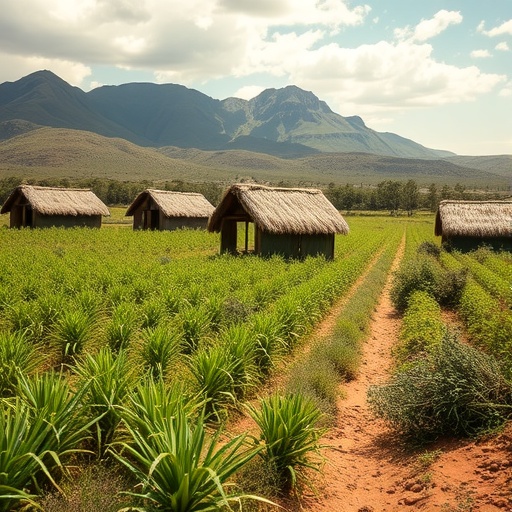
In a groundbreaking study, researchers B. Steyn and A. Antonites delve into the intricate agricultural systems of Thirteenth Century South Africa, unraveling a tapestry of sophistication that challenges preconceived notions of historical farming practices. Their work, “Cultivating Complexity: Thirteenth Century AD Crop Systems and Wild Plant Utilization,” published in the African Archaeological Review, serves as a vital contribution to the understanding of pre-colonial agricultural strategies in a region often overlooked by historians. This research reveals not only the crops that were cultivated during this era, but also the nuanced ways in which indigenous populations interacted with their environment, showcasing a complex relationship with both cultivated and wild flora.
The study draws upon archaeobotanical evidence collected from various sites across South Africa, allowing the authors to construct a detailed outline of agricultural methods utilized during the Thirteenth Century. This period, characterized by significant climatic shifts and sociopolitical changes, necessitated innovative approaches to food production. By examining plant remains and other archaeological artifacts, Steyn and Antonites illuminate the adaptive strategies that communities employed to ensure food security.
A central finding of the research highlights the diverse array of crops that were cultivated, including ancient grains, tubers, and legumes, which formed the foundation of the local diet. The authors emphasize the importance of understanding these crops not merely as commodities but as integral components of a broader ecological and cultural landscape. The synergy between human ingenuity and natural resources facilitated the development of a resilient agricultural system capable of withstanding environmental fluctuations.
Additionally, the study underscores the significance of wild plant utilization in Thirteenth Century agricultural practices. Far from relying solely on domesticated crops, communities adeptly harvested wild plants, supplementing their diets with a variety of nutrient-rich resources. This practice not only diversified their food sources but also reinforced their connection to the land, underscoring the importance of biodiversity in traditional farming systems.
The authors delve into the ethical implications of these findings, suggesting that modern agricultural practices could benefit from a reconsideration of indigenous methods. By embracing diverse cropping systems and the integration of wild plant species into contemporary agriculture, current food production can become more sustainable. This insight can be transformative for regions facing the pressures of climate change, as it emphasizes the value of historical knowledge and practices that have withstood the test of time.
Steyn and Antonites also analyze the socio-cultural dimensions of Thirteenth Century agricultural practices. They argue that these communities possessed a profound understanding of their environment, informed by centuries of knowledge passed down through generations. This collective memory shaped their agricultural decisions, influencing everything from crop rotation to the selection of planting sites. The researchers highlight the importance of preserving indigenous knowledge systems as vital reservoirs of wisdom that can inform modern agricultural practices.
The use of scientific methods, including pollen analysis and carbon dating, enriches the study’s findings, providing a robust archaeological framework for interpreting past human-environment interactions. By employing interdisciplinary approaches that draw from archaeology, botany, and anthropology, the authors present a multifaceted view of Thirteenth Century agriculture in South Africa, making their research not only an academic exercise but also a compelling narrative of human resilience and adaptability.
In their conclusion, Steyn and Antonites call for further research to expand the geographical scope of studies on ancient agricultural systems in Africa. They suggest that comparisons among different regions could yield valuable insights into the diversification of farming practices across the continent. Understanding these differences can provide crucial information about the movement of people, ideas, and agricultural techniques throughout history.
Moreover, the study has implications for food security and agricultural policy in contemporary society. Recognizing the complexity of ancient agricultural systems contributes to ongoing dialogues about sustainable practices that can help address modern challenges related to food production and environmental conservation. The researchers advocate for policies that support research into traditional farming techniques that align with ecological principles.
In light of the study’s revelations, the next steps for researchers will involve a collaborative effort to analyze other archaeological sites that may possess similar evidence of complex agricultural practices. By expanding the research to encompass a broader timeframe and diverse locations, it may be possible to piece together a comprehensive understanding of agricultural innovations across Africa and beyond.
In an era when climate change poses unprecedented challenges to global food systems, Steyn and Antonites’s work serves as an important reminder that looking to the past can provide valuable lessons for the future. The intricate agricultural systems of Thirteenth Century South Africa illustrate the rich tapestry of human adaptation to environmental change, emphasizing that innovative agricultural practices are not a modern invention but have deep historical roots.
Ultimately, this research invites us to reconsider our relationship with food production and to appreciate the wisdom encapsulated in traditional farming systems. It challenges us to value biodiversity, promote sustainability, and protect the cultural heritage that informs our agricultural practices. As the world grapples with pressing environmental issues, the lessons from the past become increasingly relevant, suggesting pathways toward resilience and sustainability in our agricultural systems today.
In summary, the findings presented by Steyn and Antonites illuminate a complex web of agricultural practices in Thirteenth Century South Africa, showcasing the ingenuity of ancient communities. This seminal research not only enriches our understanding of historical food systems but also offers practical insights for contemporary agriculture, promoting a harmonious relationship between people, crops, and the environment. This work stands as a clarion call for the integration of historical knowledge into modern food production strategies, paving the way for a sustainable future.
Subject of Research: Ancient agricultural practices and crop systems of Thirteenth Century South Africa.
Article Title: Cultivating Complexity: Thirteenth Century AD Crop Systems and Wild Plant Utilization, South Africa.
Article References:
Steyn, B., Antonites, A. Cultivating Complexity: Thirteenth Century AD Crop Systems and Wild Plant Utilization, South Africa.
Afr Archaeol Rev 42, 383–405 (2025). https://doi.org/10.1007/s10437-025-09628-6
Image Credits: AI Generated
DOI: https://doi.org/10.1007/s10437-025-09628-6
Keywords: Ancient agriculture, Thirteenth Century, South Africa, crop systems, wild plant utilization, biodiversity, sustainability, food security.


