


Oxford, September 22, 2025 – As the global climate continues to shift, the spread of vector-borne diseases has emerged as one of the most alarming public health challenges of our time. Among these, the West Nile virus (WNV) infection is rapidly gaining prominence in Europe, an area previously less affected by this pathogen. This surge in WNV cases has compelled researchers and clinicians alike to focus intently on understanding the intricate mechanisms underlying this viral threat, its clinical manifestations, and the urgent need for effective containment and treatment strategies.
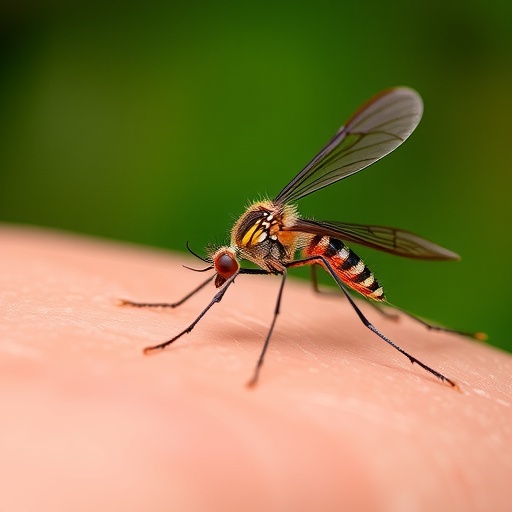
West Nile virus is an arthropod-borne virus primarily transmitted through the bite of infected mosquitoes, particularly those belonging to the genus Culex. Since its initial identification in 1937 near the Nile River in Uganda, WNV has remained a persistent global health concern. Historically, outbreaks were largely confined to Africa, the Middle East, and parts of Asia. However, recent decades have witnessed a significant expansion in its geographical range, bringing WNV into new continents and ecosystems, including the temperate climates of Europe and North America.
The amplified spread of WNV is closely linked with environmental alterations driven by climate change. Rising global temperatures and altered precipitation patterns are extending the breeding seasons and habitats of mosquito vectors, increasing the potential for human exposure. Additionally, climate-induced changes to bird migration patterns – the natural reservoirs of WNV – further complicate the seasonal dynamics of virus transmission. These ecological shifts create a synergistic effect, fostering the emergence of WNV in regions that were previously unaffected or considered low-risk.
WNV infection presents a considerable diagnostic challenge due to its largely asymptomatic or nonspecific clinical profile. Approximately 80% of infected individuals experience no discernible symptoms, rendering surveillance and early identification difficult. For symptomatic patients, infection typically manifests as a mild febrile viral illness, characterized by abrupt onset of fever, headache, malaise, muscle pain, anorexia, eye discomfort, diarrhea, and vomiting. These nonspecific symptoms can easily be mistaken for other common viral infections, delaying appropriate diagnosis and intervention.
Of greater concern are the cases where WNV progresses beyond mild symptoms. Vulnerable populations, including the elderly, immunocompromised individuals, and those with underlying chronic illnesses, are at heightened risk of developing neuroinvasive disease forms. These serious complications can take the form of meningitis, encephalitis, or acute flaccid paralysis, often resulting in permanent neurological deficits or even fatal outcomes. The pathogenesis involves viral invasion and inflammation of the central nervous system, a process that remains incompletely understood and unmitigated by current treatments.
From a virological standpoint, the WNV is a single-stranded RNA virus belonging to the Flaviviridae family. Its genome encodes several structural and nonstructural proteins that facilitate viral replication, immune evasion, and cell entry. Despite considerable scientific advances, there remains a stark absence of approved vaccines or targeted antiviral therapies for human use. Efforts to develop vaccines have been ongoing for years, yet none have progressed to advanced clinical stages, largely due to the complexity of eliciting long-term protective immunity and the sporadic nature of outbreaks.
Diagnosis of WNV infection relies primarily on serological testing, including detection of anti-WNV IgM antibodies in serum or cerebrospinal fluid, which indicate recent infection. Molecular techniques such as reverse transcription-polymerase chain reaction (RT-PCR) can detect viral RNA during the acute phase but are limited by a narrow window of viremic presence. The lack of rapid, widely available diagnostic tools poses a significant hurdle in timely case identification and outbreak containment.
Management of WNV infection remains largely supportive. No antiviral drugs have yet demonstrated consistent efficacy against WNV in clinical settings. Treatment focuses on symptom alleviation, hydration, and management of neurological sequelae. For severe neuroinvasive cases, hospitalization and intensive care may be required, with interventions such as respiratory support and seizure control often necessary. This therapeutic gap underscores the urgent need for research into antiviral compounds capable of halting disease progression before central nervous system involvement.
Preventative strategies, therefore, hinge principally on vector control. Mosquito eradication programs, including habitat reduction, insecticide application, and public education on protective measures (such as insect repellent use and avoidance of peak mosquito activity times), remain the frontline defense against WNV transmission. However, such measures face challenges related to logistical implementation, insecticide resistance, and community compliance.
The clinical and public health communities stand at a pivotal juncture. With growing evidence pointing to an escalating incidence of West Nile virus infection linked to changing environmental conditions, there is an imperative to heighten awareness among healthcare professionals. Adept clinical recognition and swift diagnosis are vital to managing individual cases efficiently and mitigating wider outbreaks, especially in high-risk groups.
Looking forward, the horizon of WNV research is illuminated by the prospects of vaccine development and novel antiviral therapies. The ideal vaccine would confer durable immunity to vulnerable populations, curtailing viral transmission and subsequent disease burden. Concurrently, antiviral agents targeting early viral replication stages could transform the management of infected individuals, reducing progression to neuroinvasive forms.
In summarizing the evolving threat of West Nile virus infection in Europe, it becomes evident that a multidisciplinary approach involving virologists, clinicians, epidemiologists, entomologists, and public health authorities is indispensable. Ongoing surveillance, ecological studies, and clinical trials will be crucial in developing an integrated response framework. As climate change continues to reshape disease landscapes globally, the West Nile virus stands as a compelling case study of how environmental shifts translate into emergent infectious disease threats.
The urgent message from experts is clear: the scientific and medical communities must enhance their preparedness for dealing with WNV. This entails not only the advancement of biomedical research but also effective communication strategies that inform the public and policymakers. Confronting the challenge of West Nile virus infection necessitates bridging the gap between vector biology, environmental science, and clinical medicine, ensuring that prevention, diagnosis, and treatment evolve in tandem with the virus’s changing epidemiology.
Remaining vigilant against West Nile virus requires proactive surveillance mechanisms coupled with investment in innovative technologies for vector control and rapid diagnostics. It is imperative to integrate climate data into predictive models for outbreak risk assessment, enabling targeted interventions. Only through such comprehensive strategies can Europe hope to contain the escalating threat posed by this viral pathogen and safeguard public health in an era of unprecedented environmental change.
Cite Scienmag News
Kristina Jarvis. (September 22, 2025). Experts warn: Prepare for a rising number of West Nile virus infections. Scienmag. https://scienmag.com/experts-warn-prepare-for-a-rising-number-of-west-nile-virus-infections/
Kristina Jarvis. "Experts warn: Prepare for a rising number of West Nile virus infections." Scienmag, 22 September 2025, https://scienmag.com/experts-warn-prepare-for-a-rising-number-of-west-nile-virus-infections/. Accessed 4 September 2026.
Kristina Jarvis. "Experts warn: Prepare for a rising number of West Nile virus infections." Scienmag. September 22, 2025. https://scienmag.com/experts-warn-prepare-for-a-rising-number-of-west-nile-virus-infections/


