


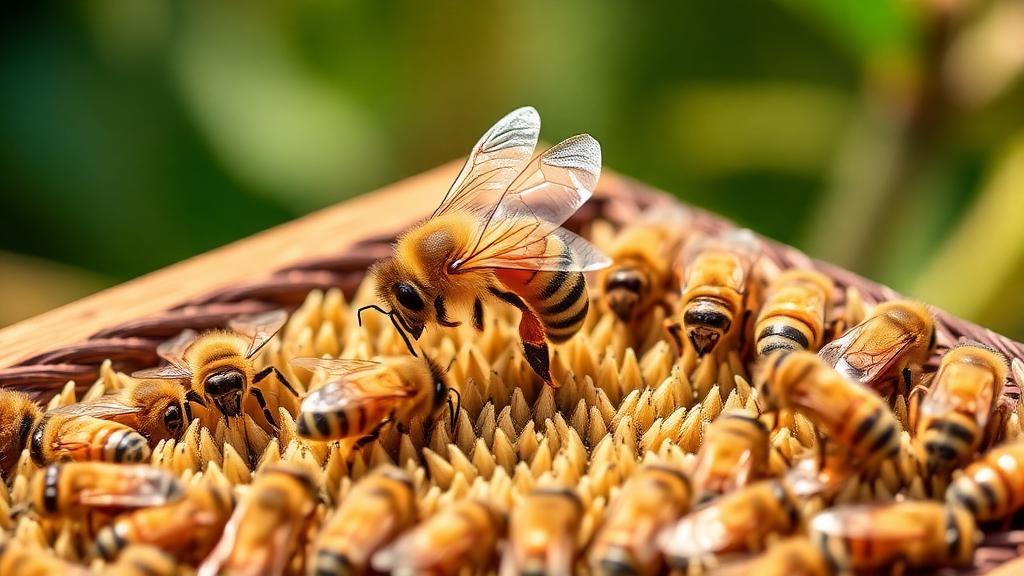
Managed bees are the unsung workforce of European agriculture. Honeybees, bumblebees and solitary mason bees pollinate a wide range of crops, from orchard fruits and oilseed rape to berries and field vegetables, underpinning yields worth billions of euros each year. Yet these industrious insects are under sustained pressure from a barrage of interacting threats: exposure to pesticides, infection by parasites and pathogens, and poor nutrition caused by flower-poor landscapes. A new study published in Scientific Reports has now brought together leading experts from across Europe to answer a deceptively simple question with profound implications: of all the things we could do to help managed bees, which are actually worth prioritising?
The research, led by Bryony K. Willcox and Simon G. Potts of the Centre for Agri-Environmental Research at the University of Reading, together with an international team spanning universities, farming organisations, conservation groups and industry, tackles one of the most stubborn problems in pollinator science. Scientists know that bees rarely face a single threat in isolation. A honeybee colony may simultaneously be exposed to a fungicide spray, carry a parasite load and struggle to find diverse forage in an intensively farmed landscape. These stressors can interact, sometimes amplifying each other’s harm in ways that single-factor studies fail to capture. But the evidence on exactly how these combinations play out, and which interventions work best against them, remains incomplete. Policymakers and farmers cannot wait for perfect data; they need practical guidance now.
To bridge that gap, the team turned to a structured expert elicitation technique known as a modified Delphi process. The Delphi method is a well-established tool for decision-making under uncertainty. It involves asking a panel of specialists to score options independently, then iterating through feedback rounds so that the group converges on the most defensible judgements. In this study, 21 experts with deep knowledge of bee health, agronomy, ecotoxicology and pollination ecology ranked 29 candidate response options across four case studies. Each case study represented a different combination of bee species and interacting stressors, covering the honeybee Apis mellifera, the buff-tailed bumblebee Bombus terrestris and the red mason bee Osmia bicornis, the three managed bee species most widely used in European crop pollination.
The experts assessed each response option along two distinct dimensions. The first was effectiveness: how well could the option mitigate pesticide exposure when it occurs in combination with either poor nutrition or an elevated parasite load? The second was feasibility: how realistic would it be to actually implement the option in real-world European agricultural landscapes, given economic, regulatory and practical constraints? Separating these two questions proved crucial. An intervention might be highly effective in principle but difficult to roll out in practice, or easy to implement but only modestly beneficial. By scoring both dimensions, the researchers could build a more nuanced picture of where effort and investment would deliver the greatest returns for bee health.
The results identified a clear set of perceived effective mitigation responses that could be prioritised to benefit multiple pollinator species facing different interacting stressors. Four options rose to the top: the creation of flower patches, rewarding farmers for pollinator-friendly practices, reducing the frequency of spray applications, and reducing spray drift. Each of these addresses a different facet of the multi-stressor problem. Flower patches boost the nutritional landscape, giving bees access to diverse pollen and nectar resources that can buffer the effects of other stressors. Rewarding farmers aligns economic incentives with pollinator protection, making bee-friendly management a viable business choice rather than a financial sacrifice. Reducing spray frequency directly cuts the number of pesticide exposure events a bee population experiences over a season, while reducing spray drift limits the spread of chemicals beyond the target field into hedgerows, wildflower strips and apiaries.
The technical logic behind these top-ranked options is compelling. Nutritional stress and pesticide exposure are known to interact: a bee that is well nourished may have greater capacity to detoxify agrochemicals, whereas a nutritionally compromised bee may be far more vulnerable to the same dose. By improving forage availability through flower patch creation, land managers can potentially reduce the lethality of unavoidable pesticide exposure. Similarly, spray drift reduction technologies and practices, such as buffer zones and precision application, reduce the spatial footprint of chemical exposure, protecting bees foraging beyond the treated crop. Reducing application frequency attacks the problem at its source, lowering the cumulative exposure burden that interacts with parasites and poor diet.
Perhaps the most policy-relevant finding of the study is the concept the authors call feasibility priorities. These are effective mitigation responses that, according to the expert panel, can only be implemented with additional targeted support. In other words, the science says these interventions would work, but farmers, beekeepers and land managers cannot deliver them without help, whether in the form of financial incentives, technical advice, regulatory backing or infrastructure. This distinction matters enormously for the design of agri-environment schemes and pollinator policies. Simply listing recommended practices is not enough; policymakers must identify which effective options are currently blocked by practical barriers and then design the support mechanisms needed to unblock them.
The study’s approach also represents a methodological contribution in its own right. By maximising the value of currently available evidence and combining it with structured expert knowledge, the researchers demonstrate a decision-support framework that can be applied even where empirical data on stressor interactions is incomplete. This is a realistic response to the pace of the pollinator crisis. Running factorial experiments on every possible combination of pesticide, pathogen and nutritional stressor across every managed bee species and cropping system would take decades. Structured elicitation allows the scientific community to distil what is already known, make transparent and auditable judgements about the remaining uncertainties, and provide actionable guidance in the meantime. The authors emphasise that this approach can provide evidence to support pollinator policy and management by bridging the current knowledge gap around the impacts of interacting stressors and how best to mitigate them.
The breadth of the expert panel lends the findings considerable weight. The 21 participants and co-authors included researchers from the University of Reading, the University of Cambridge, the University of Murcia, the University of Mons, Martin Luther University Halle-Wittenberg, Trinity College Dublin, the University of Bern and the University of Udine, alongside representatives of the National Farmers’ Union, Swedish Farmers, the International Union for Conservation of Nature, the World Wide Fund for Nature, the Institute for European Environmental Policy, and commercial pollination and bee health companies including Biobest Group, Wildbiene + Partner and VitaBeeHealth. Regulatory scientists from institutions such as the Julius Kühn Institute in Germany also contributed. Bringing together stakeholders who do not always see eye to eye, from environmental NGOs to agrochemical companies, and having them converge on shared priorities through a transparent scoring process, is itself a notable achievement and strengthens the practical credibility of the recommendations.
The work was carried out as part of PoshBee, a major European research project funded by the Horizon 2020 research and innovation programme under grant agreement no. 773921, which has examined the impacts of multiple stressors on pan-European bee populations. For beekeepers watching colony losses, for farmers who depend on pollination services, and for policymakers designing the next generation of agri-environment schemes, the message of this study is one of cautious optimism. We may not yet fully understand every interaction between pesticides, parasites and nutrition in managed bees, but we do know enough, the expert panel concludes, to act. Planting flower patches, paying farmers to farm with pollinators in mind, spraying less often and keeping sprays where they belong are the measures most likely to make a measurable difference, and with the right targeted support, the options that are effective but hard to implement today could become standard practice across European farmland tomorrow.
Subject of Research: Expert-based prioritisation of mitigation options for interacting pesticide, parasite and nutritional stressors on managed bees in European agricultural landscapes
Article Title: Options for mitigating multi-stressor interactions on managed bees in European agricultural landscapes
Article References: Willcox, B. K., Senapathi, D., Brown, M. J. F., Garratt, M. P. D., Breeze, T. D., Alix, A., Allen, M., De la Rúa, P., Gospodinov, K., Hartfield, C., Ivarsson, K., Maus, C., McDowell, D., Michez, D., Mielgo, P., Nazzi, F., Padurean, C., Paxton, R. J., Pettis, J. S., … Potts, S. G. (2026). Options for mitigating multi-stressor interactions on managed bees in European agricultural landscapes. Scientific Reports. https://doi.org/10.1038/s41598-026-73031-7
Image Credits: AI Generated
DOI: 10.1038/s41598-026-73031-7
Keywords: managed bees, pollinators, pesticides, Delphi method, agricultural landscapes, bee health, multi-stressor interactions, flower patches, pollinator policy, Apis mellifera, Bombus terrestris, Osmia bicornis
Cite Scienmag News
Denise Maddox. (October 10, 2026). Experts Rank the Best Ways to Shield Managed Bees from Combined Stressors. Scienmag. https://scienmag.com/experts-rank-the-best-ways-to-shield-managed-bees-from-combined-stressors/
Denise Maddox. "Experts Rank the Best Ways to Shield Managed Bees from Combined Stressors." Scienmag, 10 October 2026, https://scienmag.com/experts-rank-the-best-ways-to-shield-managed-bees-from-combined-stressors/. Accessed 10 October 2026.
Denise Maddox. "Experts Rank the Best Ways to Shield Managed Bees from Combined Stressors." Scienmag. October 10, 2026. https://scienmag.com/experts-rank-the-best-ways-to-shield-managed-bees-from-combined-stressors/


