


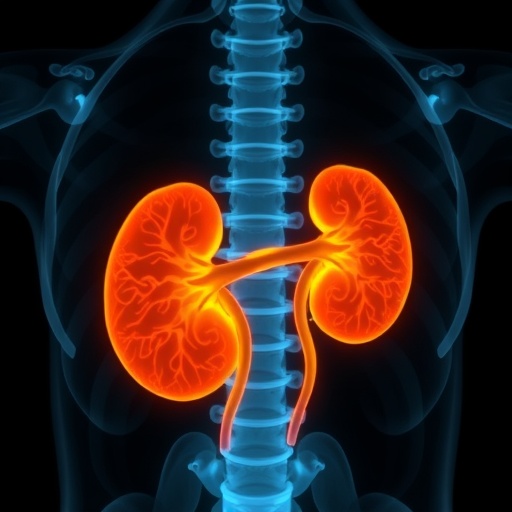
A groundbreaking study recently published in Nature Communications has cast new light on the intricate genetic underpinnings of kidney malformations, a group of congenital abnormalities that have long posed diagnostic and therapeutic challenges. Through comprehensive exome sequencing analysis, researchers have successfully linked these malformations to broader developmental disorders, identifying a spectrum of causal genes that expand the horizons of nephrogenetic research and piqued excitement in the field of developmental biology and medical genetics. This landmark research not only elucidates the genetic architecture of renal anomalies but also lays the groundwork for precision medicine strategies targeted at early diagnosis and intervention.
Kidney malformations, often diagnosed prenatally or in infancy, represent a heterogeneous group of conditions that impair renal formation and function. Traditionally, the etiology of these malformations remained elusive, hindering effective clinical management. The recent exome-wide analysis spearheaded by Milo Rasouly, H., Krishna Murthy, S.B., and their multidisciplinary team, has integrated high-throughput sequencing technologies to decode the genetic variants associated with these complex phenotypes. Their study encompassed a remarkably diverse cohort, capturing the multifaceted nature of kidney development and congenital anomalies.
One of the pivotal achievements of this study lies in leveraging exome sequencing of affected individuals, enabling the detection of rare, damaging mutations within protein-coding regions. By filtering through thousands of variants, the researchers pinpointed novel mutations with strong pathogenic potential. These results were further corroborated by functional analyses, which validated gene candidates implicated in nephrogenesis. This robust methodological framework elevates the reliability of their findings, positioning genetic screening as an indispensable tool in clinical nephrology.
The analysis unveiled that many genes implicated in kidney malformations are recurrently mutated in patients with a range of developmental disorders, highlighting an unexpected genetic overlap. This revelation underscores the notion that renal anomalies might serve as phenotypic markers for broader syndromic presentations. Indeed, the intricate developmental pathways governing kidney morphogenesis intersect with those directing other organ systems, implying that disruptions within these shared pathways can manifest as multi-organ pathologies.
Moreover, the research team identified previously uncharacterized genes whose mutations result in kidney malformations, thereby expanding the catalog of critical developmental genes. These novel genes contribute insights into hitherto unknown molecular mechanisms influencing nephron patterning, branching morphogenesis, and ureteric bud development. Understanding these genetic players is crucial, as it opens potential therapeutic avenues that could modify disease progression at the embryonic stage.
The study also emphasizes the significance of gene dosage and mutation types in determining phenotypic severity, ranging from subtle structural anomalies to complete renal agenesis. The detailed genotype-phenotype correlations established provide clinicians with predictive markers that may inform prognosis and counseling for affected families. This personalized approach to patient care represents a transformative step towards mitigating the lifelong burden associated with congenital kidney diseases.
Intriguingly, the research highlights the role of key signaling pathways — such as WNT, BMP, and Notch — governed by the identified genes, which orchestrate the cascading events of kidney development. Aberrations within these pathways can derail cellular differentiation, proliferation, and spatial organization necessary for forming functional nephrons. By elucidating how gene mutations impinge on these processes, the study bridges fundamental developmental biology with translational medicine.
Furthermore, the integrative approach combined exome data with detailed phenotypic assessments, enabling the prioritization of candidate variants within clinical diagnostic workflows. This systematic strategy ensures that genetic findings are directly applicable to patient care. The researchers advocate for the incorporation of exome sequencing into standard fetal anomaly scans and newborn screening protocols, which could revolutionize early detection and therapeutic planning for at-risk populations.
Beyond the immediate clinical impacts, this research provides a valuable genetic framework for investigating comorbidities associated with kidney malformations. Since many of the implicated genes have pleiotropic effects, their study may broaden our understanding of complex syndromic presentations, including neurodevelopmental and cardiac disorders. This holistic perspective advocates for interdisciplinary approaches in managing affected patients, recognizing the interconnected nature of developmental systems.
Notably, the study’s extensive dataset serves as a resource for the scientific community, fostering opportunities for follow-up functional studies and drug discovery programs targeting aberrant molecular pathways. The high-resolution genetic maps generated serve as a foundation for in vitro and in vivo models aiming to recapitulate human renal disease, paving the way for novel interventional trials. Such advancements have the potential to dramatically improve patient outcomes and quality of life.
The researchers also discuss the ethical dimensions surrounding genetic testing, especially in prenatal diagnostics. They emphasize the importance of genetic counseling and informed decision-making to navigate the complexities of interpreting variants of uncertain significance. As genetic technologies become increasingly accessible, balancing scientific progress with responsible application remains paramount in safeguarding patient autonomy and wellbeing.
This study exemplifies the power of genomics to unravel intricate developmental processes and highlights the transformative potential of personalized medicine in congenital disorders. It represents a convergence of cutting-edge technology, rigorous data analysis, and clinical insight, marking a milestone in our quest to decode the genetic basis of human organogenesis. The findings promise to reshape diagnostic paradigms and inspire future research endeavors exploring the nexus of genetics and development.
In conclusion, the exome analysis linking kidney malformations to developmental disorders provides unprecedented clarity on the genetic determinants of renal anomalies. The identification of causal genes deepens our mechanistic understanding and sets the stage for innovative therapeutic approaches. As this knowledge permeates clinical practice, it heralds a new era wherein genetic insights drive precision diagnostics and tailored interventions for congenital kidney diseases, ultimately transforming patient care on a global scale.
Cite Scienmag News
Juliet Wilcox. (August 8, 2025). Exome Analysis Reveals Genes Behind Kidney Malformations. Scienmag. https://scienmag.com/exome-analysis-reveals-genes-behind-kidney-malformations/
Juliet Wilcox. "Exome Analysis Reveals Genes Behind Kidney Malformations." Scienmag, 8 August 2025, https://scienmag.com/exome-analysis-reveals-genes-behind-kidney-malformations/. Accessed 7 September 2026.
Juliet Wilcox. "Exome Analysis Reveals Genes Behind Kidney Malformations." Scienmag. August 8, 2025. https://scienmag.com/exome-analysis-reveals-genes-behind-kidney-malformations/


