


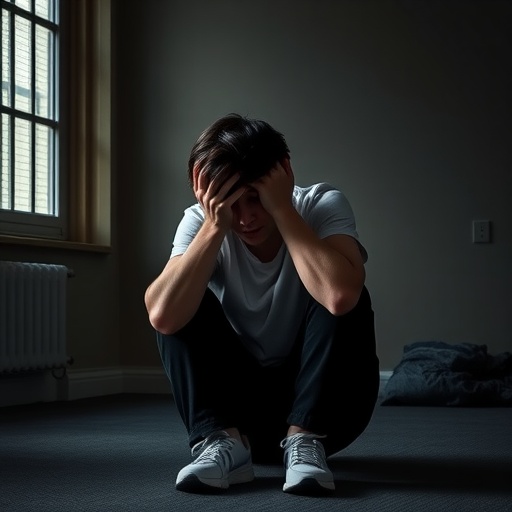
In the tumultuous landscape shaped by the COVID-19 pandemic, the mental health of university students has emerged as a critical concern worldwide. A recent study published in BMC Psychology sheds new light on the complex relationship between physical exercise and depression among this vulnerable demographic. The researchers, led by Chen, Ma, Song, and colleagues, explored not only the direct effects of exercise on depression but also the nuanced mediating roles played by feelings of relative deprivation and subjective exercise experiences. This investigation offers a compelling glimpse into the psychological mechanisms that could guide future interventions during ongoing or future public health crises.
During the pandemic, university students have faced unprecedented disruptions—from the sudden shift to remote learning to prolonged periods of social isolation. Such drastic lifestyle changes have markedly increased the risk of depression, a condition already prevalent in this age group. The study in question delves into how exercise—a widely recommended tool for mental health enhancement—may mitigate depressive symptoms under these unique circumstances. However, unlike prior research that has predominantly focused on the simplistic dichotomy of exercise versus no exercise, this study ambitively integrates psychological constructs that influence how exercise impacts mood.
A fundamental concept underpinning the research is that exercise effects are not uniform; they are intricately modulated by an individual’s subjective experience and socio-psychological context. Chen and colleagues posit that relative deprivation—a feeling of being deprived compared to others, particularly when juxtaposed against peers’ capabilities or circumstances—may significantly alter the psychological benefits one derives from exercise. In a pandemic context, where access to exercise resources varies widely and social comparisons are intensified by online interactions, relative deprivation becomes a particularly salient factor.
The methodology employed in this study involved a rigorous survey of university students, assessing their physical activity levels, depressive symptoms, feelings of relative deprivation, and subjective perceptions of their exercise experiences. The subjective exercise experience was characterized by feelings of enjoyment, fulfillment, or frustration during workouts. By integrating psychometric scales with exercise frequency data, the authors generated a sophisticated model elucidating the indirect pathways linking exercise and depression through these mediators.
One of the most striking findings reveals that students who engage in regular physical activity do indeed report fewer depressive symptoms overall, corroborating a well-established link in mental health literature. Yet, interestingly, the protective effect of exercise is attenuated or even negated in students experiencing high levels of relative deprivation. In other words, if a student feels they lack equal opportunity to exercise or perceives their performance as inferior to others, the mental health benefits typically gained from exercise diminish substantially.
Furthermore, the role of subjective exercise experience emerged as a powerful moderator. Participants who reported positive emotional engagement during exercise—such as feelings of accomplishment or enjoyment—showed a much stronger inverse association between exercise and depression. Conversely, those who found exercise unenjoyable or stressful did not reap comparable psychological rewards. This highlights the importance of not only encouraging physical activity but also fostering positive exercise experiences.
The study’s implications extend well beyond academic curiosity. By unraveling these intricate mediators, the findings advocate for a more tailored approach in mental health interventions targeting university populations. Public health initiatives merely promoting exercise volume may fall short if they ignore the psychological hurdles and inequities faced by students. Interventions designed to reduce feelings of relative deprivation—perhaps through equitable access to facilities or social support networks—could amplify the mental health benefits of physical activity.
From a technical standpoint, the research utilizes advanced mediation analysis techniques to dissect the pathways involved. Structural equation modeling enables the researchers to statistically confirm that relative deprivation and subjective exercise experience are not simply confounding variables but true mediators that partially explain how exercise influences depression outcomes. Such methodological rigor strengthens the reliability and applicability of these findings across diverse university settings.
This study also underscores the necessity of considering context-specific factors during the pandemic. Lockdowns and social restrictions have created a unique environment where usual social comparisons and exercise routines are disrupted. Virtual exercise classes and online fitness communities emerged as coping mechanisms, but these too may influence feelings of deprivation or fulfillment differently among students. The nuanced understanding offered by Chen and colleagues provides a foundation for exploring such modern adaptations and their psychological impacts.
Moreover, the psychological concept of relative deprivation investigated here aligns with broader social theories about mental health disparities. It suggests that beyond objective conditions, subjective perceptions of inequality and access critically shape well-being. This insight calls for a multidisciplinary dialogue integrating psychology, sociology, and public health to design comprehensive mental health strategies during crises.
While the study focuses on university students in China, where the data were primarily collected, the general psychological mechanisms identified likely resonate globally. The universality of COVID-19 restrictions and the widespread recognition of exercise as a mental health tool suggest that similar patterns may exist among students worldwide. Nonetheless, cultural factors affecting relative deprivation and exercise attitudes warrant further exploration to tailor intervention strategies appropriately.
In conclusion, the research by Chen, Ma, Song, and their team offers a sophisticated, timely investigation into how exercise interacts with psychological factors to influence depression among university students during the COVID-19 pandemic. By illuminating the mediating roles of relative deprivation and subjective exercise experience, it pushes the field towards a more nuanced, impactful understanding of mental health promotion. This knowledge can spur innovative, targeted interventions that not only encourage exercise but also foster equitable and enjoyable physical activity environments for students navigating the ongoing challenges of the pandemic world.
As public health professionals, educators, and policymakers digest these findings, the take-home message is clear: promoting exercise as a universal remedy for depression requires careful attention to social inequities and individual psychological experiences. Only by addressing these mediating factors can the protective effects of physical activity be fully realized, potentially mitigating the deepening mental health crisis among young adults in pandemic times and beyond.
Cite Scienmag News
Glenn Wilkins. (August 5, 2025). Exercise Eases Student Depression: Role of Deprivation, Experience. Scienmag. https://scienmag.com/exercise-eases-student-depression-role-of-deprivation-experience/
Glenn Wilkins. "Exercise Eases Student Depression: Role of Deprivation, Experience." Scienmag, 5 August 2025, https://scienmag.com/exercise-eases-student-depression-role-of-deprivation-experience/. Accessed 4 September 2026.
Glenn Wilkins. "Exercise Eases Student Depression: Role of Deprivation, Experience." Scienmag. August 5, 2025. https://scienmag.com/exercise-eases-student-depression-role-of-deprivation-experience/


