


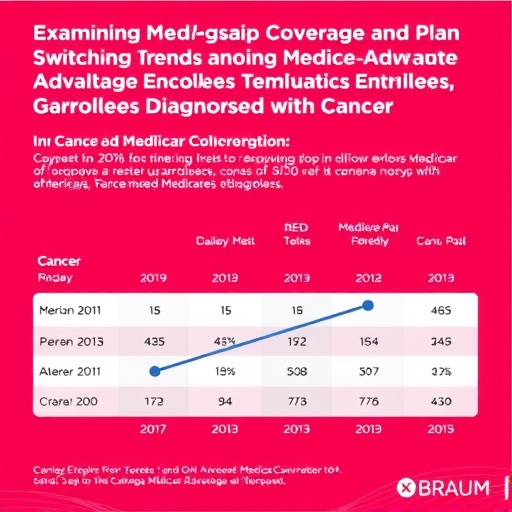
In a recent rigorous cohort study published in JAMA Health Forum, researchers have illuminated the substantial influence of state-level Medigap guaranteed issue protections on Medicare beneficiaries’ ability to switch from Medicare Advantage to traditional Medicare following a new cancer diagnosis. This pivotal research sheds light on the critical juncture at which vulnerable patients confront complex health insurance decisions and the protective role that specific policy frameworks play in navigating these choices. By highlighting differential outcomes rooted in state regulatory environments, the study uncovers nuances that have far-reaching implications for health insurance policy and equity in care access.
Medigap policies, a form of supplemental insurance covering out-of-pocket costs not included in traditional Medicare, are of particular interest here. These plans often provide a safety net by mitigating financial risk during intensive medical treatments, such as cancer care. However, not all states afford the same level of protections for beneficiaries newly diagnosed with severe conditions. In some states, guaranteed issue laws require insurers to sell Medigap policies without medical underwriting during specific qualifying events—including a cancer diagnosis—ensuring that patients can secure supplemental coverage without fear of denial or prohibitive pricing. This study rigorously evaluated how these protections affect beneficiaries’ decisions to switch from Medicare Advantage, which often imposes network restrictions and prior authorization requirements, to traditional Medicare, which typically allows greater provider choice.
The researchers employed comprehensive claims data analysis alongside demographic and policy variables, tracing the switching behaviors of Medicare Advantage beneficiaries newly diagnosed with cancer across various states with differing Medigap regulations. Their findings demonstrated a statistically significant increase in the rate of switching to traditional Medicare among beneficiaries residing in states with guaranteed issue protections. This suggests that when enrollees have confidence in their ability to obtain Medigap coverage without barriers, they are more likely to pivot toward traditional Medicare to secure broader provider access and flexibility essential for managing complex, evolving cancer care needs.
Importantly, the study also brought to light persistent disparities in the capacity and likelihood of beneficiaries to make such switches. Factors such as socioeconomic status, health literacy, and regional availability of insurance products appear to intersect with state policies, creating variable outcomes. Beneficiaries lacking resources or navigational support might encounter difficulties comparing plans or affording supplemental coverage, underscoring inequities that extend beyond straightforward regulatory frameworks. This emphasizes the need for targeted interventions to bolster equity in insurance choice and access, particularly for highly vulnerable populations recently confronted with severe illness.
From a policy standpoint, these insights merit serious consideration for the design and harmonization of Medigap regulations nationwide. As the nation grapples with escalating cancer incidence amid an aging population, the ability to fluidly switch between Medicare structures in response to changing health circumstances is more crucial than ever. Ensuring guaranteed issue protections at the federal level could standardize and protect patients’ financial security and care options, minimizing geographic and socioeconomic disparities in access to optimal cancer care pathways.
Furthermore, the findings draw attention to the intricate relationship between insurance plan design, beneficiary behavior, and health outcomes. Medicare Advantage plans, while popular for their integrated management and perceived cost efficiencies, may not suit all health trajectories—especially those requiring complex, multi-disciplinary oncology care. The study suggests that policy mechanisms allowing beneficiaries more freedom to transition without penalty or delay can promote more patient-centered care experiences aligned with clinical needs.
Clinicians, insurers, and policymakers alike must reckon with the practical implications of these insurance dynamics. Educating beneficiaries about their rights and choices post-diagnosis, streamlining enrollment procedures, and enhancing transparency in plan benefits and costs are key steps to empower patient agency. Such improvements could reduce avoidable financial toxicity and clinical disruptions, ultimately advancing both quality of life and survival outcomes for Medicare beneficiaries with cancer.
This research was spearheaded by Youngmin Kwon, PhD, and colleagues, whose methodological rigor and nuanced policy analysis contribute significant evidence to ongoing debates about Medicare reform and supplemental insurance protections. By combining robust epidemiologic methods with a policy lens, the study offers a roadmap for reducing inequities and enhancing the responsiveness of Medicare programs to the complex realities of cancer care.
As healthcare systems face mounting pressures from demographic shifts and rising medical expenses, studies like this highlight the indispensable role of adaptive policy frameworks. The intersection of guaranteed issue protections and beneficiary switching behavior underscores that regulatory details profoundly impact real-world patient experiences, influencing both access to care and financial risk.
The AcademyHealth 2025 Annual Research Meeting served as the platform for unveiling these findings, sparking conversations among health services researchers, clinicians, and policy experts. The implications resonate across stakeholders striving to create more equitable, flexible, and patient-responsive Medicare landscapes.
In sum, this cohort study offers compelling evidence that state Medigap guaranteed issue protections function as a vital safeguard, facilitating necessary transitions to traditional Medicare among beneficiaries recently diagnosed with cancer. The results advocate for broader regulatory consistency and enhanced support mechanisms to ensure that all Medicare enrollees—especially those confronting serious illness—can access insurance options aligned with their clinical and financial needs. As cancer care grows increasingly complex, maintaining flexible and fair insurance structures remains essential for health equity and quality outcomes.
News Publication Date: Not provided
Web References: Not provided
References: (doi:10.1001/jamahealthforum.2025.2018)
Cite Scienmag News
Nathaniel Bowman. (June 7, 2025). Examining Medigap Coverage and Plan Switching Trends Among Medicare Advantage Enrollees Diagnosed with Cancer. Scienmag. https://scienmag.com/examining-medigap-coverage-and-plan-switching-trends-among-medicare-advantage-enrollees-diagnosed-with-cancer/
Nathaniel Bowman. "Examining Medigap Coverage and Plan Switching Trends Among Medicare Advantage Enrollees Diagnosed with Cancer." Scienmag, 7 June 2025, https://scienmag.com/examining-medigap-coverage-and-plan-switching-trends-among-medicare-advantage-enrollees-diagnosed-with-cancer/. Accessed 5 September 2026.
Nathaniel Bowman. "Examining Medigap Coverage and Plan Switching Trends Among Medicare Advantage Enrollees Diagnosed with Cancer." Scienmag. June 7, 2025. https://scienmag.com/examining-medigap-coverage-and-plan-switching-trends-among-medicare-advantage-enrollees-diagnosed-with-cancer/


