

A Profound Demographic Transformation in U.S. Birth Patterns Signals Shifting Population Landscape
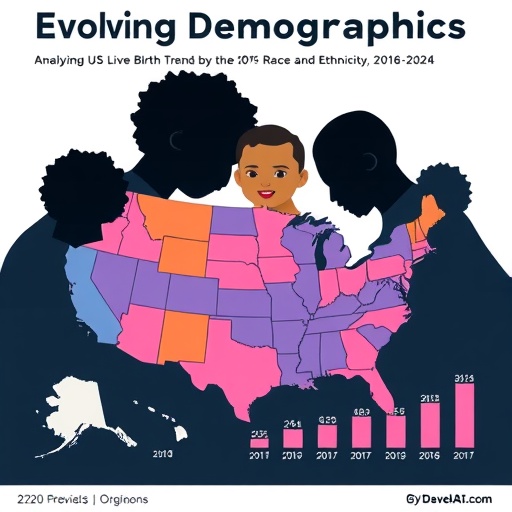
Recent demographic analyses have uncovered a remarkable shift in the ethnic composition of births across the United States, heralding transformative changes in the nation’s population dynamics. This transition is characterized by non-Hispanic white births accounting for less than half of all U.S. births, while the proportion of births attributed to Hispanic populations has surged beyond one-fourth. The implications of this trend extend deeply into social, economic, and healthcare domains, necessitating a comprehensive understanding of the underlying mechanisms driving these changes.
The evolving birth composition reflects a confluence of demographic factors, including variations in fertility rates, immigration patterns, and the age distributions of childbearing women among different ethnic groups. Declining fertility rates have been observed across most racial and ethnic groups, which traditionally would signal a general decrease in birth numbers nationwide. However, this decline has been counterbalanced by immigration inflows and notably younger maternal ages within the Hispanic community, factors that sustain relatively elevated overall birth rates despite broader fertility reductions.
An in-depth examination reveals that while fertility declines are common among non-Hispanic white women as well as other ethnic groups, Hispanic women exhibit a distinct demographic profile. On average, Hispanic women are younger during their reproductive years, resulting in higher fertility compared to older populations who generally experience diminished childbearing. This younger age structure among Hispanic women plays a pivotal role in maintaining the volume of births, offsetting the fertility decreases seen elsewhere.
In addition to age-related fertility differentials, immigration serves as another critical driver in reshaping birth patterns. The United States continues to attract significant numbers of immigrant families, many of whom belong to Hispanic populations. These immigrant communities frequently demonstrate relatively high fertility rates, contributing to higher birth counts within this demographic sector. Consequently, continued migration trends significantly influence the ethnic distribution of births beyond natural fertility changes in the resident population.
Accounting for these factors involves rigorous statistical analyses that integrate vital statistics data, including birth records and population surveys, with demographic modeling. The complexity inherent in isolating the effects of fertility, age structures, and migration demands sophisticated quantitative methodologies. Advanced statistical modeling techniques enable researchers to decipher the relative impact of each variable and forecast future demographic trajectories with improved precision, illuminating the scope and scale of these demographic shifts.
The consequences of shifting birth demographics are multifaceted. From a healthcare perspective, changes in birth composition necessitate culturally informed prenatal and maternal care services to accommodate population-specific needs. Moreover, educational planning must adapt to increased diversity among younger cohorts, particularly in regions experiencing significant Hispanic population growth. Urban planning and social services also stand to be affected as evolving population profiles influence housing demands, community resources, and labor market configurations.
Importantly, the demographic transition highlighted in these birth statistics mirrors broader societal changes, including the increasing multicultural makeup of the United States. This growing diversity not only reshapes cultural landscapes but also informs policy debates on immigration, healthcare equity, and social integration. Recognizing and responding to these shifts requires interdisciplinary approaches, combining demographic research with sociological, economic, and public health perspectives.
The role of age groups in this demographic context cannot be overstated. Younger age cohorts inherently present higher fertility potentials, and the prominence of younger Hispanic women among reproductive-age populations fuels sustained birth rates despite declining total fertility. This age-dependent variance underlines the demographic momentum inherent within different ethnic segments, highlighting the importance of age stratification in population studies.
Statistical evaluations also emphasize the interaction between ethnicity and fertility, revealing complex patterns of reproductive behavior shaped by cultural, socioeconomic, and environmental factors. These nuanced dynamics further challenge simplified interpretations and call for more granular, data-driven analyses to elucidate how ethnicity interplays with fertility trends across various U.S. regions and communities.
The ongoing demographic transformation described herein holds significant implications for the future composition of the United States. As non-Hispanic white births decline proportionally and Hispanic births ascend, cultural and societal constructs anchored in historical majority-minority frameworks will evolve. This evolution will shape national identity, political representation, and community cohesion in the decades to come.
Given these dynamics, policymakers, healthcare providers, and social planners are urged to consider demographic data’s predictive power in shaping sustainable strategies. Attention to the demographic factors driving birth rate changes is essential to supporting public health, education systems, labor markets, and social welfare programs adapting to a diversifying populace.
In summary, this demographic analysis underscores a pivotal transitional phase in U.S. birth composition, driven by intersecting decrements in fertility, heterogeneous age structures, and ongoing immigration. The resultant increased births among Hispanic women signal a reshaping of America’s demographic future with profound societal repercussions on multiple fronts. Continuous monitoring and detailed examination remain vital to navigating these complex demographic trends with informed precision.
Subject of Research: Demographic transitions in U.S. birth rates by ethnicity and contributing factors including fertility, immigration, and age dynamics.
Article Title: Not specified in provided content.
News Publication Date: Not specified in provided content.
Web References: Not specified in provided content.
References: (doi:10.1001/jamanetworkopen.2025.56659)
Image Credits: Not specified in provided content.
Keywords: Birth rates, United States population, Ethnicity, Racial differences, Statistical analysis, Demography, Age groups, Young people, Womens studies


