

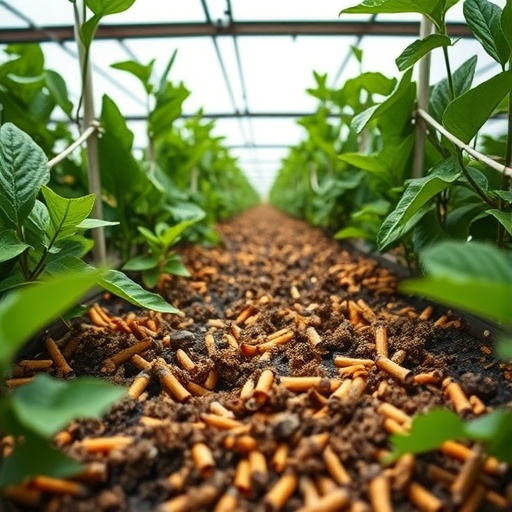
A groundbreaking new study published in Nature Communications in 2025 has illuminated the complex interplay between tobacco consumption, control policies, and sustainability impacts across global supply chains. This extensive research effort, led by Yu, B., Pan, Y., Meng, J., and collaborators, offers the first comprehensive quantitative assessment of the environmental and socioeconomic ramifications of tobacco use and the effectiveness of control measures on a global scale. Addressing tobacco’s footprint within the international supply chain underscores critical challenges for policymakers aiming to reconcile public health goals with environmental sustainability strategies.
Tobacco cultivation, processing, distribution, and consumption collectively exert profound effects on natural resources and labor systems worldwide. Despite decades of public health campaigns targeting cessation, tobacco remains a significant contributor not only to mortality rates but also to deforestation, water consumption, greenhouse gas emissions, soil degradation, and economic inequities. The new study applies advanced life cycle assessment (LCA) methodologies paired with supply chain modeling to track these impacts with unprecedented granularity and geographic scope.
One of the pivotal revelations of the research centers on the extensive deforestation directly linked to tobacco farming, particularly in countries with prominent tobacco economies such as Malawi, India, and Brazil. The authors quantify how land clearing for tobacco cultivation unleashes carbon emissions, diminishes biodiversity, and alters local microclimates. Using satellite imagery combined with on-the-ground data, the study establishes an empirical connection between tobacco land expansion and forest loss, compounding existing environmental degradation in vulnerable ecosystems.
Water usage emerges as another significant sustainability dimension. Tobacco farming requires substantial irrigation, exerting pressure on freshwater resources, especially in arid or semi-arid regions. The researchers employ hydro-economic modeling to estimate the opportunity costs of water diverted to tobacco compared to food crops or natural vegetation. Their analysis reveals a striking imbalance where tobacco’s water footprint undermines local water security, thereby exacerbating challenges in achieving sustainable water management goals amid climate change uncertainties.
Beyond environmental metrics, the investigation also delves into labor conditions and socioeconomic dynamics within tobacco supply chains. The study highlights the persistent prevalence of child labor and exploitative wage practices in key tobacco-producing regions. By integrating socioeconomic datasets with environmental indicators, this multidisciplinary approach portrays tobacco not just as a health hazard but a vector of social injustice. The authors call for integrating labor rights reforms alongside conventional tobacco control policies to holistically improve sustainability outcomes.
A particularly innovative feature of the research is its rigorous evaluation of tobacco control initiatives through the sustainability lens. The team assesses how policy interventions such as tobacco taxation, public smoking bans, advertising restrictions, and crop substitution programs influence supply chain emissions and social parameters. Their models suggest that comprehensive control measures not only reduce tobacco consumption and health burdens but also yield cascading environmental benefits, including lowered deforestation rates and reduced greenhouse gases from processing and transport.
This nexus of tobacco control and sustainability is analyzed using coupled system dynamics and supply chain optimization models. These sophisticated computational tools simulate various policy scenarios, allowing researchers to predict future trajectories under different intervention intensities. The results underscore the potential for synergistic policy frameworks that align public health objectives with environmental stewardship, reinforcing the urgency for coordinated global action.
Further, the study addresses the role of multinational tobacco corporations in shaping supply chain sustainability. It critiques the often opaque sourcing practices of industry giants and advocates for enhanced transparency and accountability mechanisms. The authors argue that corporate social responsibility initiatives and sustainable procurement protocols must be rigorously enforced to curb environmental exploitation and human rights abuses embedded in tobacco production networks.
The researchers also examine the implications of emerging alternatives such as electronic nicotine delivery systems (ENDS) and heated tobacco products on supply chain sustainability. While these novel products may reduce some combustion-related emissions and health risks, their life cycle impacts remain understudied. The article calls for detailed environmental impact assessments to ensure that shifting consumption patterns do not simply transfer burdens to other phases of production or waste management.
On a methodological level, this study represents a major advancement by integrating multiple disciplinary perspectives—environmental science, economics, public health, and social sciences—into a unified analytical framework. Such an approach enables more nuanced policy recommendations that recognize tobacco’s multidimensional footprint. It also highlights critical data gaps and methodological challenges that future research must address to refine sustainability assessments of global supply chains.
The policy implications extend beyond tobacco-specific domains. This research illustrates how complex commodity chains can be dissected to reveal hidden sustainability trade-offs and co-benefits, informing broader debates on sustainable agriculture, circular economy practices, and just transition strategies. In particular, it stresses the importance of targeting upstream supply chain nodes where environmental and social interventions can have multiplied effects downstream.
Moreover, the article draws attention to the differential impacts across regions and stakeholder groups. Tobacco’s sustainability burden is unevenly distributed, disproportionately affecting low-income countries and marginalized communities. These findings call for equity-focused policies that incorporate social justice considerations into both tobacco control and environmental regulation frameworks.
In conclusion, the pioneering assessment by Yu, B., Pan, Y., Meng, J., et al. constitutes a vital resource for policy makers, researchers, and advocacy groups. By revealing the intricate interdependencies between tobacco consumption, supply chain operations, and sustainability outcomes, it lays the groundwork for integrated governance approaches. These approaches can simultaneously advance global health, environmental conservation, and social equity goals—an imperative as the tobacco epidemic and environmental crises continue to converge.
Looking forward, the study advocates for ongoing interdisciplinary collaboration and data integration to strengthen monitoring capabilities and adaptive policy design. Only through sustained commitment and innovative analytical tools can the tobacco sector’s detrimental impacts be effectively mitigated, ultimately fostering more resilient and sustainable global systems.
Subject of Research: Assessing the sustainability impacts of tobacco use and control policies across global supply chains, including environmental, social, and economic dimensions.
Article Title: Assessing sustainability effects of tobacco use and control in global supply chains.
Article References:
Yu, B., Pan, Y., Meng, J. et al. Assessing sustainability effects of tobacco use and control in global supply chains. Nat Commun (2025). https://doi.org/10.1038/s41467-025-67755-9
Image Credits: AI Generated


