

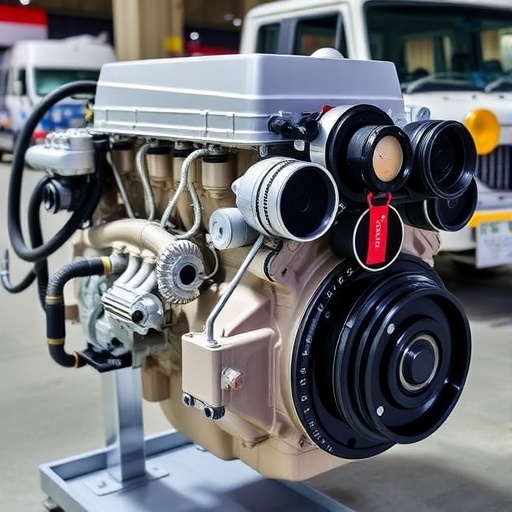
In the ever-evolving world of automotive technology, the quest for more sustainable and environmentally friendly fuel alternatives continues to drive innovation and research. A recent study by Holzer, Günthner, and Jung explores the performance of pure oxymethylene ether (OME) and various hydrogenated vegetable oil (HVO)–OME fuel blends as promising alternatives for diesel engines. This research highlights a significant shift towards biosustainable energy sources that not only meet the operational requirements of conventional engines but also aim to reduce harmful emissions and improve overall efficiency.
Diesel engines have long been a staple of the automotive industry, known for their durability and fuel efficiency. However, as environmental concerns mount and regulations on emissions tighten, the urgency to transition towards cleaner fuel options has never been greater. The study conducted by Holzer and colleagues investigates the efficacy of using OME, a synthetic ether derived from renewable resources, in combination with HVO, which is produced from the hydrogenation of vegetable oils. The combination promises to leverage the strengths of both fuel types while minimizing their respective shortcomings.
OME serves as an exciting fuel alternative due to its favorable properties, including a high cetane number, low boiling point, and lack of aromatic compounds. This chemical composition leads to a more efficient combustion process, resulting in lower particulate matter (PM) and nitrogen oxides (NOx) emissions when compared to traditional diesel fuels. The researchers aimed to validate these claims through rigorous testing in diesel engines, thereby laying the groundwork for OME’s potential integration into the automotive fuel market.
On the other hand, hydrogenated vegetable oils are becoming increasingly popular due to their renewability and compatibility with existing diesel infrastructure. They can be produced from a variety of sources, ranging from palm oil to animal fats, offering flexibility in feedstock selection. When blended with OME, HVO enhances the overall energy density and combustion characteristics, which is critical for maintaining engine performance while transitioning away from fossil fuels.
The study meticulously captures the various blends of HVO and OME to determine the optimal mix for diesel engine performance. The authors employed various metrics to evaluate engine operation, including thermal efficiency, engine power output, and emissions profiles. The results were promising, indicating that certain blends significantly outperformed traditional diesel in terms of emissions while still maintaining the engine’s performance characteristics.
One of the most remarkable findings from the research was the impact of fuel composition on emissions. By varying the proportions of HVO and OME, researchers were able to measure changes in the concentration of NOx and PM in the exhaust. The evidence pointed toward a clear trend: as the OME content increased within the blend, there was a notable reduction in NOx emissions without detrimentally affecting engine torque or power output. These findings hold tremendous implications for the future of diesel engines and the potential for significant emissions reductions.
Additionally, the researchers explored the effect of different operating conditions, such as engine load and speed, on the performance of the OME and HVO-OME blends. This thorough examination revealed that optimizing these operational parameters could further enhance the benefits of using these alternative fuels, thus making a stronger case for their integration into mainstream transportation.
Critically, it’s important to recognize the role of public and governmental support in fueling the transition towards alternative fuels like OME and HVO blends. As consumers demand greener alternatives, policymakers are tasked with creating incentives and regulations that encourage the adoption of these sustainable technologies. The research from Holzer and his team serves as an empirical foundation, equipping advocates and decision-makers alike with data necessary for informed policy decisions.
Moreover, the economic viability of producing OME and HVO from renewable sources also warrants thoughtful consideration. While initial production costs may be higher than conventional fuels, the long-term benefits—including reduced healthcare costs associated with pollution and contributions to climate change—offer a compelling argument for their widespread adoption.
Consideration of logistics, distribution, and infrastructure remains crucial for the successful implementation of these alternative fuels. The existing diesel network may require modifications to fully accommodate the characteristics of OME and HVO blends, thereby underlining the collaborative efforts required across industries to facilitate this transition.
In conclusion, the research undertaken provides a tantalizing glimpse into the future of diesel engines spurred by the innovation of alternative fuel blends. As the automotive industry navigates the complexities of climate change, studies like these enrich the dialogue on sustainable practices while offering concrete solutions to long-standing challenges. The promise of OME and HVO blends represents not only a potential paradigm shift in fuel technology but also a step towards a more sustainable future in transportation.
The implications of this research extend beyond technical performance, inviting conversations on environmental benefits, regulatory frameworks, and supply chain logistics. As the automotive world moves into an uncertain future, embracing innovation through studies like this one may be essential to steering towards a cleaner, more sustainable trajectory.
In summary, the quest for alternative fuels does not merely stem from the need to comply with stringent regulations. It encompasses a broader vision of transforming the automotive landscape to ensure that future generations inherit a planet that is not only livable but thriving. Through rigorous research, development, and collaboration, the findings from Holzer, Günthner, and Jung serve as a call to action for stakeholders across the board to invest in greener, smarter transportation solutions.
Subject of Research: Alternative fuels for diesel engines, specifically pure OME and HVO–OME blends.
Article Title: Performance of pure OME and various HVO–OME fuel blends as alternative fuels for a diesel engine.
Article References:
Holzer, A., Günthner, M. & Jung, P. Performance of pure OME and various HVO–OME fuel blends as alternative fuels for a diesel engine.
Automot. Engine Technol. 7, 369–383 (2022). https://doi.org/10.1007/s41104-022-00122-8
Image Credits: AI Generated
DOI:
Keywords: Alternative fuels, OME, HVO, diesel engines, emissions reduction, sustainable transportation.


