

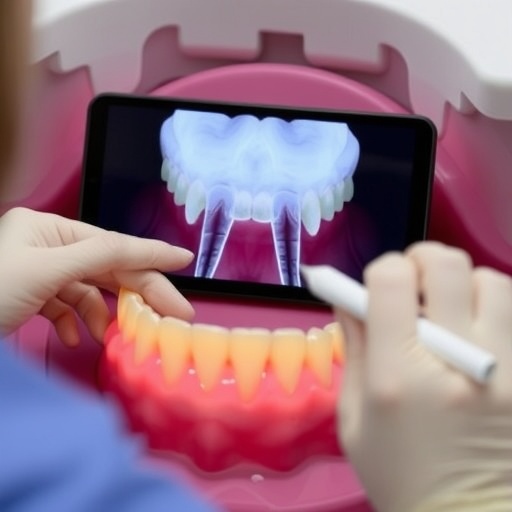
In an ever-evolving technological landscape, the education sector is rapidly adapting to new methodologies designed to enhance learning outcomes. A recent pilot study conducted by Kock, Yeap, Chhabra, and their team has focused on improving the pedagogical experience of dental students by utilizing educational videos specifically centered on the complex subject of endodontic irrigation. This novel approach not only highlights the rigorous nature of dental education but also underscores the need for innovative teaching tools that can bridge the gap between theory and practical application.
The pilot study presents an intriguing exploration into how visual media can optimize understanding in a field steeped in intricate theoretical concepts and manual skills. Endodontic irrigation, a critical component of dental procedures, involves the cleaning and shaping of the root canal to eliminate infected tissues and prevent future complications. Mastery of this skill is pivotal, especially in an era where dental health directly impacts overall health. By employing educational videos, the research strives to enhance students’ comprehension and implementation of endodontic irrigation techniques.
Educational videos have long been touted as powerful tools for learning; their ability to convey complex information in a visually engaging format makes them particularly effective. The study meticulously considered various factors to assess the impact of these videos on students’ learning experiences, including the clarity of the content, the engagement level of the students, and the overall retention of information. By focusing on endodontic irrigation, the researchers aimed to create materials that would resonate with dental students, who often face a steep learning curve during their training.
As part of the methodology, the researchers invited a cohort of dental students to participate in the study. These students were provided with access to a series of targeted videos that demonstrated best practices in endodontic irrigation. Throughout the study, feedback was collected to gauge the effectiveness of the videos in enhancing understanding. This formative assessment approach allowed the researchers to refine their content based on real student experiences, ensuring that the educational resources developed would be of maximum benefit.
Initial findings from the pilot study suggest that educational videos can significantly enhance student engagement and comprehension. Students reported feeling more confident in their ability to perform endodontic procedures following exposure to the video materials. The blend of visual and auditory elements created a multisensory learning environment that many students found more effective than traditional lecture-based methods. Such insights are particularly valuable for dental educators who are tasked with ensuring that students not only learn the theoretical underpinnings of their craft but also develop the necessary practical skills.
In addition to enhancing comprehension, the videos served as a valuable tool for self-paced learning. Students who may struggle to grasp complex concepts in a traditional classroom setting found the videos an excellent resource for revisiting challenging topics. The ability to pause, rewind, and replay content allowed learners to engage with the material on their terms, fostering a deeper understanding of endodontic irrigation. This flexibility is a crucial component of modern education, as it accommodates diverse learning styles and paces.
Furthermore, the application of video-based learning in dentistry speaks volumes about the future of educational methodologies. With technological advancements enabling easier production and dissemination of quality educational content, the potential for wider application within dental education is vast. As this pilot study demonstrates, integrating technology in teaching not only meets the needs of students better but also prepares them for a profession that increasingly relies on cutting-edge practices and tools.
While the pilot study showcases promising results, it also raises important questions about the broader implications of video-based learning in dental education. How can these findings be scaled to include various courses and topics beyond endodontic irrigation? What strategies can educators implement to ensure that video content remains relevant and up-to-date amidst rapid advancements in dental techniques? These questions are essential as the community of dental educators reflects on the lessons learned from the pilot study.
Additionally, the research paves the way for future investigations exploring various aspects of educational technology in dentistry. Beyond videos, other immersive tools such as virtual reality simulations and interactive online modules could offer enhanced learning experiences. The aim is not only to improve education quality but also to ensure that new practitioners are well-equipped to enter a challenging yet rewarding field that is constantly evolving.
As the findings from this pilot study circulate within educational circles, there is optimism that they will spur further research into multimedia learning tools across diverse subjects within dental education. The hope is that by illuminating the advantages of educational violence in teaching endodontic irrigation, more institutions will be encouraged to adopt similar strategies to enrich the dental curriculum.
Ultimately, the pilot study by Kock and colleagues signifies an important step forward in the quest to enhance dental education through innovative approaches. The potential benefits for future dental professionals are immense, as they will emerge from their studies not only with theoretical knowledge but also with practical skills rooted in effective learning methodologies that align with the modern world.
This transformative research highlights the importance of continuous evaluation and integration of new educational tools in preparing students for the complexities of their future careers. The journey of discovering the efficacy of educational videos on specific subjects, such as endodontic irrigation, is far from over, yet it heralds a promising shift toward a more engaging, effective, and technology-driven learning environment.
Subject of Research: The effectiveness of educational videos on endodontic irrigation for dental students.
Article Title: Assessing the usefulness of educational videos on endodontic irrigation for dental students: a pilot study.
Article References:
Kock, J.W., Yeap, S.K.S., Chhabra, N. et al. Assessing the usefulness of educational videos on endodontic irrigation for dental students: a pilot study.
BMC Med Educ (2025). https://doi.org/10.1186/s12909-025-07647-0
Image Credits: AI Generated
DOI: 10.1186/s12909-025-07647-0
Keywords: Endodontic irrigation, educational videos, dental education, pilot study, student engagement, multimedia learning.


