

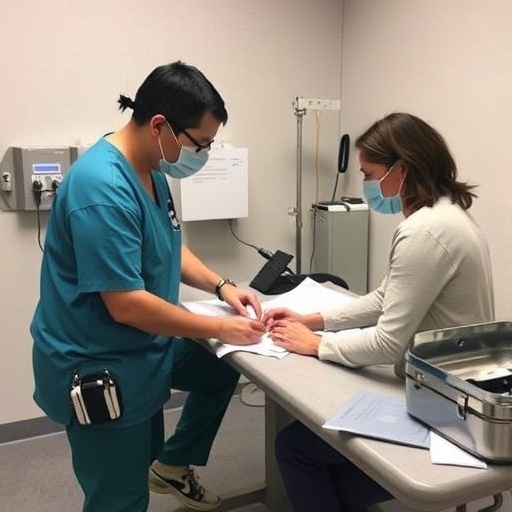
In a groundbreaking study, a research team led by Lee, GM, Jang, HS, and Choi, M has delved into the cost-utility analysis of coordinative services, particularly focusing on Fragility Fracture Liaison Services (FLS) for patients suffering from femur fractures. The insightful findings from this research, published in the journal ‘Arch Osteoporos’, have the potential to significantly influence healthcare practices and policies related to the management of osteoporosis and related fractures. The researchers utilized a comprehensive approach to assess whether the implementation of coordinator services could yield favorable outcomes not only in terms of patient health but also in economic efficiency.
Cost-utility analysis in healthcare is a method that enables decision-makers to evaluate the relative costs of different interventions in relation to their health outcomes. The premise is simple yet profound: understanding whether additional investments in specific services are warranted based on the quality-adjusted life years (QALYs) they generate. This study presents an intricate portrait of how FLS might represent a cost-effective strategy for reducing the burden of femur fractures, a common yet debilitating injury in the aging population.
The study analyzed various data sets to compare conventional care with coordinated services provided through the FLS model. The research team posited that FLS could mitigate not only the immediate complications associated with femur fractures but also the long-term consequences that these injuries often impose. Femur fractures can lead to substantial morbidity, reduced quality of life, and increased mortality among older adults. As such, the implementation of such services could have both a clinical and economic justification.
Femur fractures serve as a critical public health concern, particularly within geriatric populations. They can often precipitate a cycle of decline, including prolonged hospitalization, loss of independence, and even institutionalization for some patients. By evaluating costs alongside health outcomes, the authors of the study aimed to shed light on the effectiveness of FLS as a pivotal element in managing these fractures. They hypothesized that better coordination of care could translate into smoother transitions through the healthcare system and ultimately result in more favorable outcomes for patients.
The researchers employed a sophisticated model to derive estimates of cost-effectiveness from the perspective of the healthcare system and society at large. Their analysis incorporated costs associated with hospitalization, rehabilitation, ongoing management of osteoporosis, and potential loss of productivity among these patients. Such a nuanced evaluation is crucial for understanding the broader implications of healthcare interventions, as decisions are often influenced by factors beyond the immediate costs of care.
Importantly, the findings revealed that patients who received care through FLS demonstrated markedly improved health outcomes compared to those receiving traditional, less-coordinated services. This trend was not merely isolated to short-term outcomes; the data indicated that patients engaged with FLS subsequently enjoyed a higher quality of life and a reduced likelihood of sustaining subsequent fractures. When assigned to a coordinated care pathway, these patients experienced tailored follow-up care, which included education on osteoporosis management and preventive strategies.
This paradigm shift toward coordinated care delivery could pave the way for future policies and practices in the management of osteoporosis and femur fractures. The study’s implications extend beyond individual patient care, suggesting that systemic changes within healthcare delivery could yield far-reaching benefits. By prioritizing coordinated services, healthcare systems may not only enhance patient outcomes but also realize significant savings in overall healthcare expenditures.
Mental, emotional, and social wellbeing were also highlighted as integral components of the quality of life assessment in patients receiving FLS. Beyond the physical implications of femur fractures, the psychological burden that accompanies such injuries cannot be overlooked. Researchers noted that a supportive, well-coordinated care approach has the potential to address these issues by providing comprehensive support tailored to the unique needs of older adults.
Moreover, as the aging population continues to grow, addressing osteoporosis and fragility fractures is becoming increasingly critical. Many older adults are unaware of their risk for fractures and may not take suitable preventive measures. The FLS model emphasizes education as a core component, empowering patients with knowledge to engage actively in their health management. When patients understand their condition and the associated risks, they are more likely to adhere to treatment protocols and preventative measures.
Economic evaluations stemming from the research illustrate potential cost savings that could be achieved through the adoption of FLS. The initial costs associated with implementing these services may be offset by reducing hospital readmissions and extended rehabilitation needs. These figures suggest an urgent need for healthcare systems to consider integrating FLS into their existing frameworks as a viable strategy to address the increasing number of femur fractures amid our aging population.
The call to action arising from this study is clear: enhancing the capacity of healthcare systems to respond to fragility fractures through coordinated services represents an ethical obligation as well as a pragmatic solution. Collaboration across various healthcare professions is essential to foster the successful integration of FLS. This entails not only rehabilitation specialists but also orthopedic surgeons, geriatricians, and primary care physicians working together to create a seamless care experience for patients.
In summary, the research conducted by Lee, GM, Jang, HS, and Choi, M represents a pivotal contribution to the understanding of cost-utility in the treatment of femur fractures through the implementation of FLS. By demonstrating the potential for improved health outcomes and economic savings, the study advocates for a broader recognition of the value of coordinated care in managing chronic and acute health conditions among older adults. The future of health policy should reflect these insights, paving the way for more innovative and effective healthcare solutions for vulnerable populations.
In concluding their research, the authors encourage further studies to explore the long-term impacts of FLS on osteoporosis management. They posit that ongoing evaluations will be instrumental in refining these models of care to maximize benefits for patients while ensuring sustainability within healthcare systems.
Despite the evident successes associated with FLS, there remains a critical need for awareness and advocacy. Both healthcare providers and patients must emphasize the importance of recognizing and managing osteoporosis proactively. Increased support for FLS could ultimately foster a cultural shift towards prevention, thereby enhancing the quality of life for countless individuals confronted with the reality of fragility fractures.
To encapsulate, the study on the cost-utility of FLS not only illustrates a compelling case for coordinated care but also ignites a discussion about the necessary steps moving forward in the management of femur fractures among older adults. The complex interplay between healthcare economics, patient health outcomes, and preventive strategies aligns neatly to create a blueprint for future initiatives that promise to advance patient care and foster a healthier society.
Subject of Research: Cost-utility analysis of coordinator services (FLS) in patients with femur fractures.
Article Title: Cost-utility analysis of coordinator services (FLS) in patients with femur fractures.
Article References:
Lee, GM., Jang, HS., Choi, M. et al. Cost-utility analysis of coordinator services (FLS) in patients with femur fractures.
Arch Osteoporos 20, 130 (2025). https://doi.org/10.1007/s11657-025-01610-8
Image Credits: AI Generated
DOI: https://doi.org/10.1007/s11657-025-01610-8
Keywords: Cost-utility analysis, femur fractures, coordinator services, healthcare economics, osteoporosis management.


