


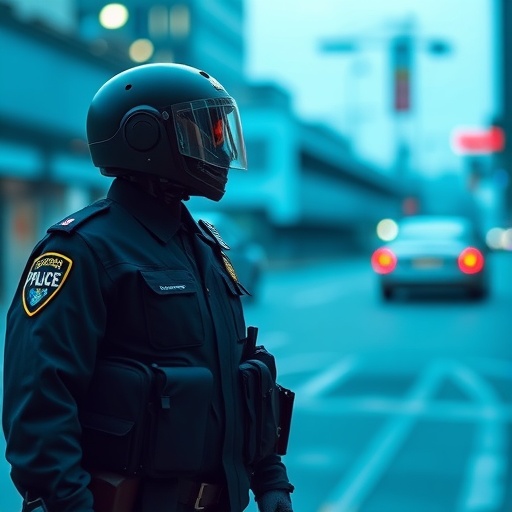
In recent years, the integration of artificial intelligence (AI) into law enforcement practices has become more than just a technological advancement; it represents a paradigm shift in how police operations are conducted. The advent of AI-driven body-worn cameras (BWCs) offers a glimpse into a future where footage review may no longer be a tedious manual task but rather an intelligent process that enhances the effectiveness of policing. A recent study conducted by White, M.D., Watts, S., and Malm, A. sheds light on officer acceptance and utilization of AI in the review of BWC footage, providing critical insights into its implications for policing and public safety.
The proliferation of body-worn cameras among police officers has been hailed as a significant move towards accountability and transparency within law enforcement. These devices serve as both a shield and a sword in police-community interactions, recording interactions that can later be reviewed during investigations or for training purposes. However, with the massive volumes of footage generated daily, the inefficiency of manual review processes stands in stark contrast to the speed and accuracy of AI-driven systems. This disconnect raises questions about how officers perceive AI technology in their daily tasks and its potential to alter their work dynamics.
The study’s findings reveal that most officers viewed AI-enhanced BWC analysis as a tool to simplify their responsibilities rather than as a replacement for their expertise. This perception is paramount, emphasizing the need for law enforcement agencies to foster an understanding that AI should serve as an aid rather than a competitor. The officers involved in the research expressed that they would feel more empowered and capable of addressing complex cases when equipped with AI’s analytical capabilities, ultimately leading to more informed decision-making in field situations.
Moreover, the research highlights the importance of training and familiarization with AI technologies for police personnel. Officers who received adequate training were more likely to embrace AI tools, recognizing their potential for operational improvements. This training aspect becomes pivotal not only for the acceptance of AI but as a way to build confidence in its application. Proper instruction can alleviate concerns that AI may be seen as encroaching on their roles, reframing it as an indispensable ally in modern policing.
Interestingly, the study also uncovered varying degrees of acceptance based on age, experience, and familiarity with technology. Younger officers, often more inclined toward technological innovation, showed a more enthusiastic disposition towards AI tools. Conversely, veteran officers displayed a degree of skepticism rooted in traditional policing methodologies. These disparities necessitate a tailored approach by law enforcement agencies to ensure a seamless integration of AI systems that accommodates the diverse profiles within their ranks.
Moreover, the research delved into the ethical considerations surrounding AI utilization. As with any technology embedded within societal structures, the deployment of AI in policing must navigate complex ethical waters. Officers expressed concerns about the potential for biases, emphasizing the need for transparent algorithms to prevent the perpetuation of existing prejudices within law enforcement. Therefore, discussions concerning the ethical implications of AI must remain at the forefront of discourse as agencies adopt these technologies.
The implications of AI integration are not just limited to internal processes; they extend to community perceptions of law enforcement. Public acceptance of policing practices could be contingent on how well officers are equipped to utilize AI technologies. As police agencies seek to bolster community trust, the ability to effectively convey the merits of AI applications to civilians will be essential. Demonstrating a commitment to transparency and accountability through AI-driven BWC processes could prove beneficial in reshaping public opinion.
The research highlights potential future developments in AI technologies specific to police operations. With advancements in machine learning and natural language processing, it is conceivable that AI systems could evolve to automatically flag critical incidents within BWC footage. Imagine a scenario in which AI analyzes hours of footage in moments, presenting officers with critical incidents and trends needing immediate attention. The capabilities for intelligent data extraction and behavioral analysis of interactions could represent a revolutionary leap in policing methodologies.
Additionally, collaborations with technology firms specializing in AI development further merit attention. These partnerships can drive innovation tailored specifically to the unique needs of law enforcement agencies. Engaging with tech experts enables police departments to stay on the cutting edge of advancements while ensuring technology aligns with their mission to support community safety.
Resistance to change is always an inherent challenge when technology alters traditional practices. Nevertheless, continued engagement and dialogue between law enforcement, community groups, and technologists are vital to this transition. Developing systems that incorporate feedback from officers using AI tools can help refine AI systems and solidify their role as supportive rather than disruptive technologies.
Additionally, as the data-driven age evolves, law enforcement must prioritize best practices for data privacy and security. With the heightened scrutiny surrounding police surveillance capabilities, establishing robust guidelines for ethical AI use becomes essential to maintaining community trust and upholding individual rights. The balance between operational efficiency and civil liberties must be carefully navigated to avoid potential pitfalls as agencies integrate AI technologies.
In summary, AI-driven body-worn cameras represent the vanguard of modern policing methodologies. Understanding officer acceptance and effective utilization of AI technologies is critical to shaping the future of law enforcement. As officers engage with these tools, the outcomes of increased efficiency, bolstered decision-making, and improved accountability stand to reshape police-community dynamics positively. The pivotal role that technology plays necessitates continual dialogue and strategic efforts by all stakeholders to ensure the responsible integration of AI in law enforcement. As the future unfolds, the role of AI in policing will likely become an indispensable facet of contemporary law enforcement practices.
White, M.D., Watts, S., Malm, A. et al. Officer Acceptance and Use of AI-Driven Body-Worn Camera Footage Review.
Am J Crim Just (2025). https://doi.org/10.1007/s12103-025-09857-0
Cite Scienmag News
Courtney Benton. (January 27, 2026). Evaluating AI-Driven Footage in Police Body Cameras. Scienmag. https://scienmag.com/evaluating-ai-driven-footage-in-police-body-cameras/
Courtney Benton. "Evaluating AI-Driven Footage in Police Body Cameras." Scienmag, 27 January 2026, https://scienmag.com/evaluating-ai-driven-footage-in-police-body-cameras/. Accessed 5 September 2026.
Courtney Benton. "Evaluating AI-Driven Footage in Police Body Cameras." Scienmag. January 27, 2026. https://scienmag.com/evaluating-ai-driven-footage-in-police-body-cameras/


