


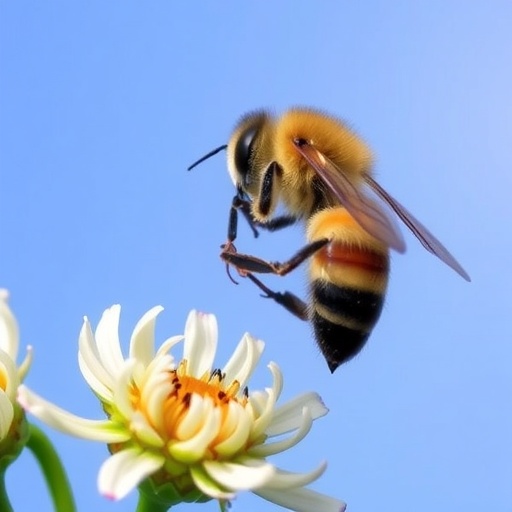
Europe stands on the precipice of a profound ecological and societal challenge as a coalition of eight European Union-funded research consortia issues a stark warning: the continent faces a looming crisis unless it halts the alarming decline of its pollinators. These vital organisms, ranging from bees to moths, are integral to the maintenance of diverse ecosystems and the security of food supplies across Europe. A new comprehensive White Paper, authored by 135 interdisciplinary experts spanning ecosystem ecology, pollinator biology, ecological economics, social sciences, and environmental law, outlines an urgent call to rethink and restructure European policies to save these indispensable creatures.
Pollinators serve as the linchpin of countless ecosystems, facilitating the reproduction of flowering plants that underpin both natural biodiversity and agricultural productivity. Yet, their populations have been dwindling at an unprecedented rate. This decline threatens not only food security but the integrity of ecosystem services essential to human well-being. The White Paper elucidates how pollinator loss emanates from a complex interplay of factors, including habitat fragmentation, pesticide usage, climate change, and disease pressures intensified by unsustainable agricultural management practices.
A fundamental barrier identified by the researchers is the EU’s fragmented governance framework. Sectoral silos within agricultural, environmental, chemical, trade, and educational policies hamper coordinated efforts to address pollinator declines effectively. Fragmentation leads to incoherent policy measures unable to tackle the multifaceted drivers of pollinator attrition. The research team argues that establishing Pollinator Stewardship as an explicit, cross-cutting priority embedded in all relevant policy domains is indispensable for reversing current trends.
Crucially, the report highlights a pervasive disconnect in how society perceives and interacts with nature. Deep-rooted paradigms position humans as separate from and dominant over the natural world, treating biodiversity and ecosystem functions largely as exploitable resources rather than as integral components of life-support systems. This worldview perpetuates economic models focused on short-term material gain, which often result in degrading practices that undermine the resilience of ecosystems and, by extension, pollinators themselves.
The ramifications extend far beyond agriculture. European economies are deeply interwoven with industries relying on pollination services. From medicinal plants used in pharmaceuticals and natural remedies to biomass crops fueling renewable energy sectors, the health of pollinator populations directly affects economic stability and cultural heritage. Textiles derived from plant fibers, fodder for livestock, cosmetics, ornamental plants, and even tourism—many of these sectors hinge on the continuity of pollination processes.
The report also exposes a critical gap in pollinator literacy among key societal actors, including farmers, policymakers, and educators. Despite a growing awareness of bee conservation, many remain unaware of the ecological roles played by less charismatic pollinators such as moths and hoverflies. For example, nocturnal pollinators like the Privet Hawk-moth, draped metaphorically in velvet and moonlit dust, outperform honeybees in certain pollination contexts but are inadequately supported due to a lack of understanding about their larval host plants and ecological needs. Seed mixtures commonly used in flower strips often neglect such species-specific requirements, weakening these conservation initiatives.
To confront this crisis, the White Paper advocates for embedding ecological literacy into professional education and practice across sectors influencing pollinator habitats. Empowering stakeholders with robust scientific knowledge can enable behavior change and more pollinator-friendly decision-making. This includes promoting agroecological approaches that balance productivity with biodiversity, informed pesticide management, and habitat restoration aligned with pollinator life cycles.
Addressing pollinator decline also demands reforming EU governance structures. The authors call for dismantling policy silos that foster fragmented responsibilities, ineffective top-down measures, and poor inter-administrative coordination. Only through integrated policymaking that harmonizes agriculture, environment, trade, finance, and education can a viable, enforceable strategy for pollinator restoration be developed and sustained.
Notably, this crisis reflects a broader systemic issue: the conflict between short-term, production-oriented objectives and the imperative to safeguard ecosystem services as public goods. Current economic incentive systems often marginalize long-term environmental stewardship. Rectifying this imbalance will require aligning financial mechanisms and trade policies with ecological sustainability, thereby incentivizing practices that enhance pollinator habitats instead of degrading them.
The White Paper concludes with a detailed, evidence-based roadmap featuring fifteen priority actions designed to operationalize pollinator recovery efforts at multiple governance levels. These recommendations emphasize measurable targets, cross-sector integration, enhancement of pollinator diversity beyond managed honeybees, and active engagement of civil society in stewardship roles.
The scale and urgency of the challenge demand immediate and sustained intervention. Europe’s wilderness and agricultural landscapes must be reimagined not as arenas for unchecked production but as vibrant, interconnected ecosystems vital to human survival. By reshaping societal values, policy frameworks, and educational paradigms, the EU can avert a pollination crisis, restore ecological resilience, and secure its food systems for future generations.
Cite Scienmag News
Julie Wynn. (June 22, 2026). Europe Faces Potential Crisis Amidst Declining Pollinator Populations, Scientists Warn. Scienmag. https://scienmag.com/europe-faces-potential-crisis-amidst-declining-pollinator-populations-scientists-warn/
Julie Wynn. "Europe Faces Potential Crisis Amidst Declining Pollinator Populations, Scientists Warn." Scienmag, 22 June 2026, https://scienmag.com/europe-faces-potential-crisis-amidst-declining-pollinator-populations-scientists-warn/. Accessed 3 September 2026.
Julie Wynn. "Europe Faces Potential Crisis Amidst Declining Pollinator Populations, Scientists Warn." Scienmag. June 22, 2026. https://scienmag.com/europe-faces-potential-crisis-amidst-declining-pollinator-populations-scientists-warn/


