

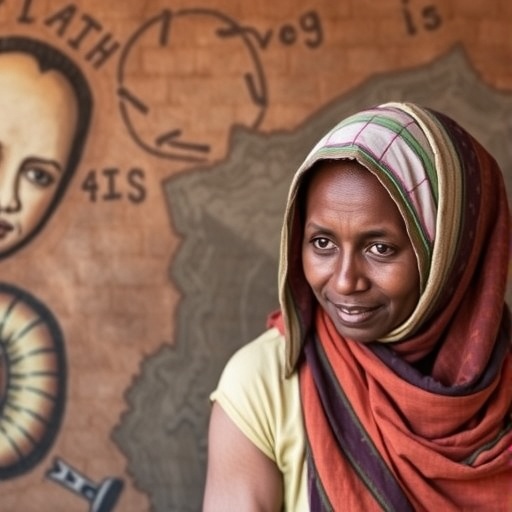
In recent years, the intertwining dynamics of gender and poverty have emerged as critical focal points in global development discourse, particularly in the context of low-income nations. Ethiopia, a country with a rich cultural tapestry yet immense socio-economic challenges, illustrates this complexity through its distinct gender disparity in household poverty. A groundbreaking study titled, “Gender Disparity in Household Poverty in Ethiopia Using Monetary and Multidimensional Approaches,” authored by Sherka, T., Andemo, A., Debaen, A., et al., seeks to illuminate these disparities by utilizing both monetary metrics and multidimensional poverty assessments.
This research takes a dual approach to poverty measurement, contrasting traditional financial statistics with broader indicators of well-being. By engaging with both perspectives, the authors aim to present a more nuanced picture of the realities faced by different genders within Ethiopian households. Their work highlights how relying solely on monetary measures can overlook the intricacies of deprivation experienced by women, who often bear the brunt of poverty in nuanced and varied ways.
When delving into the methodology, the authors employed a combination of qualitative and quantitative analyses. This hybrid approach allows for a deeper comprehension of poverty that transcends mere income levels. The authors explored dimensions such as health, education, and living standards, providing a more comprehensive view of household well-being. This methodology not only enriches the data collected but also enhances the study’s potential for informing policy and development efforts aimed at reducing gender inequality.
One provocative finding suggests that while both men and women experience poverty, the manifestations and depths of that poverty are markedly different. Women often face unique barriers that exacerbate their poverty, including educational disparities, limited access to healthcare, and social norms that restrict economic opportunities. Through the lens of their research, the authors argue that understanding these gendered experiences is critical for effective intervention strategies to alleviate household poverty.
Additionally, the study reveals that cultural norms play a significant role in perpetuating gender disparities in Ethiopia. Embedded within the societal fabric are traditions and expectations that dictate the roles of men and women, often limiting women’s access to economic resources. By addressing these cultural challenges through data-driven insights, policymakers can work towards not only alleviating poverty but also fostering gender equality in the region.
Furthermore, the research indicates that multidimensional poverty—a metric that encompasses various aspects of living conditions and not just financial capital—provides a stronger framework for understanding the complexities of gender disparities. The authors argue that multidimensional indicators can often reveal hidden layers of deprivation experienced by women, thereby leading to more effective targeted interventions in poverty reduction strategies.
The implications of this study stretch far beyond Ethiopia. They resonate with global calls to recognize and dismantle gender inequality as it pertains to economic vulnerability. In many developing countries, where gender norms are similarly entrenched, the findings of this research may serve as a catalyst for change, urging governments and organizations to adopt holistic approaches to gender and poverty.
In drawing attention to these critical issues, the study underscores the importance of actionable data. Policymakers are often guided by statistics and trends; thus, presenting a more profound understanding of how gender intersects with poverty could drive significant shifts in public policy. For instance, if developmental initiatives incorporate the distinct needs of women, they are more likely to succeed in alleviating poverty effectively.
Moreover, the authors emphasize the role of women’s empowerment in combating poverty. The study suggests that investing in women’s education and health services, promoting gender-sensitive economic policies, and challenging restrictive societal norms will contribute to breaking the cycle of poverty. By focusing on women’s empowerment, Ethiopia could potentially reshape its socio-economic landscape for the better.
Raising awareness regarding the gendered nature of poverty is pivotal, as it can spur civil society engagement and encourage grassroots movements. A well-informed populace can advocate for equitable policies, challenge normative barriers, and serve as a powerful counter to entrenched gendered disparities. The researchers call upon NGOs, governmental agencies, and stakeholders to take heed of these findings and commit to fostering environments where women are equally afforded opportunities for growth.
The study challenges the narrative surrounding poverty as a uniform experience, showcasing that gender must be a central component when discussing economic deprivation. With robust data highlighting the disparities faced by women, the authors make a compelling case for an urgent need to rethink how poverty is approached across the globe. The implications for future research are immense, as understanding these gendered dimensions may yield new avenues for further exploration.
Ultimately, the synthesis of monetary and multidimensional approaches to understanding poverty provides a rich framework that can drive impactful discussions and actions. This research advocates for an approach that sees beyond numbers—one that engages with the daily realities of individuals and communities affected by poverty. Through this lens, a more equitable and sustainable future can be envisioned, where gender inequality is not merely addressed but eradicated.
As this study sets a precedent, it could inspire similar investigations in other geographical contexts, thereby contributing to a more global understanding of gender disparities in poverty. The pressing need for enhanced gender sensitivity in poverty alleviation strategies remains clear, as evidenced by the nuanced findings of the research.
The study encapsulates a turning point in the discourse surrounding gender and poverty, offering both critical insights and a call to action. By honing in on the multifaceted experiences of women in poverty, this research invites stakeholders to engage, rethink, and innovate solutions that promote gender equality both in Ethiopia and globally.
By embracing this multifaceted exploration of gender disparity in household poverty, we position ourselves to make informed decisions and foster a world that prioritizes equality—where every individual, irrespective of gender, has the opportunity to thrive.
Subject of Research: Gender disparity in household poverty in Ethiopia
Article Title: Gender disparity in household poverty in Ethiopia using monetary and multidimensional approaches
Article References:
Sherka, T., Andemo, A., Debaen, A. et al. Gender disparity in household poverty in Ethiopia using monetary and multidimensional approaches. Discov Sustain (2026). https://doi.org/10.1007/s43621-026-02668-1
Image Credits: AI Generated
DOI: 10.1007/s43621-026-02668-1
Keywords: gender disparity, household poverty, Ethiopia, multidimensional approach, economic vulnerability, women’s empowerment, cultural norms, poverty alleviation, social well-being, global policy, gender equality, development strategies, socioeconomic challenges


