


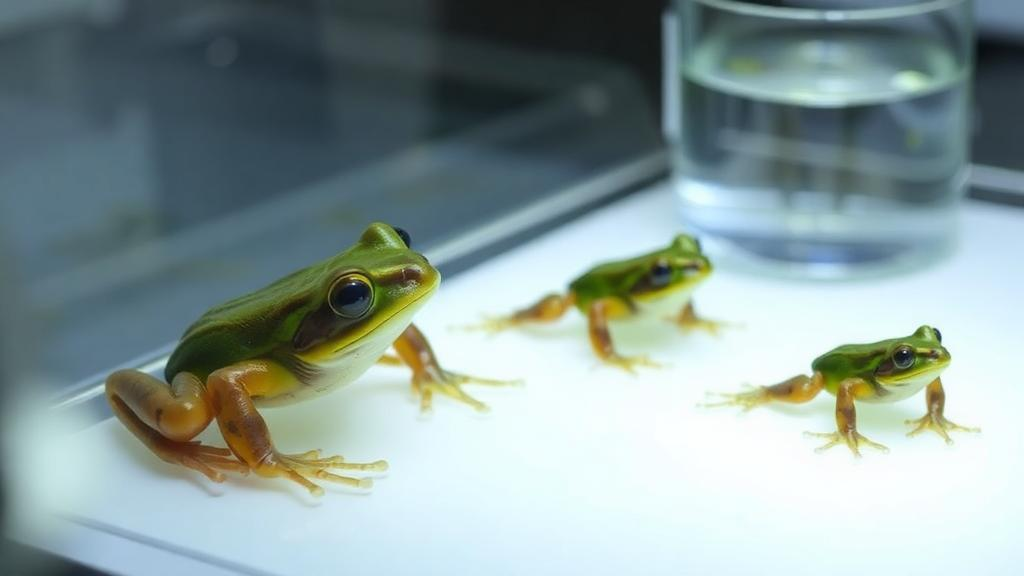
Behind the glass jars of any major natural history museum lies a quiet chemical dilemma. The Africamuseum in Tervuren, Belgium, has preserved a substantial part of its vertebrate collections for decades in 70 percent ethanol denatured with camphor, at 0.35 grams per liter of the alcohol and water mixture. Camphor was once a common denaturing agent, but the European Union no longer lists it as a permitted denaturant for ethanol. Because preservative fluid slowly evaporates and containers must be topped up to keep specimens from drying out and deteriorating, the museum can no longer legally refill its historic jars with camphor-denatured ethanol. A team of researchers set out to find which alternative denaturing agents could be safely mixed into the existing preservation fluid without provoking harmful reactions with the specimens or the old liquid.
Three candidate denaturants were evaluated: denatonium benzoate, diethyl ether and isopropyl alcohol. Each is permitted as an ethanol denaturing agent under European Union rules. Diethyl ether and isopropyl alcohol have their own history as preservation liquids, making them plausible substitutes. Denatonium benzoate has never served as a preservative, but it is a bittering agent used in household products and as an alcohol denaturant that does not change the contents, which made it chemically interesting. Staff safety and health were also weighed, since fluid collections raise well-documented occupational concerns for the people who maintain them.
Before any mixtures were made, the researchers checked theoretical compatibility. Camphor is soluble in ethanol and should also dissolve in other alcohols such as isopropanol, but its functional carbonyl group can react with several aldehydes, ketones and strongly reducing or oxidizing compounds. Denatonium benzoate is chemically inert and stable in the presence of air or light. Isopropyl alcohol and ethanol both have low reactivity. Diethyl ether, however, is a base that can react with acids and can photo-oxidize into diethyl ether peroxide, an explosive compound, a property that would later constrain the experimental design. Under the flammability and toxicity criteria the team applied, none of the mixtures scored as safe, because the large ethanol fraction immediately fails both categories regardless of the denaturant added.
For the practical test, twenty fresh specimens of the American bullfrog, Lithobates catesbeianus, were used. The species is invasive in Belgium and specimens are regularly euthanized as part of the LIFE-3n Bullfrog project, so using them avoided sacrificing collection material. The frogs were fixed by injection of 4 percent formaldehyde buffered with 0.5 to 1.5 percent methanol and wrapped in cheesecloth permeated with a 4 percent formaldehyde solution for 24 hours. Twenty glass containers, each holding one specimen, were filled halfway with ethanol denatured with camphor to mirror the current situation at the museum, then divided into four sets of five. Each set was topped up with ethanol denatured by one of the three test agents, while a fourth set was topped up with the base ethanol and camphor solution as a control.
Every two weeks the researchers measured the snout-urostyle length and the thigh length of each frog with an analog caliper precise to 0.02 millimeters, taking seven measurements over three months including a pre-preservation baseline. These traits matter because preservation in alcohol can shrink specimens by up to six percent, an undesirable outcome in scientific collections regularly used for taxonomic research. The shrinkage is caused by dehydration, as alcohol replaces water in the tissue, and the amount varies between types of alcohol. Photographs were taken bimonthly under identical artificial light with a color calibration target, allowing the color and transparency of the preservation liquid to be monitored visually. All measurements were taken by a single author to ensure consistency across the longitudinal dataset.
To quantify the change over time, the team fitted a nonlinear mixed effects model, a modified exponential decay model borrowed conceptually from nuclear physics and pharmacokinetic modeling. In this formulation, one parameter represents the maximum percentage loss of length, another the theoretical size after that maximum loss, and a half-life parameter quantifies the time needed to achieve half of the maximal shrinkage. Because the same frogs were measured repeatedly, the observations were not independent, so the mixed effects framework incorporated random effects accounting for animal-specific deviations while estimating population-level trends.
The results showed that every specimen experienced a rapid exponential loss of length in the first few weeks, which slowed and stabilized over time. The reference mixture with ethanol and camphor alone reduced the snout-urostyle length by 4.69 percent with a half-life of 14 days, and the thigh length by 4.46 percent with a half-life of 20 days. The maximal shrinkage itself was essentially independent of the denaturant used, but the rate at which it was reached differed: denatonium benzoate and isopropyl alcohol accelerated the snout-urostyle shrinkage by roughly two-thirds relative to the reference, while diethyl ether accelerated it by 86 percent. For the thigh, denatonium benzoate slowed the process dramatically while the other two agents sped it up modestly. None of these estimated differences were statistically significant, likely due to the small sample size of five specimens per group, and the team emphasized that the p-values should be treated as hypothesis-generating rather than hypothesis-confirming.
After the three-month follow-up, all twenty specimens underwent artificial aging: the sealed containers were heated in a hot water bath to 40 degrees Celsius for seven hours, an adaptation of a method normally applied to feathers and hair at much higher temperatures. The elevated temperature accelerates chemical and biophysical reactions that would otherwise unfold over decades. The temperature was deliberately limited because of the diethyl ether, which could form dangerous peroxide compounds when heated. Equivalence testing on logarithmically transformed data, with each frog serving as its own reference, quantified the difference before and after aging. Here a small but notable pattern emerged: specimens in the isopropyl alcohol mixture shrank the least of all sets, including the control, with a snout-urostyle shrinkage of only 0.797 percent compared to 1.98 percent for the control and 3.15 percent for the denatonium benzoate set, the worst performer. The thigh measurements shrank far less than the body, most likely because the thigh contains less soft tissue.
Visually, the liquids told their own story. No difference in color was found between the sets; each container developed a slight yellowish hue, but every specimen remained clearly visible, and variation could have stemmed from fat and blood leaching from individual specimens. More concerning was the formation of precipitates in almost all containers during the first month, an undesirable reaction of unknown nature and consequences. Judged on the amount of precipitation, the control set with ethanol and camphor alone performed best, followed closely by the isopropyl alcohol set and then the diethyl ether set, while the denatonium benzoate set produced the most precipitate. Because denatonium benzoate was actually present in all sets as an impurity of the available ethanol, which was already denatured with methyl ethyl ketone and denatonium benzoate, the team suspects interactions between camphor and denatonium benzoate were to blame, despite the compound being considered chemically inert. The authors also caution that the lack of pure ethanol means ketone reactions might have influenced some observations, although no specific reaction between methyl ethyl ketone and camphor has yet been documented.
The study was restricted to a single species and a small sample, so repetition and amplification with pure ethanol as the base solution are needed to reduce statistical uncertainty. Still, the practical conclusion is clear. The three tested denaturing agents did not cause significant differences in shrinkage during the first few months, and the estimated half-lives of a month or so have limited relevance for collections intended to last multiple decades. But after artificial aging, specimens in the isopropyl alcohol mixture shrank the least on average, even excluding a statistical outlier whose thigh length increased, a phenomenon previously observed in cane toads. Diethyl ether, despite reasonable performance, is unstable over time and risks forming peroxides that could endanger museum staff and collections. Weighing shrinkage, precipitation, and long-term stability, the researchers conclude that isopropyl alcohol is the most suitable denaturing agent to add to ethanol and camphor of the three tested, offering museums a legal and gentle way to top up their historic jars. Researchers using preserved frogs for morphological data, meanwhile, should remain aware that preservative liquids can measurably alter specimen dimensions.
}
Subject of Research: Changes in morphology over time due to denaturing agents in an ethanol and camphor solution
Article Title: Changes in morphology over time due to denaturing agents in an ethanol and camphor solution
Article References: Jacobs, H., Cael, G., & Bauvois, S. (2025). Changes in morphology over time due to denaturing agents in an ethanol and camphor solution. Natural History Collections and Museomics, 2, 1-12. https://doi.org/10.3897/nhcm.2.161606
Image Credits: AI Generated
Keywords: Changes, morphology, over, time, denaturing, agents, ethanol, camphor, solution, scientific research
Cite Scienmag News
Carolyn Rudd. (October 17, 2026). Ethanol denaturants put museum frog specimens to the shrinkage test. Scienmag. https://scienmag.com/ethanol-denaturants-put-museum-frog-specimens-to-the-shrinkage-test/
Carolyn Rudd. "Ethanol denaturants put museum frog specimens to the shrinkage test." Scienmag, 17 October 2026, https://scienmag.com/ethanol-denaturants-put-museum-frog-specimens-to-the-shrinkage-test/. Accessed 17 October 2026.
Carolyn Rudd. "Ethanol denaturants put museum frog specimens to the shrinkage test." Scienmag. October 17, 2026. https://scienmag.com/ethanol-denaturants-put-museum-frog-specimens-to-the-shrinkage-test/


