


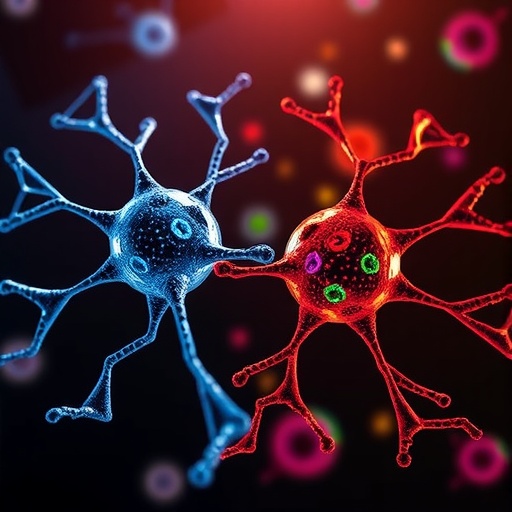
Unveiling the intricate dance of epigenetic regulation that guides stem cells to their destined identities, researchers at Case Western Reserve University have uncovered a remarkable synergy between two pivotal histone modifications—H3K79 methylation and H3K36 trimethylation—that critically orchestrate gene expression during cell differentiation. This discovery sheds new light on the molecular choreography that determines how pluripotent stem cells choose their fate, advancing our understanding of both development and disease and opening promising avenues for therapeutic intervention.
Epigenetics, the study of heritable changes in gene activity independent of DNA sequence alterations, plays an indispensable role in cellular differentiation. Histone modifications act as molecular marks on chromatin, influencing the accessibility of genes to the transcriptional machinery. Among these, methylation marks at specific lysine residues on histone H3—namely H3K79 and H3K36—have been traditionally associated with active transcriptional regions, yet their precise interplay remained elusive until now.
The research team employed cutting-edge CRISPR-based genetic engineering techniques to generate stem cell models selectively deficient in enzymes catalyzing H3K79 methylation and H3K36 trimethylation, both individually and in combination. Remarkably, while the loss of either modification alone led to subtle transcriptional changes, the concomitant absence of both marks triggered an unexpected hyperactivation of genes, effectively stalling the differentiation process. This gene over-activation paradoxically disrupted the normal progression of stem cells into mature neuronal phenotypes, pointing to a complex regulatory mechanism where these epigenetic marks act in concert to maintain transcriptional balance.
This groundbreaking finding overturns previous assumptions in the field. Whereas H3K79 and H3K36 methylation had been thought primarily to facilitate gene activation, their simultaneous removal leading to gene overexpression unveils a nuanced regulatory system where these marks also function as critical modulators preventing excessive transcriptional activity. The investigation highlights an intricate epigenetic feedback loop that safeguards the fidelity of lineage specification.
Understanding the molecular underpinnings of this epigenetic synergy is not merely an academic pursuit; it bears profound clinical significance. Alterations in histone methylation patterns are increasingly implicated in a spectrum of human diseases, ranging from neurodevelopmental disorders to malignancies such as leukemia. Specifically, defects in methylation can impair blood stem cell differentiation, resulting in dysfunctional hematopoiesis and aggressive cancer phenotypes.
The Case Western Reserve team identified a hyperactive YAP-TEAD transcriptional pathway that becomes unleashed when both H3K79 and H3K36 methylation are lost. YAP-TEAD, a well-known oncogenic driver involved in cell proliferation and survival, thus emerges as a potential therapeutic target. Intriguingly, inhibitors of the YAP-TEAD complex are already undergoing clinical trials for cancers like mesothelioma, representing a novel repurposing opportunity for treating subsets of leukemia characterized by epigenetic misregulation.
Such translational implications underscore the importance of collaborative, multidisciplinary research environments like those fostered at Case Western Reserve University. By integrating expertise in biochemistry, genetics, and oncology, the team has not only elucidated a fundamental biological mechanism but also paved a strategic path towards innovative treatments that exploit epigenetic vulnerabilities in cancer cells.
Looking forward, validating these findings in clinical models represents the crucial next step. Preclinical investigations will determine whether pharmacological inhibition of YAP-TEAD can restore normal differentiation programs in leukemia stem cells and halt disease progression without off-target toxicities. Should these efforts prove successful, they could revolutionize therapeutic paradigms for hematological malignancies that currently lack effective targeted options.
These revelations about epigenetic regulation enrich the broader scientific narrative that cell fate decisions are governed by a delicate balance of activating and repressive signals inscribed on chromatin. The interplay of H3K79 and H3K36 methylation exemplifies the complex epigenomic landscapes dictating development and disease, illuminating new dimensions of gene regulatory networks.
More broadly, the study exemplifies how sophisticated genetic manipulations alongside comprehensive molecular analyses can unravel the intricate mechanisms of cellular programming. As the epigenetics field advances rapidly, such discoveries will continue to inform the design of precision therapies that modulate chromatin states to correct developmental disorders and combat cancer.
Beyond leukemia and neurodevelopmental conditions, these findings may have far-reaching implications for regenerative medicine. Harnessing or mimicking the cooperative action of these histone marks could enhance protocols for directing stem cell differentiation in vitro, improving the generation of specific cell types for transplantation and tissue engineering.
Ultimately, this work emphasizes the critical importance of integrated gene regulation for maintaining cellular homeostasis. It reminds us that the epigenome is not a static entity but a dynamic, responsive system finely tuned to ensure appropriate gene expression levels, cellular identity, and function throughout life.
—
News Publication Date: 4-Jul-2025
Web References:
- Case Western Reserve University: http://case.edu/
- Science Advances article: https://www.science.org/doi/epdf/10.1126/sciadv.adt8765
References:
- DOI link: http://dx.doi.org/10.1126/sciadv.adt8765
Cite Scienmag News
Juliet Wilcox. (August 14, 2025). Epigenetic Duo Drives Cell Fate and Disease: Unraveling Double Trouble. Scienmag. https://scienmag.com/epigenetic-duo-drives-cell-fate-and-disease-unraveling-double-trouble/
Juliet Wilcox. "Epigenetic Duo Drives Cell Fate and Disease: Unraveling Double Trouble." Scienmag, 14 August 2025, https://scienmag.com/epigenetic-duo-drives-cell-fate-and-disease-unraveling-double-trouble/. Accessed 5 September 2026.
Juliet Wilcox. "Epigenetic Duo Drives Cell Fate and Disease: Unraveling Double Trouble." Scienmag. August 14, 2025. https://scienmag.com/epigenetic-duo-drives-cell-fate-and-disease-unraveling-double-trouble/


