

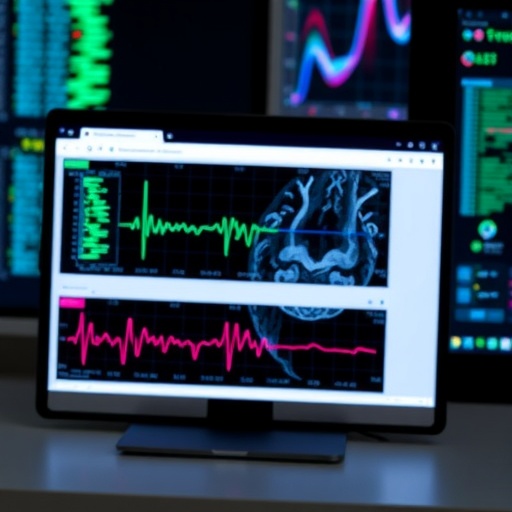
In the rapidly evolving field of clinical neurophysiology, innovative approaches to education and research are essential for advancing both patient care and scientific understanding. Traditional clinical neurophysiology examinations—encompassing electroencephalography (EEG), sleep and vigilance studies, and nerve conduction recordings—rely heavily on hands-on interpretation taught during clinical rotations. However, this traditional mode of learning poses challenges, especially in facilitating remote or unsupervised education. Addressing these challenges, a groundbreaking open-source JavaScript library named Epicurrents has emerged, promising to transform access to neurophysiology data through web-based technology. Developed by Sampsa Lohi, a Doctoral Researcher at the University of Eastern Finland, Epicurrents offers a secure, accessible, and cost-effective solution for viewing and analyzing complex clinical neurophysiology recordings directly in modern web browsers.
One of the most striking advantages of Epicurrents lies in its browser-native design, allowing users to interact with neurophysiological data on any device running a Chromium-based web browser without the need for installing additional specialized software. This fundamentally democratizes access to clinical-grade neurophysiology education and research tools, as it bypasses hardware and software constraints that traditionally limit participation. Users can open signal datasets either locally or over a network connection, empowering the secure sharing of pseudonymized patient data for secondary research purposes. Given the ever-growing emphasis on data privacy and secure access protocols in clinical research, Epicurrents incorporates reliable user authentication mechanisms suitable for sensitive data environments.
The application’s interface expertly caters to the visualization of multiple neurophysiological signal types, including EEG waveforms, nerve conduction velocity graphs, and polysomnographic sleep data. Such versatility provides educators and researchers with a unified platform to teach, analyze, and correlate multifaceted physiological phenomena without the logistical burden of managing disparate software ecosystems. Epicurrents’ capacity to run directly within the browser highlights a pivotal shift in bioinformatics tools, promoting seamless integration with cloud-based datasets and distributed educational frameworks that can transcend geographical limitations.
Despite being built in JavaScript—which is traditionally not optimized for intensive numerical computation—Epicurrents circumvents this limitation by enabling the execution of embedded Python scripts and ONNX-based machine learning models within the interface. This hybrid computational design empowers users to perform advanced signal processing tasks such as spectral analysis, artifact rejection, and automated pattern recognition efficiently. Consequently, researchers can deploy sophisticated algorithms for tasks like spike detection or sleep stage classification directly through the browser, enhancing the utility of remote neurophysiology workstations without sacrificing analytical rigor.
However, the additional computational overhead associated with running machine learning models and Python code implies a requirement for more powerful hardware—typically desktop computers or high-performance laptops—to maintain optimal performance. Nonetheless, this trade-off is a small price to pay for the immense scalability and accessibility benefits provided by a web-based platform. The ability to embed cutting-edge computational tools within a universally accessible application marks a significant advancement, paving the way for wider adoption in both clinical research environments and academic institutions.
A core philosophical underpinning of the Epicurrents project is its commitment to the open-source movement. By making the entire source code publicly available, the project invites continuous scrutiny, innovation, and collaboration from the global neurophysiological community. This transparency not only bolsters trust among users but also ensures long-term sustainability through collective stewardship and evolution. Open-source availability implies that educational institutions, research groups, and independent developers can freely adapt and extend Epicurrents to fit emerging needs, forging a living ecosystem around clinical neurophysiology data visualization and analysis.
Moreover, the open nature of Epicurrents facilitates reproducible research—a crucial aspect when dealing with complex biological signals that require rigorous validation and standardization across studies. Researchers can directly share processing pipelines, annotations, and custom analysis routines embedded within the platform, promoting scientific reliability and accelerating discovery. The project’s ability to unite educational and research purposes under a single, flexible interface challenges the conventional dichotomy that often separates academic teaching tools from professional scientific software.
Epicurrents has already demonstrated its utility in high-profile academic venues, including presentations at European Academy of Neurology congresses. These early adoptions underscore the community’s readiness for next-generation, web-native neurophysiology applications. The positive reception at such a prestigious forum suggests that Epicurrents could be a catalyst for broader acceptance of browser-based neurophysiology tools within clinical and research domains. Its integration into conference workshops and training sessions also highlights the practical benefits of browser-based solutions for disseminating neuroscience knowledge worldwide.
The broader implications of the Epicurrents initiative extend towards advancing telemedicine and remote clinical consultations. By enabling clinicians to securely access and review neurophysiological data through standard web browsers, patient care workflows gain flexibility, potentially reducing the delay between data acquisition and clinical decision-making. Such timely access is particularly pertinent for acute neurological conditions requiring fast interpretation of EEGs or nerve conduction studies. Expanding remote diagnostic capabilities aligns perfectly with the current healthcare paradigm shift towards decentralized and patient-centric models.
In neuroscientific education, Epicurrents has the potential to revolutionize curriculum delivery by providing interactive, real-time visualization of physiological signals, a task previously hampered by expensive proprietary tools and technical barriers. Students can engage with authentic datasets at their own pace, conduct analysis exercises, and receive immediate feedback through integrated computational modules. This level of immersion enhances understanding of complex neurophysiological concepts, equipping the next generation of clinicians and researchers with practical skills that extend well beyond textbook knowledge.
Furthermore, Epicurrents’ adaptability to diverse clinical datasets encourages interdisciplinary research, bridging gaps between neurology, sleep medicine, neurorehabilitation, and computational neuroscience. Its multi-format file compatibility and modular processing capabilities enable integration with various recording devices and data standards. This flexibility supports cross-institutional collaborations where heterogeneous datasets are common, allowing researchers to contextualize findings across populations and methodologies, thus enriching the scientific dialogue in neurophysiology.
Given its substantial benefits, the Epicurrents project exemplifies how modern web technologies can be harnessed to overcome entrenched challenges in clinical neurophysiology education and research. By leveraging open-source principles, browser-based accessibility, and integrated computational tools, Epicurrents sets a novel standard for how complex physiological data can be viewed, analyzed, and shared globally. As the scientific community continues to embrace digital transformation, tools like Epicurrents will undoubtedly play a central role in fostering innovation, improving training, and enhancing patient outcomes across the neurological sciences.
Subject of Research: Clinical neurophysiology education and research enabled by browser‑based visualization and analysis tools.
Article Title: An open‑source JavaScript clinical neurophysiology library for education and clinical research.
News Publication Date: 6-Feb-2026
Web References: http://dx.doi.org/10.1016/j.cnp.2026.02.001
Keywords: clinical neurophysiology, electroencephalography, nerve conduction studies, open source software, browser-based application, JavaScript, Python integration, machine learning, signal processing, neurophysiology education, remote teaching, scientific research, data visualization, telemedicine


