


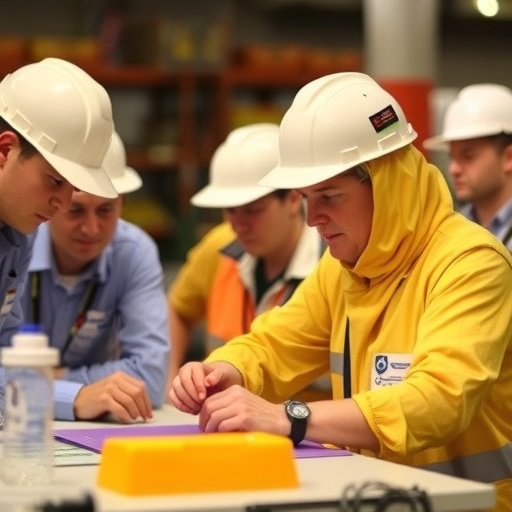
The landscape of education is rapidly changing, and one profound shift lies in the vocational education and training (VET) sector, particularly within technical and vocational education and training (TVET). In a world that increasingly values practical skill sets, the collaboration between educational institutions and enterprises becomes pivotal. The intricate dance between these two entities could redefine how vocational training is approached, shaping both future educators and the workforce at large.
A recent study conducted by K.S. Guta explores perceptions of TVET instructors regarding enterprise involvement in cooperative training. This research delves into how instructors view their roles, responsibilities, and the impact of partnership with businesses on the learning experience of students. Understanding these insights offers a glimpse into the future of vocational education, where instructor perceptions could mold curricula and student engagements, ultimately influencing career trajectories.
One central theme emerging from Guta’s research is the assertion that enterprises play a crucial role in enriching the training landscape. Instructors articulated that the integrating of real-world experiences into the learning modules occupies a central role. This hands-on experience is invaluable, allowing learners to bridge the gap between theory and practice. By embedding such experiences into curricula, educators can equip students with practical skills that are more aligned with industry needs.
Another key finding of the study is that collaboration with enterprises can enhance educational resources within TVET institutions. Many instructors reported that partnerships provide access to tools, technologies, and methodologies that are not readily available in traditional classroom settings. By leveraging these resources, educators can cultivate an environment that prioritizes experiential learning, fostering greater engagement among students.
However, the study did not shy away from highlighting challenges that TVET instructors face regarding enterprise involvement. While the benefits are clear, navigating these partnerships is fraught with complexities. Instructors expressed concerns over curriculum alignment, which requires ongoing dialogue between educational and industry stakeholders. Achieving a common understanding of objectives, requirements, and expected outcomes is not always straightforward, yet it is essential for the success of cooperative training models.
Furthermore, the research points out that instructors’ perceptions vary widely based on their experiences and backgrounds. Those with robust ties to industry often embrace enterprise involvement more positively, recognizing its potential to boost employment rates among graduates. In contrast, instructors who have limited experience with industries may express skepticism about the effectiveness of such partnerships, highlighting a need for broader professional development opportunities in this area.
An important aspect highlighted in Guta’s study is the transformative potential of cooperative training for students. Instructors reported that students participating in internships or co-op experiences are more likely to develop not only technical skills but also soft skills such as teamwork, communication, and problem-solving. These skills are increasingly valuable in today’s job market, where employers seek well-rounded candidates who can adapt to varied work environments.
The educators surveyed indicated that continual feedback from enterprises is crucial for improving cooperative training programs. Regular communication helps to adapt educational strategies and ensure that the learning material remains relevant and up-to-date with industry practices. Instructors emphasized the significance of feedback loops that create a dynamic relationship between teaching entities and industry representatives, fostering improvements that benefit everyone involved.
One compelling insight from the research underscores the evolving role of TVET instructors themselves. With increasing collaboration with enterprises, instructors find themselves transitioning from traditional teaching roles to becoming facilitators or mentors. This shift requires a new skill set, as educators are now expected to guide students not only through theoretical learning but also in navigating real-world professional environments. The necessity for training programs designed to equip instructors with these new competencies is paramount for the future.
In addition to enhancing teaching and learning experiences, cooperative training also promotes a sense of community engagement. Instructors noted that when enterprises participate in educational programs, it fosters a connection between students, schools, and local businesses. This engagement contributes to building a more transparent career pipeline, linking education outcomes directly to local employment opportunities. The positive feedback loop created through community ties enhances the overall effectiveness of vocational training programs.
The findings from Guta’s study suggest that for enterprises to engage effectively, they need to be aware of their roles in the educational process. It is not merely about providing resources; enterprises must actively participate in curriculum development and assessment of training outcomes. This level of involvement can ensure that the curriculum is fine-tuned to meet evolving business demands, thus creating a win-win scenario for both education and industry.
Ultimately, perceptions of TVET instructors are shaping the future of vocational training. The need for stronger partnerships between educational institutions and enterprises is increasingly recognized as a cornerstone to addressing the workforce challenges of tomorrow. Through cooperative training, a balance can be established that equips students with the necessary skills while also meeting the ever-changing demands of the job market.
In summary, the ongoing dialogue between TVET instructors and enterprises could lead to a paradigm shift in how vocational training is delivered. Guta’s study highlights crucial factors that define these relationships, illuminating the path toward a more integrated educational framework. As industries evolve, the future will rely heavily on the adaptability and readiness of educational systems to equip students for successful careers.
In conclusion, the research by Guta opens up new avenues for discussion around collaborative training. As educators and enterprises bridge their efforts, the result could be a well-prepared, skilled workforce ready to tackle the opportunities and challenges presented by a rapidly changing global economy. The question remains—will both parties embrace this paradigm, and how will it shape the future of vocational education?
Guta, K.S. Perceptions of TVET instructors on the involvement of enterprises in cooperative training.Discov Educ 4, 397 (2025). https://doi.org/10.1007/s44217-025-00850-7
Cite Scienmag News
Courtney Benton. (October 9, 2025). Enterprise Involvement in TVET Instructors’ Cooperative Training Insights. Scienmag. https://scienmag.com/enterprise-involvement-in-tvet-instructors-cooperative-training-insights/
Courtney Benton. "Enterprise Involvement in TVET Instructors’ Cooperative Training Insights." Scienmag, 9 October 2025, https://scienmag.com/enterprise-involvement-in-tvet-instructors-cooperative-training-insights/. Accessed 4 September 2026.
Courtney Benton. "Enterprise Involvement in TVET Instructors’ Cooperative Training Insights." Scienmag. October 9, 2025. https://scienmag.com/enterprise-involvement-in-tvet-instructors-cooperative-training-insights/


