

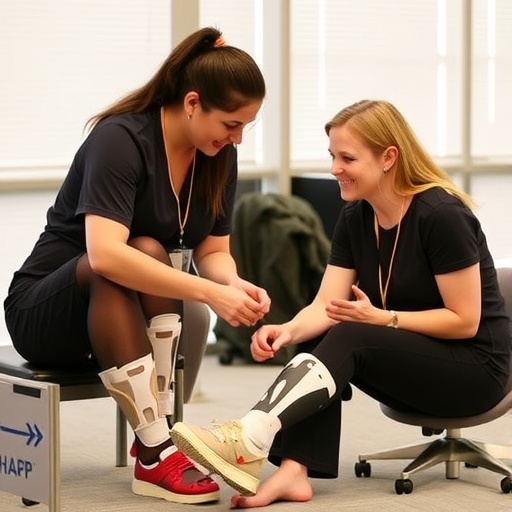
In the rapidly evolving landscape of healthcare, the sustainability of professional education programs has become a pressing concern, particularly within the orthotic and prosthetic fields. A recent study conducted by Spaulding and colleagues sheds light on this critical issue, offering a thematic analysis that underscores the nuanced challenges and opportunities faced by educators and practitioners alike. The implications of this research extend beyond academia; they resonate with every corner of the healthcare continuum, prompting stakeholders to rethink strategies that bolster the robustness of educational frameworks.
The drive to ensure that health professional education remains relevant and effective hinges on several interrelated factors. One of the primary challenges identified in the study is the need for curricula that reflect current clinical practices and technological advancements. The orthotic and prosthetic profession, in particular, is experiencing a notable transformation driven by innovation in materials, design, and patient care. As these changes unfold, educators must be agile in adapting their teaching methods and course content, which can often lag behind the rapid pace of industry evolution.
Moreover, the research highlights the imperative for collaboration between academia and clinical practice. The traditional divide between these two realms can create silos that hinder the sharing of knowledge and best practices. By fostering strong partnerships with healthcare providers, educational institutions can develop more comprehensive training programs that better equip students for the realities of their future careers. Such collaboration not only enhances the educational experience but also ensures that graduates are more competent and confident in their roles.
One significant aspect of sustaining health professional education programs is the necessity of engaging a diverse range of stakeholders. The study emphasizes the importance of voices from various sectors, including policymakers, funding bodies, and community members. A multi-faceted approach to gathering input can lead to a richer understanding of the challenges faced and the solutions needed, thereby informing the development of educational programs that are both inclusive and effective.
In addressing the financial sustainability of these programs, the research reveals that funding remains a critical barrier. Many educational institutions struggle with limited resources, making it difficult to implement innovative teaching strategies or to invest in ongoing faculty development. The study suggests that identifying diverse funding sources, such as grants, partnerships, and alumni contributions, can provide a financial lifeline to programs at risk of closure. This is particularly essential in specialized fields like orthotics and prosthetics, where the training infrastructure may be limited.
The role of technology in enhancing the educational experience cannot be understated. The study points out that incorporating digital tools and resources can transform traditional learning environments. Online modules, virtual simulations, and telehealth experiences can supplement in-person training, offering students flexible and diverse learning opportunities. Integrating technology also presents a chance to attract students from varied backgrounds, potentially increasing enrollment and enriching the educational community.
Equally vital to sustaining education programs is ensuring consistent quality in teaching. The research highlights the importance of faculty development initiatives. Educators must be supported in honing their teaching skills, staying current with industry advancements, and integrating new pedagogical techniques into their classrooms. This not only enhances the learning experience for students but also fosters a culture of continuous improvement within educational institutions.
Alongside these practical measures, the thematic analysis serves as a reminder of the emotional and psychological dimensions of sustaining health professional education. Burnout among educators can have a detrimental effect on program quality and student outcomes. Consequently, institutions must prioritize faculty well-being, creating supportive environments that encourage work-life balance and professional growth. This holistic approach can contribute significantly to the longevity and effectiveness of educational programs in the orthotic and prosthetic profession.
It’s also crucial to acknowledge the role of student feedback in shaping educational frameworks. Engaging with students about their experiences, challenges, and aspirations can provide invaluable insights into the strengths and weaknesses of current educational practices. By actively involving students in the development and assessment of curricula, educators can create a more responsive and learner-centered environment that meets the needs of the next generation of professionals.
The findings of this study are not merely academic; they carry real-world implications for the future of the orthotic and prosthetic profession. As healthcare systems worldwide grapple with an aging population and increasing rates of disability, the demand for skilled practitioners in this field continues to rise. Ensuring that educational programs can meet this demand is essential to fostering a workforce that can effectively serve patients and improve outcomes.
In conclusion, the thematic analysis presented by Spaulding and colleagues provides a comprehensive overview of the multifaceted challenges faced by health professional education programs in the orthotic and prosthetic field. By addressing issues of collaboration, funding, technology integration, faculty development, and student engagement, stakeholders can work collectively to sustain and enhance educational frameworks. The future of health professional education relies on our ability to innovate, adapt, and support those who educate the next generation of practitioners. As we move forward, the insights gleaned from this research will be invaluable in navigating the complexities of this essential endeavor.
Subject of Research: Sustainability of health professional education programs in the orthotic and prosthetic profession.
Article Title: Sustaining health professional education programs: a thematic analysis for the orthotic and prosthetic profession.
Article References:
Spaulding, S.E., Sions, J.M., Block, J.L. et al. Sustaining health professional education programs: a thematic analysis for the orthotic and prosthetic profession.
BMC Med Educ (2026). https://doi.org/10.1186/s12909-026-08570-8
Image Credits: AI Generated
DOI:
Keywords: Sustainability, health professional education, orthotics, prosthetics, thematic analysis, education programs, financing, technology integration, faculty development, student engagement.


