


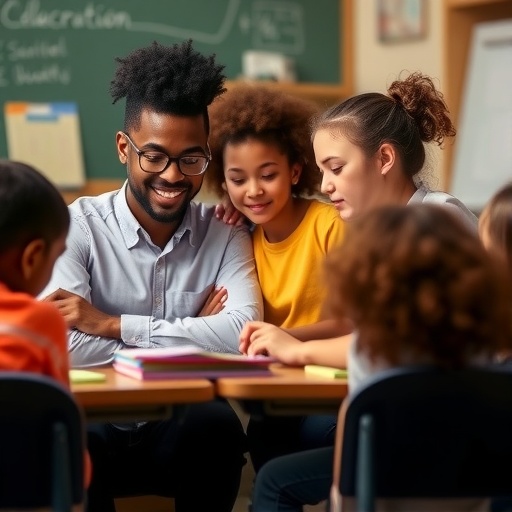
In an era marked by globalization and multiculturalism, the educational landscape has become increasingly multifaceted. Recent research conducted by scholars Lee, Bustamante-Barreto, and Yoo delves into the complex interplay of teacher self-efficacy within diverse classroom environments. Their study, titled “Toward a more discriminative and culturally responsive TALIS teacher self-efficacy in multicultural classrooms scale: cross-national evidence from Japan and Colombia using the generalized partial credit model,” exemplifies this nuance by exploring how teacher confidence varies cross-nationally, particularly considering the distinct educational cultures of Japan and Colombia.
The study seeks to address a crucial gap in educational research—understanding how teachers perceive their efficacy in settings that are rich in cultural diversity. Traditional measures of self-efficacy may not adequately capture the unique challenges and strengths that teachers encounter in multicultural classrooms. By applying the generalized partial credit model, the authors aim to refine the existing TALIS framework, providing a more nuanced and comprehensive assessment tool that reflects the realities of educators operating in diverse environments.
At the core of the research lies the belief that effective teaching in multicultural contexts hinges not only on subject matter expertise but also on a deep understanding of cultural dynamics. In Japan, where educational practices are deeply rooted in tradition, teachers may encounter students from various backgrounds, necessitating a shift in teaching strategies that align with different cultural expectations. Conversely, in Colombia, a country characterized by a vibrant mix of cultural identities, teachers may find themselves embracing a broader spectrum of pedagogical approaches to meet diverse student needs.
To explore these dynamics, the researchers employed a robust methodology, contrasting teacher self-efficacy perceptions in both countries. By surveying educators across Japan and Colombia, they uncovered striking differences in how self-efficacy is influenced by cultural factors. Teachers in Japan reported high confidence levels rooted in their mastery of pedagogical techniques well-established within their cultural context. On the other hand, Colombian educators expressed a more varied self-efficacy profile influenced by their daily experiences navigating students’ diverse backgrounds.
One of the pivotal findings of the study highlights the importance of cultural responsiveness in teacher training programs. The authors argue that fostering self-efficacy among educators requires more than just equipping them with pedagogical skills; it necessitates a curriculum that emphasizes cultural awareness and sensitivity. This approach empowers teachers to adapt their strategies, ensuring that every student feels included and valued, ultimately enhancing the learning experience for all.
Moreover, the research raises essential questions about the systemic support needed for teachers to thrive in multicultural settings. It suggests that educational policymakers must consider incorporating cultural competence training into teacher preparation programs. By doing so, they can create a framework that not only recognizes the challenges teachers face in diverse classrooms but also equips them with the necessary tools to address these challenges effectively.
As the study unfolds, it becomes apparent that fostering teacher self-efficacy is not merely an individual endeavor but a collective mission. Schools, teacher training institutions, and policymakers need to collaborate and develop strategies that prioritize cultural inclusivity. This collaboration should extend beyond initial teacher education and into ongoing professional development, ensuring that educators continue to evolve alongside the diverse populations they serve.
Furthermore, as educational institutions grapple with the effects of the COVID-19 pandemic, the importance of cultural responsiveness has never been more pronounced. The rapid transition to online learning exposed many inequities within the education system, emphasizing the need for teachers to be equipped with the skills to foster inclusivity in virtual learning environments that may further alienate students from diverse backgrounds.
Ultimately, the implications of this research extend far beyond the confines of classrooms in Japan and Colombia. The insights gleaned from the study can resonate within global education systems as they strive to meet the needs of increasingly diverse student populations. As educators around the world are challenged to confront cultural disparities in their classrooms, the findings underscore the necessity of developing a more culturally responsive teacher self-efficacy scale.
In conclusion, the work of Lee, Bustamante-Barreto, and Yoo paves the way for a richer discourse on teacher self-efficacy in multicultural settings. Their research not only underscores the importance of cultural factors in shaping educators’ confidence but also provides a framework for enriching teacher training and professional development initiatives. By addressing the unique challenges faced by teachers in diverse environments, the academic community can contribute to a more inclusive and effective educational landscape.
In a world where cultural diversity is increasingly prominent, the voice of the teacher becomes crucial in bridging gaps and fostering understanding among students. This research serves as a call to action—inviting educational leaders, policymakers, and researchers to prioritize and invest in the development of culturally responsive educational practices that will ultimately elevate the learning experiences of students from all walks of life.
Cite Scienmag News
Courtney Benton. (November 12, 2025). Enhancing Teacher Self-Efficacy in Diverse Classrooms. Scienmag. https://scienmag.com/enhancing-teacher-self-efficacy-in-diverse-classrooms/
Courtney Benton. "Enhancing Teacher Self-Efficacy in Diverse Classrooms." Scienmag, 12 November 2025, https://scienmag.com/enhancing-teacher-self-efficacy-in-diverse-classrooms/. Accessed 4 September 2026.
Courtney Benton. "Enhancing Teacher Self-Efficacy in Diverse Classrooms." Scienmag. November 12, 2025. https://scienmag.com/enhancing-teacher-self-efficacy-in-diverse-classrooms/


